The company should restart its smart home ambitions with a smart display and a whole bunch of other accessories.
Apple is hosting its second fall event on October 13, and the “Welcome Home” tagline on its invitation strongly suggests that it will focus on smart home products. Depending on your perspective, you can trace the company’s entry into the space with the introduction of Apple TV, HomeKit or the first HomePod, but this new push is reportedly centered around the improved functionality of Siri AI and several new pieces of hardware that run it.
The star of that new hardware lineup is reportedly the company’s first smart display, but it’s also expected to see updates to the Apple TV and HomePod Mini alongside it, and possibly a lot more. Here is the complete overview of new products that Apple could announce at its Smart Home event.
An Apple Smart Display or ‘HomePad’
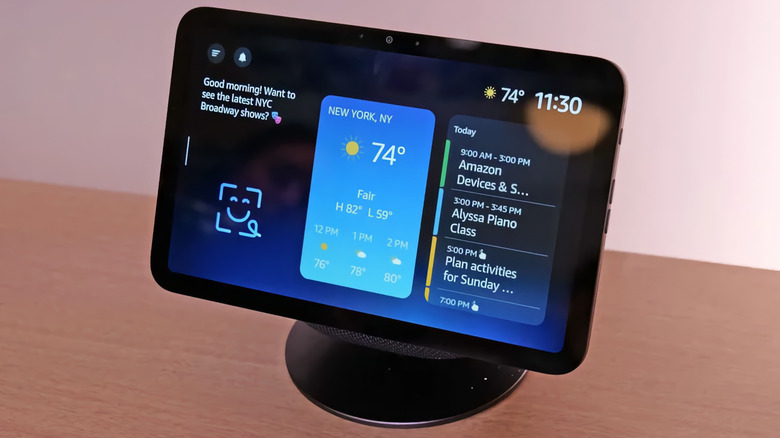
All recent reporting indicates that Apple is ready to launch its first smart display, a device that marries the audio and AI assistant capabilities of a HomePod with a display that can show photos, run apps and act as a dedicated FaceTime device.
Bloomberg reports Apple’s so-called “HomePad” will have a 6-inch square display that will be available with a round HomePod Mini-style speaker or a smaller audio setup that can be mounted next to the display on a wall. The primary method of interacting with the HomePad is Siri AI, but the device’s new tvOS-based “homeOS” will also support touchscreen interactions and include some of the customizable interface elements of the Apple Watch and the iPhone’s StandBy mode. The smart display will also be able to run iPadOS-style apps, according to Bloombergwhich opens up the possibility for video streaming and other functionality if developers decide to support it.
In addition to showcasing Siri AI’s ability to interact with Apple’s HomeKit platform, Apple also plans that the device will be able to detect who’s looking at it and adjust its interface and apps accordingly, though it apparently won’t rely on Apple’s iPhone’s Face ID technology to do so. The feature allowed the HomePad to switch which calendar or notifications it shows depending on who’s looking at the screen — personalization features that few other Apple devices offer.
Updates for the HomePod mini and Apple TV
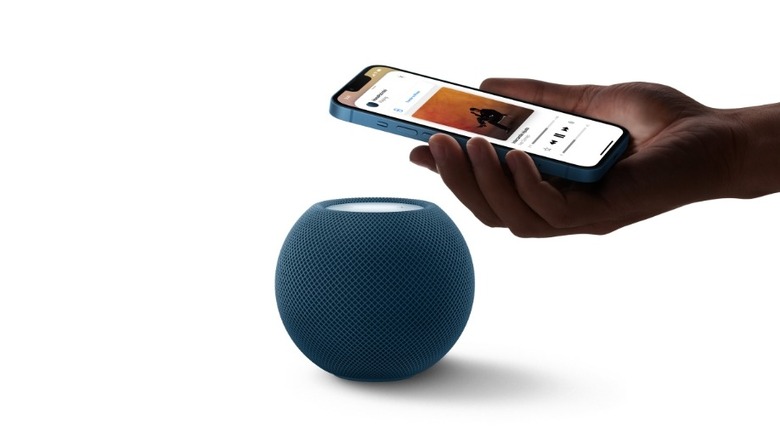
Apple limits access to Siri AI based on a device’s A-series or M-series chip, so it makes sense that the aging chips in the current HomePod Mini (an S5 chip from the Apple Watch Series 5) and the Apple TV 4K (an A15 Bionic chip from the iPhone 13) need to be replaced for something new. Bloomberg reports that both the Apple TV 4K and the HomePod mini will be updated with faster chips that can run Siri AI, along with modest design updates.
The new Apple TV 4K is reportedly powered by at least one A19 chip from the iPhone 17 lineup and features a slightly redesigned remote. The HomePod Mini will come in new colors, including green, pink, blue, black and white, according to reports MacRumorsand will probably have a chip from a recent Apple Watch so it can handle Siri AI prompts. Apple is also working on supporting surround sound setups with HomePods, an expansion of the stereo HomePod setups it currently offers via the Apple TV.
Third party doorbells, locks and cameras
Previous reports have suggested that Apple is working on its own privacy-focused cameras as part of its smart home lineup, but now Bloomberg reports that they may not be sold under Apple’s name. The company is to collaborate with LG Electronics to create a series of smart locks, doorbells, thermostats and temperature sensors. The devices will work with Apple’s smart home ecosystem but will apparently be manufactured, sold and supported by LG. A later leak suggested that similar third-party devices are also coming from Schneider Electric, apparently making a thermostat for the launch.
The partnership “Second-Party” includes accessories from Schneider:
• Schneider Home Smart Thermostat
• Schneider Electric temperature/humidity sensorOnly the thermostat shows (placeholder) setup assets. Its configuration configuration mentions Proximity Settings.
In total iOS…
— pdfu (@itspdfu) October 7, 2026
This does not necessarily prevent Apple from releasing its own versions of these devices down the line, but it does suggest that Apple will not make the first accessories designed for this new era of HomeKit. Considering the threat the company’s scale and reach poses to other makers of smart home products, it’s probably the right move to play nice.