 Skip to content
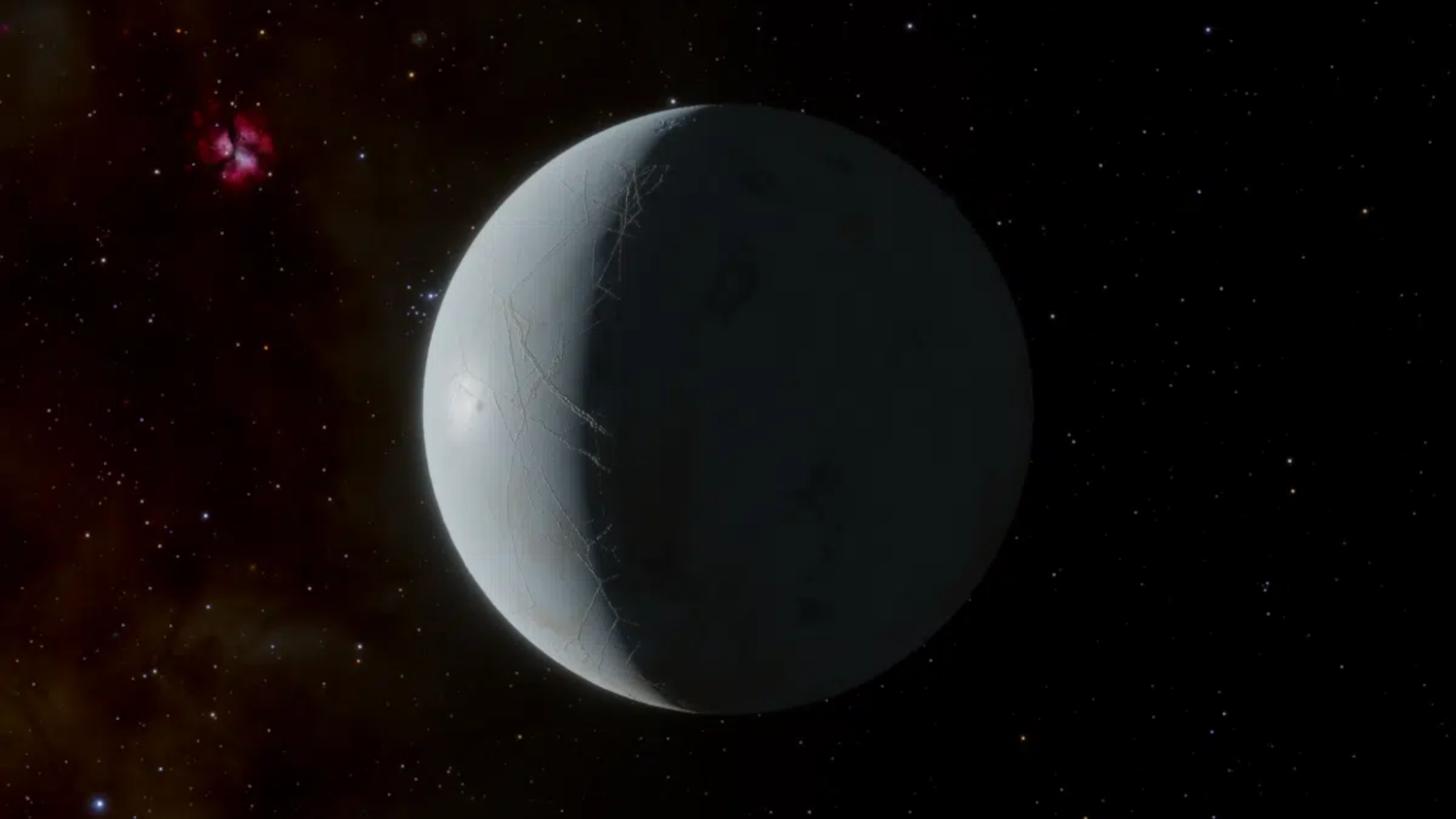
Beyond Neptune lies a population of small, icy worlds with unusually elongated orbits that are steeply tilted relative to the plane of the solar system. Planetary scientists have debated for years how to explain these orbital patterns, if at all.
What the simulation found
A team of three researchers, including Patryk Sofia Lykawka, Pedro Bernardinelli and Jonti Horner, conducted computer simulations covering 4.5 billion years Solar system evolution to test competing explanations. Their candidates, are labeled Planet X2will carry about one to two Earth masses. It will orbit the Sun with its semi-major axis approximately 350 to 500 AUits closest solar distance is nearly 200 astronomical units.
As a background, Neptune is located 30 astronomical units From the sun. Planet X2’s proposed orbit would put it about ten to seventeen times farther from the known outermost planets.
The team compared Planet X2 to scenarios involving transient planetary embryos. These are Mars-to-Earth-mass objects that formed the outer solar system early in its history and were then ejected. These embryonic scenarios fail to reproduce all observed features and typically disappear within millions to tens of millions of years, leaving orbital distributions similar to models with no additional planets at all.
Planet X2 performed better in test scenarios. Its simulation reproduces all orbital properties 11 known extreme trans-Neptunian objects Factors considered in the study included similar orbital characteristics to Sedna and 2012 VP113, two of the most distant and puzzling objects known.
Disadvantages of the model
The researchers tested their results 96 distant objects In the catalog of dark energy surveys, use tools designed to explain observational biases. The Planet X2 model conforms to two key properties: orbital inclination and perihelion distance, the closest point an object reaches to the Sun.
These models do not adequately reproduce the distribution semimajor axisrepresents the characteristic scale of those distant orbits. The authors acknowledge this mismatch and suggest that it may reflect limitations of the initial debris disk used in the simulations, flagging it as a shortcoming requiring further improvement.
Planet X2 is not Planet Nine
Planet X2 is a separate hypothesis from the more widely discussed hypothesis. planet nine. The Planet Nine proxy studied is approximately six Earth masses, a structure that could lead to an oversupply of highly tilted objects in the comet supply region, which could conflict with the known distribution of comets.
The authors consider this comparison to be preliminary, noting that Planet Nine was tested in only one configuration.
What this study can’t tell you
No telescope has yet photographed Planet X2 or tracked it as a moving point of light. The mass, orbital inclination, and closest solar distance it proposes are constraints inferred from dynamics rather than direct observations.
The study also did not model how such a planet would have formed, whether in the right location, through outward scattering, or through an early encounter with another star.
The next real test
this Vera Rubin Observatory Legacy spatiotemporal surveys offer a promising way to test this hypothesis. If Planet X2 is bright enough and within the survey range, Rubin can detect it directly.
Even if the planet is still too dim, discovering more distant icy bodies could reveal whether their orbital distribution carries the gravitational fingerprint predicted for Planet X2. Both results, whether direct detection or a richer orbital data set, will help determine whether Planet X2 moves from hypothesis to confirmed discovery.