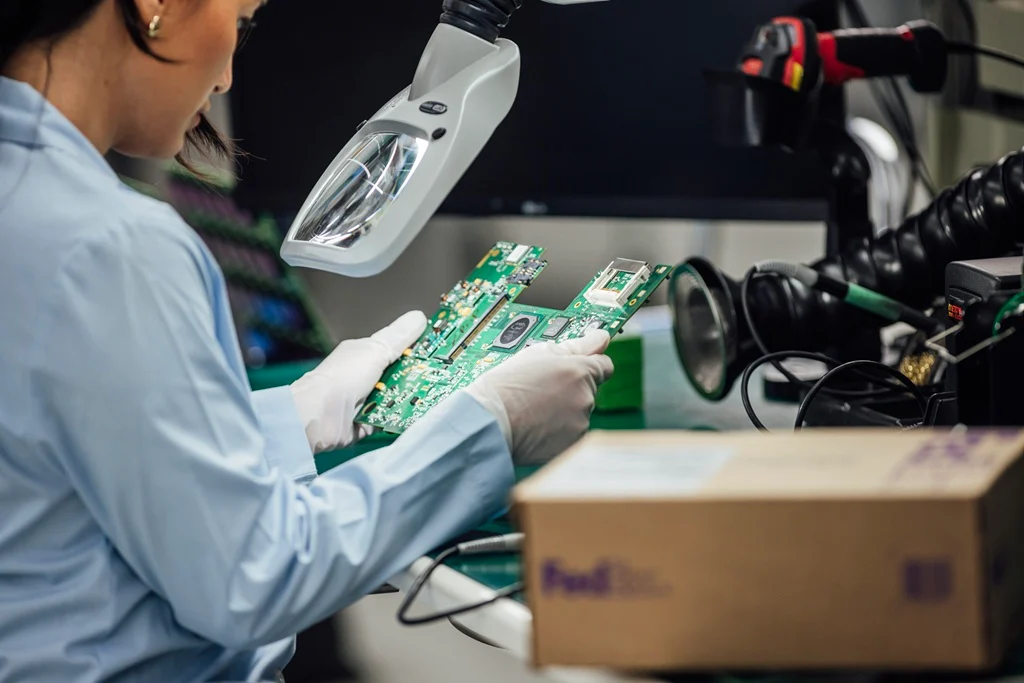
The Philippines’ established semiconductor manufacturing base and skilled workforce position the country to benefit as companies expand and diversify supply chains across Asia Pacific
Federal Express Corporation (FedEx), one of the world’s largest express transport companies, released results from a new report developed in collaboration with Frost & Sullivan, which examines the evolving semiconductor ecosystem across Asia Pacific (APAC).
The report finds that growing demand for artificial intelligence (AI), high-performance computing, electric vehicles (EVs), and advanced communications technologies is accelerating semiconductor production and driving investment in the digital infrastructure that drives the AI economy. These trends are creating increasingly complex regional and global supply chains that depend on speed, visibility and resilience.
For the Philippines, the shift presents an opportunity to build on the country’s established position in the global semiconductor supply chain as a major hub for assembly, packaging and testing, supported by a skilled workforce and an established ecosystem of global manufacturers and local suppliers.
APAC AT THE CENTER OF THE HALF-LEAD MAP
The report, From AI to EVs: How APAC Semiconductors Drive the Global Innovation Map, highlights how APAC has become the center of the global semiconductor ecosystem, accounting for approximately 58 percent of global semiconductor industry revenue. As industries increasingly rely on advanced chips to power AI applications, data centers, connected devices, and next-generation vehicles, moving semiconductors and related technologies efficiently across multiple markets has become critical.
A recent FedEx survey conducted at SEMICON Taiwan 2026, one of the industry’s most influential trade shows, reinforced expectations for continued regional growth. Nearly four in five respondents identified Taiwan, Southeast Asia, Greater China and Japan as the markets expected to see the largest increase in semiconductor demand over the next three years.
“The next decade of innovation will be shaped not only by advances in semiconductors, but by the strength and resilience of supply chains that power AI and digital infrastructure,” said Salil Chari, president of Asia Pacific at FedEx. “As investment in AI infrastructure accelerates, enterprises are managing increasingly complex supply chains that span semiconductors, servers, networking equipment, cooling systems and advanced technology components across multiple markets. data centers.”
AI INFRASTRUCTURE A MAJOR DRIVER OF SEMICONDUCTOR DEMAND
The report identifies AI and high-performance computing as the fastest growing drivers of semiconductor demand. More than 2,000 new data centers are expected to be built worldwide between 2026 and 2035.
Beyond semiconductors, AI is accelerating demand for an entire ecosystem of supporting infrastructure, including high-density servers, network equipment, cooling systems and power solutions. These critical technologies often move through multiple manufacturing, assembly and testing hubs before being deployed in AI data centers worldwide, creating increasingly interconnected supply chains.
As a result, businesses place greater value on logistics providers that can deliver speed, visibility and seamless cross-border connectivity for high-value, time-sensitive shipments.
At the same time, EVs, which require significantly more chips than traditional vehicles, along with 5G, IoT, consumer electronics, medical devices and industrial automation further expand semiconductor demand across industries.
THE PHILIPPINES: A KEY PLAYER IN AN INCREASINGLY CONNECTED APAC SEMICONDUCTOR ECOSYSTEM
The report highlights APAC’s central role in semiconductor innovation and production. Rather than being concentrated in a single market, semiconductor manufacturing is spread across highly specialized hubs throughout the region. Key regional strengths include:
- China: a major material supplier, consumer market and growing manufacturing hub
- Taiwan: leads global advanced semiconductor production and accounts for approximately 60 percent of global foundry production
- South Korea: a global leader in memory chip production and advanced manufacturing capabilities
- Japan: plays a critical role in semiconductor equipment, materials and specialty manufacturing inputs
Southeast Asia, including the Philippines, has emerged as a key center for semiconductor assembly, packaging and test operations.
The Philippines hosts manufacturing operations of major global semiconductor companies and has developed a skilled workforce that supports assembly, packaging and testing services. This existing industrial base gives the country an opportunity to capture new investment as semiconductor companies expand and diversify their manufacturing and sourcing footprint across Asia Pacific.
Recent investment activity in the country highlights this shift. Philippine economic zones continue to attract electronics and advanced manufacturing projects, while government efforts are increasingly focused on moving the country to higher-value activities in the semiconductor value chain, including research, engineering, design and advanced manufacturing.
This specialization creates a deeply interconnected ecosystem, with semiconductor design, manufacturing, packaging, testing and deployment often occurring in multiple countries before a final product reaches the market. In addition to hyperscalers, small and medium-sized enterprises (SMEs) also play an important role, benefiting from growing opportunities in high-value niche segments.
“The Philippines has decades of experience and a strong talent base in semiconductor manufacturing. The opportunity is now to build on these strengths as the industry enters a new phase driven by AI, advanced computing and increasingly distributed supply chains,” said Garrick Thompson, Managing Director of FedEx Philippines. “For the Philippines to achieve more of this growth, manufacturing capacity must be matched with reliable connectivity to suppliers and customers in the region and around the world. This is where logistics can help turn our geographic position and industrial capabilities into a stronger competitive advantage.”
Industry sentiment reflects this regionalization trend. In the FedEx SEMICON Taiwan survey, 35 percent of respondents said they expect their companies to expand manufacturing into additional APAC markets in the next three years. Another 25 percent plan to increase or diversify sourcing within APAC or globally.
SUPPLY CHAINS SHIFT FROM EFFICIENCY TO RESILIENCE
Supply chain resilience is becoming a strategic priority. Geopolitical uncertainty, regulatory complexity and other external disruptions continue to challenge operations.
Survey results reinforce this shift: 30 percent of respondents cited geopolitical disruption as the most significant challenge to growth, ahead of rising operating costs and cross-border trade and customs complexity.
Therefore, companies are supplementing traditional just-in-time operating models with more flexible supply chain strategies, including geographic diversification and inventory buffers. This evolution increases the demand for reliable international logistics networks that support high-value, critical shipments.
LOGISTICS ENABLE THE NEXT CHAPTER OF SEMICONDUCTOR growth
As semiconductor supply chains become more complex and globally interconnected, survey results suggest that speed and visibility will be central to future logistics strategies, with 44 percent of respondents identifying faster international shipping as the most important capability when selecting logistics and supply chain partners in the next three years.
FedEx supports this connectivity through its extensive international network and operations in the Philippines, including its gateway in Clark. Located near major industrial and economic zones in Central Luzon, Clark gives Philippine businesses convenient access to FedEx’s regional and global network, helping to move high-value and time-sensitive shipments to international markets.
The report provides businesses with insight into the evolving AI and semiconductor ecosystem across Asia Pacific, helping them better understand emerging supply chain trends, growth opportunities and the logistics capabilities to support the next wave of innovation. The full report can be downloaded here.
SURVEY METHODOLOGY
The survey was commissioned by FedEx and conducted on-site during SEMICON Taiwan in Taipei from September 2 to 4, 2026. Responses were collected from 478 semiconductor industry participants representing companies, industry associations and research institutes from APAC, Europe and North America. The survey explores growth expectations, supply chain strategies, expansion challenges and future logistics requirements across the semiconductor ecosystem in Asia Pacific.