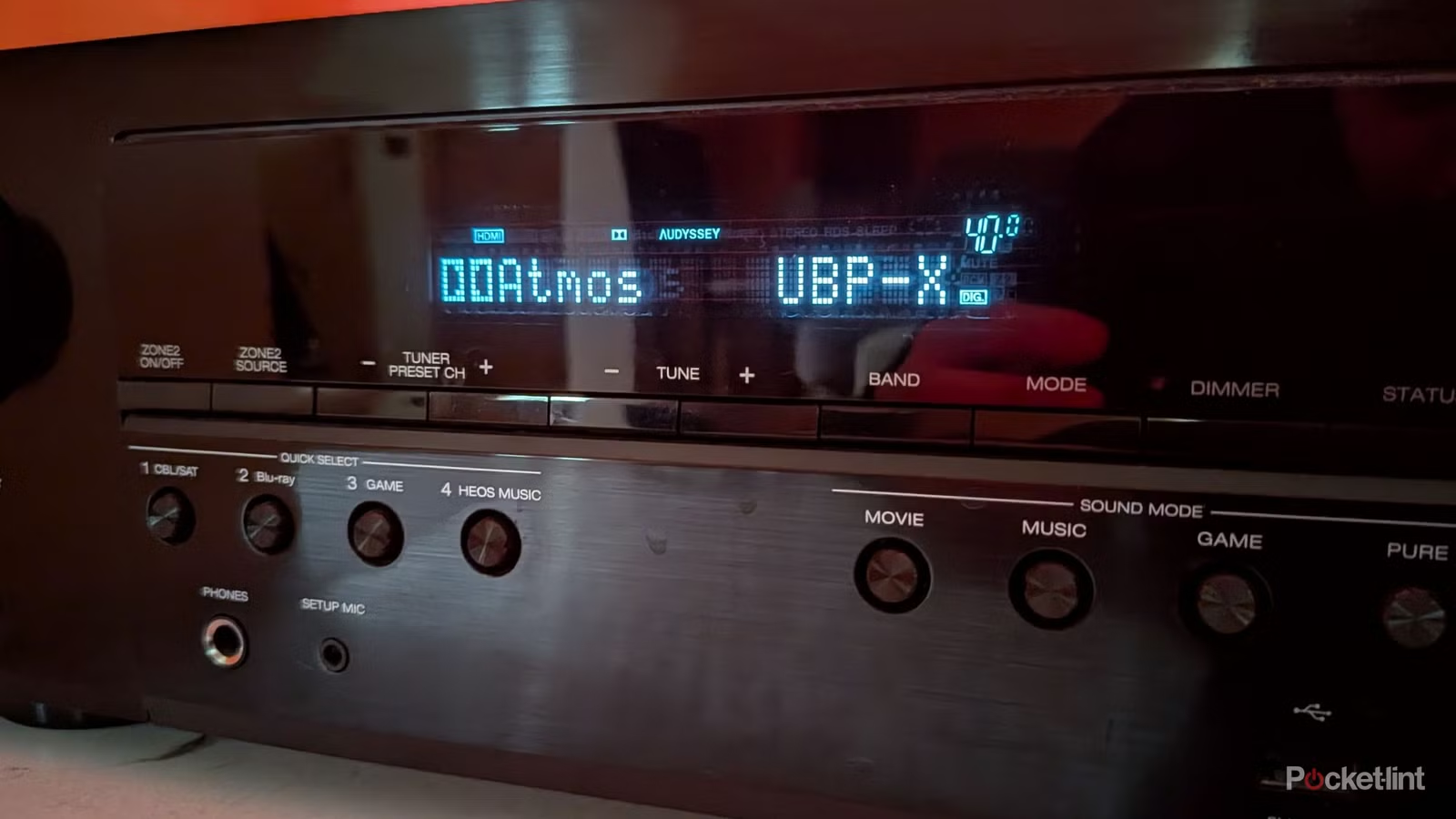
There are several audio formats available, but there has been a big push of late towards Dolby Atmos. If you look at the highest levels of streaming services or what audio format is available on a 4K UHD Blu-ray, it is typically Dolby Atmos. Atmos has been in our homes for years, and even your phone has access to it. However, not all Atmos mixes are created equal, and even if your TV says you’re listening to it, there’s a good chance you’re not getting the best experience out of it.
Many corners have to be cut to get it into homes, and sometimes there is a lesser experience. At its core, Dolby Atmos is a direction-based audio format, and it greatly benefits from having speakers placed high on your wall and even above you. This helps to simulate the real intention, so listening to an Atmos mix from your phone’s speakers on Apple Music will not sound the same.
Dolby Atmos is limited by your speakers
The more, the better
Since Atmos relies on directional audio, you want to place your speakers in a way that can show that. For example, Top Gun: Maverick, one of the best showcases of Dolby Atmos on 4K UHD, has many overhead effects thanks to the planes. If you only have speakers in front of you, this won’t do much. When you have surrounds and overhead speakers, the format really shines.
Many soundbars claim to have Dolby Atmos, and to be fair, they do. They read the Atmos format just fine, but since they mostly rely on upfiring speakers, you either have to make sure your ceiling is at the correct height so the audio bounces at you, or you have to be okay with getting a lesser experience. I don’t think Atmos is one of those situations where any of it is better than none of it, because it can sound very strange without the right setup. This is especially the case on your phone.
It’s not that expensive to add to your existing setup
It can be, but it doesn’t have to be

Building a surround sound setup is not cheap. You’ll need to get a bunch of speakers, a subwoofer, a receiver, and you’ll probably want a good TV to go with it. This can easily blow way past the $1,000 price tag. I had a 5.1 surround sound system in my living room before I went Atmos, and believe me when I say that was the most expensive part of it all. I just wanted to dip my toes into Atmos, so I ended up grabbing a cheap pair of satellite speakers from Amazon for around $40. I still use those to this day, and I desperately need an upgrade.
What you may not realize is that although Atmos brings height channels into the mix, most movies and shows don’t use it all the time. In fact, you will notice that they are simply inactive for most of the watch time. This means you don’t have to get the best of the best speakers for your Atmos height channels. You can cut some corners there and still get a good experience. It’s perfect to start with small satellite speakers, but I’d upgrade those sooner than I did if I were you.
It doesn’t have to be forced on everything
No need to upscale

Something I did a lot when I first connected my Atmos speakers was listen to a bunch of my favorite movies on the format. It didn’t take me long to realize that many movies don’t have an Atmos mix, but that didn’t stop my receiver. Thanks to my Denon receiver, I was able to upscale the audio and play it through these Atmos speakers. It works for sure, but I suddenly felt that the movies didn’t sound like they were intended, and I stopped doing that.
There is nothing wrong with this if you are okay with sounds that sometimes come from the wrong speaker, but I just don’t like to deal with such things anymore. My receiver did a good job of getting the audio sound correct, but I just wanted to stick with the original tracks. If that meant my Atmos speakers didn’t get any action during a movie, so be it.
It’s not so good at streaming
It flashes on a disc

Something that many people need to understand is that nothing on streaming looks or sounds as good as it can. I think it probably sounds as good as it can get for streaming. The reason for this is compression, and it’s what services need to do to make sure you’re able to get a decent experience at home. I don’t blame them for that, and I’ve enjoyed my fair share of streaming content over the years.
If you have a Dolby Atmos setup, you owe it to yourself to pick up some 4K Blu-ray discs so you can see what you’re missing. The big thing for me is subwoofer activity. Streaming services just don’t seem to enable it as much as a disc, and a subwoofer is actually one of the most vital parts of an Atmos setup. A lot of movies, like Edge of Tomorrow, shine thanks to the LFE (low-frequency effects), and that just doesn’t come across as well as it should on streaming.