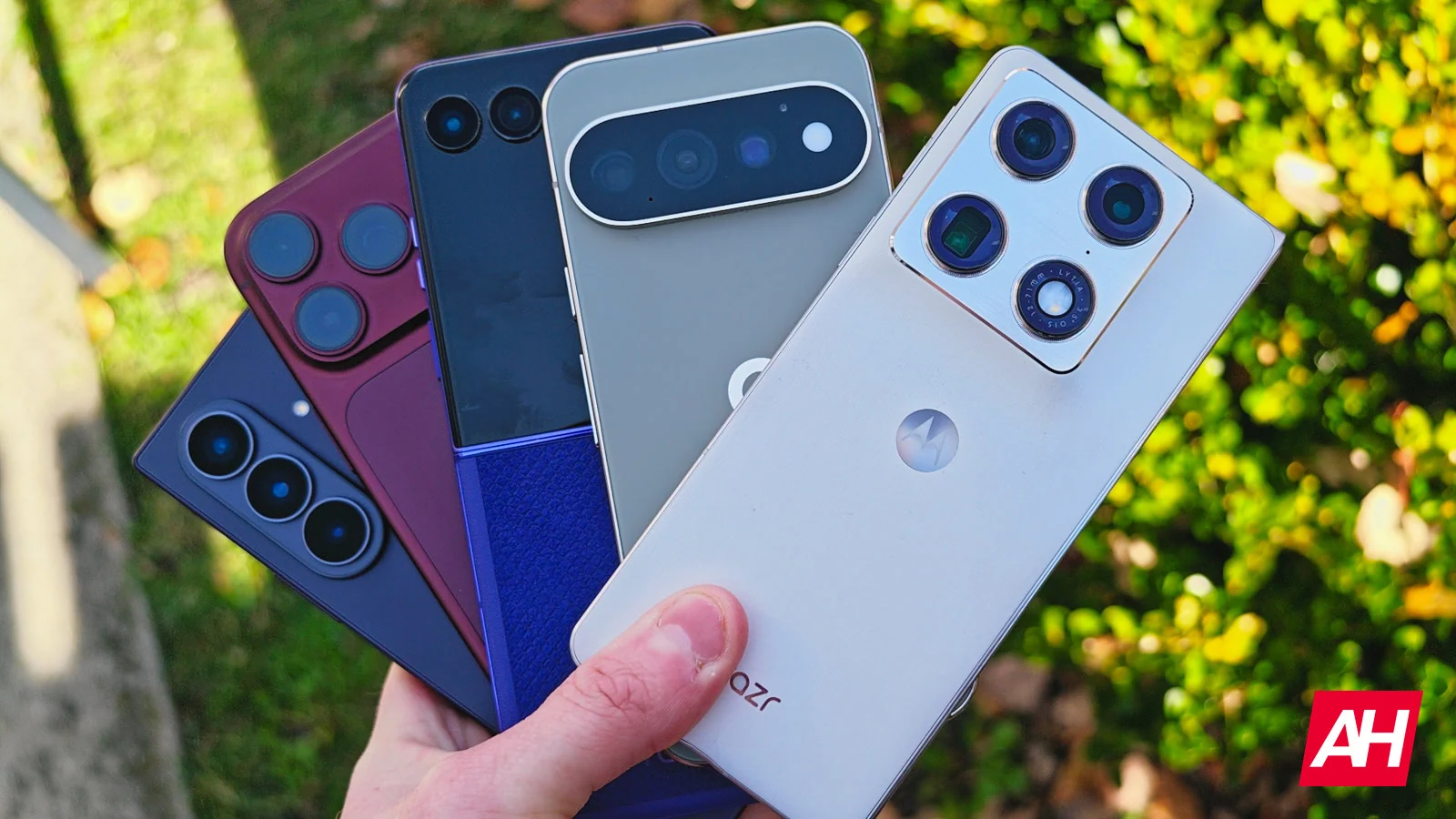
The Samsung Galaxy S26 Ultra is the best smartphone you can buy right now because it lasted longer than any other non-folding phone in our battery test, and it’s the only phone on this list with a built-in S Pen. If you want an iPhone, get the iPhone 18 Pro Max. I tested the iPhone 18 Pro as my daily phone, and the Pro Max has the same chip and cameras with a bigger screen and battery.
This guide ranks iPhones and Android phones on one list, because that’s how most people actually shop. We’ve used every phone on it but one, the iPhone 18 Pro Max, and its write-up explains how we judged it. From the $599 Pixel 10a to the $2,099.99 Galaxy Z Fold 8 Ultra, every pick had to beat a named rival to earn its spot.
We run the phones we review through the same tests, no matter who reviews them, and the battery and charging results on this page are our own. The iPhone 18 Pro Max is the exception: we haven’t tested it yet. Here’s exactly how we test. Every phone here is sold new in the US, unlocked or through a US carrier, and every price is the maker’s regular US price, never a sale.
Start with the quick picks for the short answer, then tap any phone to jump to its full write-up. Want every phone side by side? The spec comparison lines them all up. Still torn? How to choose walks through screen size, battery, updates, and how much to spend.
What is the best phone right now?
The best phone right now is the Samsung Galaxy S26 Ultra. It’s the best all-around phone, with great battery life, a great camera, excellent software and updates, and the S Pen.
Quick picks
Prices checked on: November 3, 2026
Best Overall
Best Overall
Samsung Galaxy S26 Ultra
$1,399
It outlasted every other non-folding phone in our battery test and is the only phone here with a built-in S Pen
Best iPhone

Best iPhone
Apple iPhone 18 Pro Max
$1,299
The most complete iPhone: the bigger screen and bigger battery make the extra $100 easy to justify.
Best Productivity and Best Battery Life

Best Productivity and Best Battery Life
Samsung Galaxy Z Fold 8 Ultra
$2,099
It lasted longer than any phone on this page in our battery test, and its 8.0-inch inner screen gives you more room than the Galaxy Z Fold 8.
Best iPhone for Most People

Best iPhone for Most People
Apple iPhone 18 Pro
$1,199
It’s the Pro iPhone I’d hand most people, smaller and $100 cheaper than the Pro Max without feeling like a step down.
Best Android for Most People and Best Camera

Best Android for Most People and Best Camera
Google Pixel 11 Pro
$1,099
Its camera beat the Galaxy S26 Ultra in our own samples, and it costs $300 less than Samsung’s flagship.
Best Foldable Smartphone

Best Foldable Smartphone
Motorola Razr Fold
$1,899
It beat the Galaxy Z Fold 8 at the same price, with a bigger 8.1-inch inner screen.
Best Flip Smartphone

Best Flip Smartphone
Motorola Razr Ultra (2026)
$1,499
It’s the flip phone I’d carry, with a cover screen big enough that I rarely had to open it.
Best Value

Best Value
It beat the Galaxy A57 at the same price and lasted longer in our battery test.
Honorable Mention

Honorable Mention
Last year’s Pixel is still sold new and gets you Google’s software and cameras for $300 less than the Pixel 11 Pro.
Honorable Mention

Honorable Mention
It’s the pick for Samsung fans on a tighter budget, even though the Pixel 10a beat it on battery at the same price.
Honorable Mention

Honorable Mention
Samsung Galaxy Z Fold 8
$1,899
It’s the lighter, cheaper way into Samsung’s Fold line, but the Razr Fold beat it at the same price.
Compare every phone’s specs side by side.
Best Overall
Best overall means the phone that does the most things well, with no big weak spot. That includes a battery that won’t have you charging by 4 PM. On this page, that’s the Galaxy S26 Ultra.
Samsung Galaxy S26 Ultra

Pros
- Big performance jump. The Snapdragon 8 Elite Gen 5 for Galaxy is noticeably faster than last year’s chip.
- Impressive thermal management. It barely gets warm outside of a full stress test.
- Privacy Display. It’s a useful hardware feature, and nothing else on the market has it.
- Excellent battery life for the size. It easily lasts a full day of heavy use, including 5G roaming and GPS.
- 60W charging. It’s a meaningful upgrade and uses standard USB-C PD PPS, with no proprietary nonsense.
Cons
- No silicon-carbon battery. It’s the same size battery Samsung has used since the Galaxy S20 Ultra
- Not a true 10-bit display. The panel is 8-bit with FRC.
- Privacy Display has a cost. It introduces a gray tint, removes the anti-reflective coating and reduces brightness.
- The camera module wobbles. The phone rocks when you set it on a flat surface.
- No telemacro. The ALoP sensor on the 5x periscope kills telemacro shooting.
The Galaxy S26 Ultra wins because it has the fewest compromises on this page. It was also our pick for the best Android phones. It lasted 23 hours and 45 minutes in our battery test, longer than any other non-folding phone on this page, including the Pixel 11 Pro. It’s still the only phone you can buy with a built-in S Pen. The Pixel 11 Pro takes better photos, and the iPhone 18 Pro Max is the better iPhone, but neither does this many things this well. I called it a jack-of-all-trades in my Galaxy S26 Ultra review, and that’s why it also tops our list of the best Samsung phones. You’ll want to check out Galaxy S26 Ultra cases and the Galaxy S26 series.
- Battery life (our video loop test): 23 hrs, 45 mins
- Charge time (1% to 100%): 45 mins
- Geekbench 6 single-core / multi-core: 3,675 / 11,241
- AnTuTu: 3,824,993
- 3DMark Wild Life Extreme stress test, best loop / stability: 7,115 / 57%
- Temperature after stress test: 102.9°F
The battery is very impressive and the best of any non-folding phone on this page. I used it all day at Mobile World Congress in Barcelona, roaming on 5G, running Google Maps and shooting booth after booth, and I usually ended the day around 30%. On normal days at home, I got a day and a half to two days. That’s a 5,000mAh battery beating phones with far bigger cells.
I didn’t expect to use Privacy Display as much as I did. On the flights to Barcelona and on the MWC show floor, I flipped it on with a double-press of the side key, and nobody next to me could read my screen. The trade-off is real, though: a gray tint, a slightly dimmer panel and no anti-reflective layer, so I don’t leave it on all day.
It also stays cool. After our stress test it read 102.9°F, cooler than the Galaxy S25 Ultra, and it held its performance better while doing it. Photo Assist edits rendered faster than they did on last year’s phone.
The cameras are the biggest improvement, even with similar hardware. Samsung finally fixed its oversaturated colors. The one real loss is telemacro: the new 5x periscope can’t focus up close anymore.
Charging is simple too. It uses USB-C PD PPS, so any 60W PPS charger works. You’ll want a 5A cable for full speed, but the 3A cable in the box was less than 10 minutes slower in my testing.
The Galaxy S26 series flagship is cross-shopped against two phones. The Pixel 11 Pro costs $300 less, has a better camera, and sits flat on a table thanks to its camera bar. But the S26 Ultra scored almost double on AnTuTu and plays games the Pixel’s GPU struggles with. Pick the Pixel if photos come first. Pick the Galaxy S26 Ultra for everything else.
The Galaxy Z Fold 8 Ultra lasted longer in our battery test, but it costs $700 more and doesn’t have the S Pen.
The iPhone 18 Pro Max is the tougher matchup. If you live in iMessage and FaceTime with family, stay on the iPhone. If you’re not locked in, the Galaxy S26 Ultra offers the S Pen, a Privacy Display, and seven years of updates, and that’s the phone I’d tell an Android-curious iPhone owner to try first. It’s also the top pick in our guide to the best Android phones and the one I’d start with among Samsung’s best phones.
On paper, this looked like the smallest Ultra upgrade in years. Then I carried it through a week of Unpacked and MWC, and I kept grabbing it even with others in my bag. The rounded corners make it far more comfortable than the Galaxy S25 Ultra. My one gripe with One UI 8.5 is that it puts AI in your face and keeps resurfacing suggestions whether you want them or not. If I want to use AI, I’ll do it; I don’t need these suggestions all the time. If you’re on a Galaxy S23 Ultra or older, buy it. If you’re on a Galaxy S24 Ultra or Galaxy S25 Ultra, wait for a deal or a strong trade-in offer.
- Released: March 2026
- Dimensions: 163.6 x 78.1 x 7.9 mm (6.44 x 3.07 x 0.31 in)
- Weight: 214 g (7.55 oz)
- Display: 6.9″ Dynamic AMOLED, 3120×1440 resolution, 1-120Hz adaptive, 8-bit with FRC, Privacy Display
- Chipset: Qualcomm Snapdragon 8 Elite Gen 5 for Galaxy
- RAM: 12GB or 16GB (LPDDR5X)
- Storage: 256GB / 512GB / 1TB, no microSD card slot
- Main Camera: 200MP, f/1.4, 1/1.3″ sensor, 0.6µm, PDAF, OIS
- Ultrawide: 50MP, f/1.9, 120˚, 1/2.5″ sensor, Dual Pixel PDAF
- Telephoto: 10MP, 3x optical zoom, f/2.4, 1/3.94″ sensor, PDAF, OIS
- Telephoto (Periscope): 50MP, 5x optical zoom, f/2.9, 1/2.52″ ALoP sensor, PDAF, OIS
- Front Camera: 12MP, f/2.2, 1/3.2″ sensor, Dual Pixel PDAF
- Video: Up to 8K at 30fps, APV and LOG recording, Horizon Lock with Super Steady 2.0
- Battery: 5,000mAh
- Wired Charging: 60W wired charging (USB-C PD PPS), charger and 5A cable not included
- Wireless Charging: 25W wireless charging
- Build: Armor Aluminum frame, IP68
- Software: Android 16 with One UI 8.5
- Connectivity: 5G, LTE, Wi-Fi 7, Bluetooth 5.4
- Notable Extras: Built-in S Pen, Privacy Display, Now Nudge, Galaxy AI
- Colors: Black, Cobalt Violet, Sky Blue, White
- Years of Updates: 7 years of OS and security updates (through 2033)
- Launch MSRP: $1,299.99
You’re on a Galaxy S23 Ultra or older, you want the S Pen, or you want the longest battery life you can get without a foldable.
You want the best Android camera (get the Pixel 11 Pro), or you can’t live with the gray tint and loss of the anti-reflective coating that come with Privacy Display.
Best iPhone
If you’re staying on iOS, all that’s left is picking which iPhone. This award goes to the most complete one, the iPhone I’d pick if price weren’t the deciding factor.
Apple iPhone 18 Pro Max

Pros
- Bigger 6.9-inch screen. It’s 0.6 inches larger than the iPhone 18 Pro’s, gets up to 3,000 nits outdoors, and has an anti-reflective coating.
- A20 Pro chip. It’s the same chip as in the iPhone 18 Pro, which ran fast and stayed cool in my testing.
- Bigger battery. The US model is 5,567mAh, about 30% bigger than the iPhone 18 Pro’s.
- Fast charging. Apple rates it at 50% in about 15 minutes with a 60W adapter, and up to 25W on MagSafe and Qi2.
Cons
- No fixed update promise. Apple doesn’t commit to a set number of years of software updates.
- Price increase. It went up $100 this year.
- Heaviest iPhone yet. It gained weight and now sits at 249g.
The iPhone 18 Pro Max is the best iPhone because of its bigger screen and battery. I tested the iPhone 18 Pro as my daily phone, and the Pro Max shares its A20 Pro chip, cameras, and 12GB of RAM, with a 6.9-inch screen and a battery about 30% bigger. It loses to the Galaxy S26 Ultra on updates, but the two are close on camera and software, so it really comes down to which experience you prefer. If you’re staying on iOS, nothing Apple sells right now beats it. Our guide to the best iPhones breaks down the rest of the lineup, and our best iPhone 18 Pro Max cases will keep it protected.
We haven’t tested the iPhone 18 Pro Max. Nobody here has used one yet, so there are no battery or charging results for it on this page.
I haven’t used the iPhone 18 Pro Max myself. I tested the iPhone 18 Pro as my daily phone, and the two share the same A20 Pro chip, the same three 48MP cameras and 12GB of RAM, so most of what I found on the Pro applies here.
The A20 Pro was the upgrade I noticed first on the Pro. It ran fast and stayed cool, and I recorded 4K video outdoors in late-summer heat without it getting too hot to hold. It also topped our 3DMark loop test on this page.
What the Pro Max adds is size. The screen is 6.9 inches against the Pro’s 6.3, and the battery is 5,567mAh against 4,288mAh, about 30% bigger. Nobody here has measured how long it lasts, so I can’t give you a number. Apple rates both at 50% in about 15 minutes with a 60W adapter. The trade-off is weight: at 249g, it’s 38g heavier than the Pro, and the heaviest iPhone yet.
The two phones people cross-shop it against are the Galaxy S26 Ultra and the Pixel 11 Pro. The Galaxy S26 Ultra costs $100 more and adds the S Pen, Privacy Display and seven years of updates, and at 214g it’s 35g lighter. The Pixel 11 Pro costs $200 less, has the best camera on this page and a true 5x periscope, and gets seven years of updates too. Neither one can match Apple’s ecosystem, though. If iMessage, FaceTime, and an Apple Watch run your life, stay with the iPhone 18 Pro Max. If they don’t, the S26 Ultra is the better phone.
The other option is the iPhone 18 Pro. It’s $100 cheaper and 38g lighter, with the same A20 Pro chip and the same three cameras. You give up the 6.9-inch screen and the larger 5,567mAh battery. If you want the bigger screen and battery, get the Pro Max.
- Released: September 2026
- Dimensions: 163.4 x 78.0 x 8.75 mm (6.43 x 3.07 x 0.34 in)
- Weight: 249 g (8.78 oz)
- Display: 6.9″ Super Retina XDR OLED, 2868×1320 resolution, 460 ppi, ProMotion adaptive refresh up to 120Hz, Always-On, Dynamic Island, 1,000 nits typical, 1,600 nits HDR, 3,000 nits peak (outdoor), anti-reflective coating, Ceramic Shield 2
- Chipset: Apple A20 Pro, 6-core CPU (2 super cores, 4 efficiency cores), 7-core GPU with Neural Accelerators, dual 16-core Neural Engine, hardware-accelerated ray tracing
- RAM: 12GB
- Storage: 256GB / 512GB / 1TB / 2TB, no microSD card slot
- Main Camera: 48MP Fusion Main, variable aperture (f/1.48, f/1.8, f/2.8, f/4.0), 24mm, second-generation sensor-shift OIS, 12MP optical-quality 2x crop
- Ultrawide: 48MP Fusion Ultra Wide, f/2.2, 13mm, 120˚, 48MP macro
- Telephoto (Tetraprism): 48MP Fusion Telephoto, 4x optical zoom (100mm), f/2.8, 3D sensor-shift OIS, 12MP optical-quality 8x crop, up to 40x digital zoom
- Front Camera: 18MP Center Stage, f/1.9, autofocus
- Video: 4K Dolby Vision at up to 120fps (Fusion Main), ProRes RAW, Apple Log 2, Dual Capture
- Battery: 5,567mAh (US eSIM model, per GSMArena; Apple doesn’t list capacity)
- Wired Charging: Up to 50% in around 15 minutes with a 60W-capable adapter with Adjustable Voltage Supply, charger not included
- Wireless Charging: Up to 25W MagSafe and Qi2
- Build: Aluminum unibody, Ceramic Shield 2 front, Ceramic Shield back, IP68 (6 meters up to 30 minutes)
- Software: iOS 27
- Connectivity: 5G (sub-6 GHz and mmWave), Apple N1 chip with Wi-Fi 7 and Bluetooth 6, Thread, second-generation Ultra Wideband, NFC, USB-C (USB 3 up to 10Gb/s, DisplayPort), Emergency SOS, Messages and Find My via satellite
- SIM: Dual eSIM (two active, stores eight or more), no physical SIM tray
- Biometrics and Sensors: Face ID, LiDAR Scanner, barometer, high dynamic range gyro, high-g accelerometer, proximity sensor, dual ambient light sensors
- Audio: Stereo speakers, four studio-quality mics, no headphone jack
- Notable Extras: Action button, Camera Control, Apple Intelligence and Siri AI, Crash Detection
- In the Box: iPhone, USB-C Charge Cable (1m)
- Colors: Black, Silver, Glacier, Burgundy
- Years of Updates: No fixed update promise from Apple
- Launch MSRP: $1,299
You’re on an iPhone 16 Pro Max or older and want the biggest screen and battery Apple sells.
You’re on an iPhone 17 Pro Max, since the upgrade is mostly battery, or 249g is too heavy for you, in which case get the iPhone 18 Pro.
Best Productivity and Best Battery Life
Some people use their phone as a laptop replacement: email, documents, split-screen apps and calls all day. For them, screen space and battery matter more than a slim body or a great zoom lens. A book-style foldable is the right tool for that job, and one of them is built for it. It also takes the crown for the Best Battery Life.
Samsung Galaxy Z Fold 8 Ultra

Pros
- 3,000-nit inner display. It’s up from 2,600 nits on the Galaxy Z Fold 7, with a new anti-reflective layer that makes a real difference in direct sunlight.
- Flex Titanium display. The new technology keeps the panel flatter, allows a full 180-degree open and improves the crease.
- Bigger silicon-carbon battery. The 5,000mAh cell is a 13% increase in capacity and it lasts roughly 10 to 15% longer day to day.
- Seven years of updates. A standard for Samsung, not so much for other brands.
Cons
- $100 price increase. It costs more than last year with a camera system that barely changed.
- Same weak telephoto. It’s still a 10MP 3x sensor, the weak point carried over from previous generations.
- No vapor chamber. The phone still runs hot during camera use, video recording and gaming.
- Thick cover display bezels. They’re still noticeable.
The Galaxy Z Fold 8 Ultra is the Android phone I’d hand to someone who works from their phone. It lasted 25 hours and 12 minutes in our battery test, the longest of any phone on this page, ahead of the Galaxy Z Fold 8 at 23 hours and 1 minute and the Razr Fold at 19 hours and 58 minutes. It keeps Flex Mode, which the Galaxy Z Fold 8 dropped, and its 8.0-inch inner screen gives you more room than the Fold 8’s 7.6 inches. The Razr Fold is the better all-around foldable, but for spreadsheets, split screens, and long days, the Ultra wins. More in my Galaxy Z Fold 8 Ultra review, and in our Samsung guide. We also have plenty of great Galaxy Z Fold 8 Ultra cases, and our Android guide has more options.
- Battery life (our video loop test): 25 hrs, 12 mins
- Charge time (1% to 100%): 1 hr, 1 min
- Geekbench 7 single-core / multi-core / GPU: 2,615 / 7,507 / 15,719
- AnTuTu: 3,453,998
- 3DMark Wild Life Extreme stress test, best loop / stability: 7,135 / 50.5%
- Temperature after stress test: 113.1°F
Before Unpacked, I used the Galaxy Z Fold 7 for two weeks and usually ended a six-hour screen-time day around 30%. The same kind of day on the Fold 8 Ultra ends around 40-45%. On my heaviest days, eight to nine hours of screen time, I can still kill it, but that’s a lot of work done on one charge.
The software is built for getting things done. Flex Mode turns the bottom half into a trackpad when the phone is half folded, and split screen puts two apps side by side when it’s open on the 8-inch screen. That’s the setup I actually use for writing and email on the go.
The inner screen is easier to live with outdoors. The jump to 3,000 nits and the new anti-reflective layer were noticeable the first time I used it in the sun. The beveled edge also makes it easier to open than the Fold 7.
Heat is the trade-off. In London, after a few photos and a short video, the camera area got very warm. Day to day, it never slowed down, but it heats up faster than some other foldables.
The Galaxy Z Fold 8 costs $200 less and weighs 201g, compared with the Ultra’s 215g, and it beat the Ultra in Geekbench 7. But it lacks Flex Mode, has a smaller 7.6-inch inner screen, and lasted about two hours less in our battery test. The Razr Fold has a slightly bigger 8.1-inch inner screen, 16GB of RAM standard, and much faster charging, but it ran more than five hours shorter in our battery test. If you want one foldable for everything, get the Razr Fold.
If your phone is your office, the Galaxy Z Fold 8 Ultra is the one. Our Galaxy Z Fold 8 lineup coverage includes every model, and our Samsung guide shows where it fits, and our Android guide has more options.
The Galaxy S26 Ultra costs $700 less and has better zoom with its 5x periscope, but it has no 8-inch screen for split-screen work. For other foldables we recommend, see our full list.
I keep calling this the boring Galaxy Z Fold, and for work, boring is exactly what I want: the same shape I know. It does feel more premium than the Galaxy Z Fold 7, thanks to the improved hinge and glass protection, which also makes it more durable. The camera is the letdown at this price. The camera bump is a bit thicker than the Galaxy Z Fold 7’s, even though the only camera change is the ultrawide. If you’re coming from a Fold 6 or older, or switching from another foldable, buy it. If you’re on a Fold 7, wait for a deal.
- Released: July 2026
- Dimensions: Folded: 158.4 x 72.8 x 8.9 mm (6.24 x 2.87 x 0.35 in); Unfolded: 158.4 x 143.2 x 4.1 mm (6.24 x 5.64 x 0.16 in)
- Weight: 215 g (7.58 oz)
- Display: Cover Display: 6.5″, 2520×1080 resolution, 1-120Hz adaptive; Inner Display: 8″ foldable AMOLED, 2504×2256 resolution, about 422 ppi, 1-120Hz adaptive, 3,000 nits peak brightness, anti-reflective layer, Flex Titanium
- Chipset: Qualcomm Snapdragon 8 Elite Gen 5 for Galaxy, no vapor chamber
- RAM: 12GB (16GB on the 1TB model only)
- Storage: 256GB / 512GB / 1TB, no microSD card slot
- Main Camera: 200MP, f/1.7, OIS, 85˚
- Ultrawide: 50MP, f/1.9, 120˚, 1/2.5″ sensor
- Telephoto: 10MP, 3x optical zoom, f/2.4, 36˚
- Front Cameras: 10MP, f/2.2, 100˚ (inner display); 10MP, f/2.2, 85˚ (cover display)
- Battery: 5,000mAh (silicon-carbon)
- Wired Charging: 45W wired charging, charger not included
- Wireless Charging: 20W wireless charging
- Reverse Wireless Charging: Yes, Wireless PowerShare
- Build: Beveled frame, IP48
- Software: Android 17 with One UI 9
- Connectivity: 5G, LTE, Wi-Fi 7, Wi-Fi Direct, Bluetooth 6.0
- Notable Extras: Flex Mode, Gemini app automation, Gemini Notebook
- Colors: Cream, Graphite, Violet Shadow; Green Shadow (Samsung.com exclusive)
- Years of Updates: 7 years of OS and security updates (through 2033)
- Launch MSRP: $2,099.99
You’re coming from a Galaxy Z Fold 6 or earlier, or you want the longest battery life possible in a foldable, plus Flex Mode for work.
You care about zoom photos, since the 10MP 3x telephoto is still weak, or you want the best all-around foldable, which is the Razr Fold.
Best iPhone for Most People
Most iPhone buyers don’t need the biggest, most expensive model. They need something that fits in one hand, lasts a day, and costs a little less. This is the iPhone I’d recommend to a friend who just wants a great iPhone.
Apple iPhone 18 Pro

Pros
- Huge A20 Pro performance. It topped our 3DMark loop test on this page, and a larger vapor chamber helps it stay cool under load.
- Long battery life. The smaller Pro now lasts about as long as last year’s Pro Max.
- Variable aperture main camera. Handy for close-up depth of field, though in daily use I rarely noticed it.
- Strong everyday cameras. Portraits, selfies and tricky lighting come out consistently well across all three 48MP sensors.
Cons
- $100 price increase. It starts at $1,199, and the iPhone 17 Pro does most of what it does for less.
- Heavier and easy to scuff. Both Pro models gained weight, and the aluminum frame still picks up marks easily.
- Soft 8x zoom. Telephoto shots could be sharper, especially in tough lighting.
The iPhone 18 Pro is the iPhone I’d hand to most people. It’s $100 cheaper than the Pro Max at $1,199, and it’s smaller and lighter, making it easier to live with every day. I tested it as my daily phone after coming from an iPhone 17 Pro Max, and the first thing I noticed was the smaller size. It’s easier to handle while still delivering great battery life (similar to last year’s iPhone 17 Pro Max). You give up some screen and some battery capacity, but the performance and experience are the same. Our iPhone guide covers every model in the lineup, and our best iPhone 18 Pro cases guide has plenty of protection options.
These are our own test results; they aren’t in a published AH review yet.
- Battery life (our video loop test): 21 hrs, 39 mins
- Charge time (1% to 100%): 59 mins
- Geekbench 7 single-core / multi-core: 3,976/11,252
- AnTuTu: 3,368,954
- 3DMark Wild Life Extreme stress test, best loop / stability: 9,059/59.4%
- Temperature after stress test: 110.2°F
The A20 Pro chip is the upgrade I noticed first. It runs fast and stays cool, and the vapor chamber helps it hold that under load. I recorded 4K video outdoors in late-summer heat, and it never got too hot to hold.
Battery life is the other big change. It’s a big step up from last year’s model, and on heavy days I got through to bedtime without reaching for a charger. If you’re coming from an iPhone 17 Pro, this is the upgrade you’ll feel most.
Charging surprised me most. Apple rates it at 50% in about 15 minutes with a 60W adapter, and a few minutes on the charger before heading out took mine from 20% to 50%. It’s still slower than the Razr Fold, which went from 1% to full in 42 minutes in our test, but for a quick top-up before I leave the house, it’s fast enough.
The two phones it’s cross-shopped against are the iPhone 18 Pro Max and the Pixel 11 Pro. The iPhone 18 Pro Max costs $100 more and offers a larger display and a bigger battery.The Pixel 11 Pro is $100 less, has the best camera on this page, and lasted 23 hours and 20 minutes in our battery test. If you’re staying on iOS and don’t need the biggest screen, buy the iPhone 18 Pro. If you’re open to Android, the Pixel 11 Pro is the better value.
The Galaxy S26 Ultra costs $200 more and lasted about two hours longer in our battery test, and it adds the S Pen and seven years of updates. But it’s a 6.9-inch phone, so you give up the one-handed size that makes the 18 Pro easy to live with. Apple doesn’t promise a set number of years of updates, so if long support matters most, that’s a point for Samsung.
I bought the iPhone 18 Pro with my own money, and I don’t regret it. It’s 22 grams lighter than the iPhone 17 Pro Max I came from, and smaller, which makes it much easier to use one-handed. The variable-aperture camera doesn’t make much difference in daily use, but the A20 Pro and battery life do. The $100 price increase does sting a bit, though. If you’re coming from an iPhone 16 Pro or older, it’s a solid upgrade. If you have an iPhone 17 Pro, skip it and save your money, unless you really want significantly better battery life.
- Released: September 2026
- Dimensions: 150.0 x 71.9 x 8.75 mm (5.91 x 2.83 x 0.34 in)
- Weight: 211 g (7.44 oz)
- Display: 6.3″ Super Retina XDR OLED, 2622×1206 resolution, 460 ppi, ProMotion adaptive refresh up to 120Hz, Always-On, Dynamic Island, 1,000 nits typical, 1,600 nits HDR, 3,000 nits peak (outdoor), anti-reflective coating, Ceramic Shield 2
- Chipset: Apple A20 Pro, 6-core CPU (2 super cores, 4 efficiency cores), 7-core GPU with Neural Accelerators, dual 16-core Neural Engine, hardware-accelerated ray tracing
- RAM: 12GB
- Storage: 256GB / 512GB / 1TB / 2TB, no microSD card slot
- Main Camera: 48MP Fusion Main, variable aperture (f/1.48, f/1.8, f/2.8, f/4.0), 24mm, second-generation sensor-shift OIS, 12MP optical-quality 2x crop
- Ultrawide: 48MP Fusion Ultra Wide, f/2.2, 13mm, 120˚, 48MP macro
- Telephoto (Tetraprism): 48MP Fusion Telephoto, 4x optical zoom (100mm), f/2.8, 3D sensor-shift OIS, 12MP optical-quality 8x crop, up to 40x digital zoom
- Front Camera: 18MP Center Stage, f/1.9, autofocus
- Video: 4K Dolby Vision at up to 120fps (Fusion Main), ProRes RAW, Apple Log 2, Dual Capture
- Battery: 4,056mAh (Global), 4,288mAh (eSIM only)
- Wired Charging: Up to 50% in around 15 minutes with a 60W-capable adapter with Adjustable Voltage Supply, charger not included
- Wireless Charging: Up to 25W MagSafe and Qi2
- Build: Aluminum unibody, Ceramic Shield 2 front, Ceramic Shield back, IP68 (6 meters up to 30 minutes)
- Software: iOS 27
- Connectivity: 5G (sub-6 GHz and mmWave), Apple C2 cellular modem, Apple N1 chip with Wi-Fi 7 and Bluetooth 6, Thread, second-generation Ultra Wideband, NFC, USB-C (USB 3 up to 10Gb/s, DisplayPort), Emergency SOS, Messages and Find My via satellite
- SIM: Dual eSIM (two active, stores eight or more), no physical SIM tray
- Biometrics and Sensors: Face ID, LiDAR Scanner, barometer, high dynamic range gyro, high-g accelerometer, proximity sensor, dual ambient light sensors
- Audio: Stereo speakers, four studio-quality mics, no headphone jack
- Notable Extras: Action button, Camera Control, Apple Intelligence and Siri AI, Crash Detection
- In the Box: iPhone, USB-C Charge Cable (1m)
- Colors: Black, Silver, Glacier, Burgundy
- Years of Updates: No fixed update promise from Apple
- Launch MSRP: $1,199
You’re on an iPhone 16 Pro or older and want Pro cameras in a phone you can use one-handed.
You’re on an iPhone 17 Pro, since the upgrade isn’t worth the price this year, or you zoom a lot, since the 8x crop gets soft. The Pixel 11 Pro has a true 5x optical periscope for $100 less.
Best Android for Most People and Best Camera
Most Android buyers want a phone that’s fast enough, lasts all day, gets years of updates, and takes great photos without fiddling with settings. This one does all of that, and it takes the best photos on this page.
Google Pixel 11 Pro

Pros
- Best-looking Android phone on the market. The camera bar design prevents wobble and enables PixelSnap magnetic charging.
- Noticeably cooler thermals. It dropped 11 degrees over the Pixel 10 Pro in stress testing.
- Better modem. The new MediaTek modem delivers about 10% faster speeds and better signal than the Samsung modem it replaces.
- Real battery improvement. In my daily use it outlasted even last year’s larger Pixel 10 Pro XL.
Cons
- $100 price increase over the Pixel 10 Pro. And you’re actually getting 4GB less RAM.
- Still trails in raw benchmarks. It’s well behind Samsung and OPPO in tests like AnTuTu.
- Battery is better, not best: my iPhone 17 Pro Max still lasts longer.
- Weak gaming GPU. The PowerVR GPU still struggles with games like Genshin Impact.
- Low 540Hz PWM. The display flickers at one of the lowest rates of any flagship, and it gave me more headaches and eye strain than any other phone I’ve reviewed recently.
The Pixel 11 Pro is the Android phone I’d tell most people to buy, and the one I’d pick for photos. In my Galaxy S26 Ultra review, I said to skip Samsung if you want the best Android camera, and this is that camera. It costs $300 less than the Galaxy S26 Ultra, it lasted 23 hours and 20 minutes in our battery test, and Google finally fixed the heat and modem problems in the Pixel 11 series that held back the Pixel 10 series. It loses to the S26 Ultra on raw speed and gaming, but for most people, that won’t matter. My Pixel 11 Pro review has the full story about why it’s one of our top Android Picks. If you pick one up, check out our best Google Pixel 11 Pro cases, and the best Google Pixel Phones.
- Battery life (our video loop test): 23 hrs, 20 mins
- Charge time (1% to 100%): 1 hr, 18 mins
- Geekbench 7 single-core / multi-core / GPU: 2,748 / 7,557 / 3,123
- AnTuTu: 1,992,456
- 3DMark Wild Life Extreme stress test, best loop / stability: 2,956 / 66.8%
- Temperature after stress test: 102.2°F
The battery finally holds up. With the Pixel 10 Pro XL, I was usually reaching for a charger around 5 PM. The Pixel 11 Pro gets me through a full day, and on the days it doesn’t, it’s a small top-up around 7 PM. It’s tight, but it’s a real fix. It even outlasted the bigger Pixel 11 Pro XL in our battery test (23 hrs 20 mins against 14 hrs 54 mins), so there’s no reason to size up.
The new modem is easy to overlook, but it matters. Side by side with the Pixel 10 Pro XL on the same AT&T network through US Mobile, I was getting about 10% faster speeds, and better signal means less battery drain.
The camera is still why you buy a Pixel. Colors are right up there with vivo’s ZEISS tuning, and Night Sight is now almost instant, with the light smears from older Pixels gone. The 120x Pro Zoom is fun to play with, but it still makes up text.
Gaming is the catch. Genshin Impact no longer supports the PowerVR GPU properly, and it shows. If you play demanding games, this isn’t your phone.
Against the Galaxy S26 Ultra, the Pixel wins on camera, price, and comfort, and it doesn’t rock on a table. The S26 Ultra wins on speed, nearly doubling the Pixel’s AnTuTu score, plus the S Pen and slightly longer battery life. Against the iPhone 18 Pro, the Pixel is $100 cheaper. The camera specs are similar to the iPhone 18 Pro, but the ability to turn off AI processing is a huge plus for the Pixel 11 Pro.
If you’re on Android and want the best camera and a phone that just works, buy the Pixel. The Pixel 11 lineup shares the same cameras across the Pro and Pro XL, so our Pixel buying guide awards the camera to the Pro XL. For more options, see our top Android phones. Against the Pixel 10a, the Pixel 11 Pro costs $500 more, and you get the 5x periscope, the faster Tensor G6, and PixelSnap magnetic charging.
I switched to the iPhone in 2020, and every year since I’ve asked whether the new Pixel could get me back. This is the closest Google has ever come. My eSIM almost moved over. But the PWM rate is still incredibly low at 540Hz. This matters if you get headaches from using your phone for long periods. While using it, I noticed headaches and eye strain more than with any other device I’ve reviewed recently. If you’re on a Pixel 9 Pro or older, buy it. If you’re on a Pixel 10 Pro, skip it. You’re paying $100 more for less RAM.
- Released: August 2026
- Dimensions: 152.7 x 71.9 x 8.4 mm (6.01 x 2.83 x 0.33 in)
- Weight: 204 g (7.2 oz)
- Display: 6.3″ Super Actua LTPO OLED, 1280×2856 resolution, about 495 ppi, 1-120Hz adaptive (Smooth Display), 2,400 nits HDR, 3,600 nits peak brightness, 540Hz PWM, Corning Gorilla Glass Victus 2 with anti-scratch shield
- Chipset: Google Tensor G6, 3nm (TSMC N3P), PowerVR GPU, Titan M3 security coprocessor, MediaTek modem
- RAM: 12GB (256GB model) or 16GB
- Storage: 256GB / 512GB / 1TB, no microSD card slot
- Main Camera: 50MP, f/1.68, 1/1.3″ sensor, Octa PD wide
- Ultrawide: 48MP, f/1.7, 123˚, 1/2.51″ sensor, Quad PDAF
- Telephoto (Periscope): 48MP, 5x optical zoom, f/2.8, 1/1.95″ sensor, Quad PDAF, up to 120x Pro Res Zoom
- Front Camera: 42MP, f/2.2, 103˚ ultrawide, Dual PDAF
- Video: 8K at 24/30fps, 4K at 24/30/60fps, 1080p at 24/30/60fps
- Battery: 4,850mAh
- Wired Charging: 30W wired charging (up to 55% in about 30 minutes), charger not included
- Wireless Charging: 25W PixelSnap wireless charging, Qi2.2 certified with built-in magnets
- Reverse Wireless Charging: Yes, Battery Share
- Build: Aluminum frame (glossy rails, matte on Obsidian), glass back, all-glass camera bar, Gorilla Glass Victus 2 front, IP68
- Software: Android 17
- Connectivity: 5G (Sub6 + mmWave on US models), Wi-Fi 7, Bluetooth 6.0, NFC, UWB, Thread, Emergency SOS via satellite, USB Type-C
- SIM: Dual eSIM in the US (two active, stores 8 or more eSIMs), no physical SIM tray
- Biometrics and Sensors: Ultrasonic under-display fingerprint, face unlock, accelerometer, gyro, proximity, compass, barometer, temperature sensor
- Audio: Dual stereo speakers, no headphone jack
- Notable Extras: HiLight rear LED, Magic Capture, Gemini Intelligence, Live Translate for media, Car Crash Detection
- In the Box: Phone, USB-C to USB-C cable, SIM tool
- Colors: Canyon, Olive, Fog, Obsidian
- Years of Updates: 7 years, through August 2033
- Launch MSRP: $1,099
You want the best camera on Android, or you’re on a Pixel 9 Pro or older.
You play demanding games, since the PowerVR GPU still struggles, you need the fastest Android phone, which is the Galaxy S26 Ultra, or you’re sensitive to screen flicker, since its 540Hz PWM gave me headaches in long sessions.
Best Foldable Smartphone
A book-style foldable gives you a phone and a small tablet in one pocket. The best one nails the basics first: a visible screen, a long-lasting battery, and a hinge you trust. This year, Motorola delivers the best all-around option.
Want more choices? See our best foldable phones.
Motorola Razr Fold

Pros
- Massive battery. A 6,000mAh silicon-carbon battery, with 80W USB-C PD charging.
- Incredibly bright displays. Both top 6,000 nits.
- Tougher cover glass. It’s the first foldable with Corning Gorilla Glass Ceramic 3.
- Pantone partnership. It gives the cameras excellent color accuracy and the phone a genuinely premium soft-touch finish.
Cons
- IP48/IP49 only. That’s the same as the Samsung foldables here, but the S26 Ultra, iPhones and Pixels on this page are IP68.
- $1,899 price tag is steep. Even if it’s justified by the current RAM crisis.
- Close-ups are tough. The main camera’s minimum focusing distance gets in the way.
- No tele-macro mode. The telephoto sensor is capable of it, but Motorola hasn’t added it.
- Reflective displays. Both screens are noticeably more reflective than the competition, which shows up most indoors.
The Motorola Razr Fold is the best foldable here. It costs the same $1,899.99 as the Galaxy Z Fold 8, but it has a bigger 8.1-inch inner screen, 16GB of RAM and 512GB of storage standard, and 80W charging that filled it in 42 minutes in our test, compared with the Fold 8’s 1 hour and 6 minutes. It’s Motorola’s first book-style foldable, and it’s surprisingly polished for a first try. I carried it as my daily phone for almost two weeks, with my iPhone eSIM in it. The Fold 8 lasted longer in our video test, but the Razr Fold won where it counted. There’s more in my Razr Fold review and our best foldable phones guide, and it made our Android guide too.
- Battery life (our video loop test): 19 hrs, 58 mins
- Charge time (1% to 100%): 42 mins
- Geekbench 6 single-core / multi-core / GPU: 2,590 / 8,779 / 17,159
- AnTuTu: 2,892,571
- 3DMark Wild Life Extreme stress test, best loop / stability: 4,661 / 58.1%
- Temperature after stress test: 109°F
- Temperature after 10 mins of 4K60 recording: 76.2°F
Battery life is better in daily use than our test suggests. I’d unplug it around 6 AM and go to bed around 11 PM with 40% or more left. Motorola’s phones just aren’t tuned for video playback the way Samsung’s are, which is why the Fold 8 wins our loop test and loses my actual day.
It also uses USB-C PD, so almost any strong USB-C brick works, and it still pulls about 40W at 90% when most phones drop below 20W.
Both displays get extremely bright, which matters on a foldable’s plastic inner screen. The downside is glare. Indoors, they reflect more light than the competition, and outdoors it’s a challenge as well. However, that is where the added brightness comes in to combat the glare.
Motorola also supports the Moto Pen stylus, which Samsung removed from its foldable last year with the Galaxy Z Fold 7. This is really useful for those who love to take notes and draw. Moto Pen works on both displays.
The Galaxy Z Fold 8 costs the same, weighs 42g less, and lasted about three hours longer in our video test, but it has a smaller 7.6-inch screen, slower charging, and 12GB of RAM compared to the Razr’s 16GB. The Galaxy Z Fold 8 Ultra is $200 more and the better work phone, with the longest battery life on this page and Flex Mode. For most foldable buyers, the Razr Fold is the one to get. Pick the Ultra only if you work from your phone all day. For the rest of the lineup, see our Motorola coverage and our Motorola guide, or check where it lands in our Android phone rankings.
Against the Galaxy S26 Ultra, the Razr Fold costs $500 more and gives up IP68 water resistance, but it opens to an 8.1-inch screen. The S26 Ultra lasted almost four hours longer in our battery test, though the Razr Fold charged faster, in 42 minutes against the S26 Ultra’s 45.
For the first time in years, the Galaxy Z Fold isn’t my obvious foldable pick. It’s the Motorola Razr Fold, the foldable I’ve had a hard time putting down since it launched. While people have called the Snapdragon 8 Gen 5 a “mid-range” chip, that’s not true. I barely noticed a difference between it and the Snapdragon 8 Elite Gen 5 in the OPPO Find N6. Motorola also gets a point for the hinge, since it can sit at 90 degrees and has a desktop-style view for editing Google Docs. Buy it, particularly if you’re on a Galaxy Z Fold 6 or 7 and don’t need Flex Mode. Fold 6 owners who do need Flex Mode should look at the Galaxy Z Fold 8 Ultra. If you want a foldable for entertainment, skip it. That inner display is square and not great for watching video.
- Released: April 2026
- Dimensions: Folded: 160.1 x 73.6 x 10.1 mm (6.30 x 2.90 x 0.40 in); Unfolded: 160.1 x 144.5 x 4.7 mm (6.30 x 5.69 x 0.19 in)
- Weight: 243 g (8.57 oz)
- Display: Cover Display: 6.6″ pOLED, 21:9, 165Hz, HDR10+, 6,200 nits peak brightness, Corning Gorilla Glass Ceramic 3; Inner Display: 8.1″ 2K LTPO, 8:7.2, 120Hz, HDR10+, 6,000 nits peak brightness, Ultra Thin Glass
- Chipset: Qualcomm Snapdragon 8 Gen 5
- RAM: 16GB LPDDR5X
- Storage: 512GB UFS 4.1, no microSD card slot
- Main Camera: 50MP Sony LYTIA, f/1.6, 1/1.28″ sensor, multi-directional PDAF, OIS
- Ultrawide: 50MP, f/2.0, 122˚, 1/2.76″ sensor, PDAF
- Telephoto: 50MP Sony LYTIA 600, 3x optical zoom, f/2.4, 1/1.95″ sensor, dual-pixel PDAF, OIS, up to 100x Super Zoom
- Front Cameras: 32MP (inner display); 20MP (cover display)
- Battery: 6,000mAh (silicon-carbon)
- Wired Charging: 80W TurboPower (USB-C PD)
- Wireless Charging: 50W wireless charging
- Reverse Wireless Charging: Yes, 5W
- Build: Pantone soft-touch back, IP48/IP49
- Software: Android 16 at launch
- Audio: Stereo speakers with Dolby Atmos, tuned by Bose, three microphones
- Notable Extras: Moto Pen Ultra support (sold separately, $99), Pantone Validated camera
- Colors: Blackened Blue, Lily White
- Years of Updates: 7 years of OS and security updates (through 2033)
- Launch MSRP: $1,899.99
You want the best all-around foldable, all-day battery, and fast-charging that works with almost any USB-C brick.
Glare bothers you, since the displays are noticeably more reflective than Samsung’s, or you need the longest battery and Flex Mode for work, in which case, get the Galaxy Z Fold 8 Ultra.
Best Flip Smartphone
Flip phones trade a big screen for a small square that slips into any pocket. That only works if the cover screen runs real apps well enough that you don’t have to open it every few minutes. This award goes to the flip you can leave shut most of the day.
More foldables we’ve tested: our best foldable phones guide.
Motorola Razr Ultra 2026

Pros
- Best-in-class flip design. Premium Pantone wood and Alcantara backings set it apart.
- Excellent full-screen cover display. The 4-inch panel handles nearly any app.
- Brighter Extreme AMOLED panels. 3,000 nits outside, 5,000 nits inside, with Gorilla Glass Ceramic durability.
- Bigger 5,000mAh silicon-carbon battery. It easily lasts a full day.
Cons
- $200 price increase. It costs more than the 2025 model.
- No 1TB option. Motorola dropped it.
- Only two colors. And there’s no vegan leather option this year.
- Weak software support. It gets 3 OS updates and 4 years of security patches, compared with the Razr Fold’s 7 years.
- Overheats under sustained load. It overheated and crashed in our 3DMark stress test, the same as the Razr Ultra 2025.
The Motorola Razr Ultra 2026 is the flip Android phone I’d carry, and the 4-inch cover screen is why. It runs nearly any app, so I triage email, check Google Maps, and play games without opening it. In our battery test, it lasted 19 hours and 23 minutes, almost three hours longer than the Razr Ultra 2025, and its panels are brighter. The catch is right in my review’s headline: it’s the same phone as last year, but $200 more expensive, with weak software support. It’s still the best flip I’ve used, which is why it’s the flip pick in our best Motorola phones guide and our best Android phones guide. Full details are in my Razr Ultra 2026 review.
- Battery life (our video loop test): 19 hrs, 23 mins
- Charge time (1% to 100%): 56 mins
- Geekbench 6 single-core / multi-core / GPU: 2,788 / 8,443 / 19,253
- AnTuTu: 3,053,889
- 3DMark Wild Life Extreme stress test: Didn’t finish (overheated and crashed)
- Temperature after 1 hour of Genshin Impact: 99.7°F
- Temperature after 10 mins of 4K60 recording: 97.5°F
The cover screen does most of the work. Emails, notifications, directions, and the odd game while waiting at the airport all happen there. Live Updates on the cover screen now show things like a rideshare’s arrival without opening the phone. The inner screen is the weak spot: at 22:9 it’s tall and skinny, which is why I keep going back to the outside.
The battery holds up in the real world. I took it to Google I/O for a day in the heat and direct sun, and it got through the day easily, even as my second phone.
Charging needs a warning. A bug from last year is still here: Google’s Pixel 67W charger sent it into a bootloop instead of charging. Anker and UGREEN chargers were fine. With no charger in the box, that matters.
The camera got a legitimate upgrade this year with LOFIC on the main sensor; this helps it hold highlights and shadows in the same shot. It might be the best camera on a flip phone, but it won’t beat a flagship phone.
The Razr Fold costs $400 more and gives you a full-size inner screen, a 6,000mAh battery and 7 years of updates. If you want one phone that does everything, stretch to the Fold. If you want something that disappears in your pocket and lives on its cover screen, the Razr Ultra 2026 is the pick. Last year’s Razr Ultra 2025 is the other option: nearly the same phone, but it lasted about three hours less in our battery test. Get the 2026 model. You’ll find the rest of the Razr lineup in our Motorola phones coverage and our guide to the best Motorola phones; it’s one of our favorite Android phones, too.
The Pixel 11 Pro is $400 cheaper, lasted almost four hours longer in our battery test, and gets seven years of updates instead of three OS upgrades. It’s also IP68, compared with the Razr’s IP48. If you want a phone that folds in half, that’s the trade-off.
I come away from every Razr Ultra with the same verdict, and this one is no different. It’s the best flip phone I’ve used, and the cover screen still has me hooked. It’s not all good news: Motorola included a dedicated AI key that I rarely used. It uses Moto AI, which can then direct you to Gemini, Copilot, and Perplexity, but you can’t remap it. Fortunately, since the phone barely changed, last year’s accessories still work. But $1,499.99 is a lot for last year’s phone with a bigger battery. Motorola discounts its phones quickly, so wait for a deal.
- Released: May 2026
- Dimensions: Open: 171.48 x 73.99 x 7.19 mm (6.75 x 2.91 x 0.28 in); Closed: 88.12 x 73.99 x 15.69 mm (3.47 x 2.91 x 0.62 in)
- Weight: 199 g (7.02 oz)
- Display: Cover Display: 4″ Extreme AMOLED, 165Hz, 3,000 nits peak brightness, Corning Gorilla Glass Ceramic; Inner Display: 7″ Extreme AMOLED, 22:9, 165Hz, 5,000 nits peak brightness
- Chipset: Qualcomm Snapdragon 8 Elite
- RAM: 16GB LPDDR5X
- Storage: 512GB, no microSD card slot
- Main Camera: 50MP, f/1.8, 1/1.56″ LOFIC sensor, 2.0µm Quad Pixel, PDAF, OIS
- Ultrawide: 50MP, f/2.0, 122˚, 1/2.93″ sensor, macro
- Front Camera: 50MP, f/2.0, 1.28µm Quad Pixel
- Video: Dolby Vision recording
- Battery: 5,000mAh (silicon-carbon)
- Wired Charging: 68W wired charging (USB-C PD), charger not included
- Wireless Charging: Yes, plus reverse wireless charging
- Build: Pantone wood or Alcantara back, IP48
- Software: Android 16 with Hello UI
- Biometrics and Sensors: Fingerprint reader, proximity sensors (main and cover), ambient light sensors (main and cover), accelerometer, gyroscope, e-compass, SAR sensor, barometer
- Notable Extras: Dedicated AI key, Moto AI with Gemini, Copilot and Perplexity
- Colors: Pantone Orient Blue (Alcantara), Pantone Cocoa (wood)
- Years of Updates: 3 OS upgrades and 4 years of security updates (through 2030)
- Launch MSRP: $1,499.99
You want the best flip phone, you live on the cover screen, and you’re fine with slower, shorter software support.
You want years of fast updates, since it gets only 3 OS updates and 4 years of security patches, or you want a foldable that does everything, in which case get the Razr Fold.
Best Value
Best value means the most phone for the money: a good camera, all-day battery, and years of updates, without flagship pricing. At about $600, one phone gives you more of that than anything else we tested.
Want to spend less? See our best budget phones.
Google Pixel 10a

Pros
- Still a good price point. It undercuts every other pick on this page.
- Very nice color options. Berry and Lavender stand out.
- Flat camera. The phone actually lays flat, with no wobble.
- Great user experience. Clean Pixel software with Call Screening and Pixel Screenshots.
Cons
- Same processor as the previous model. It’s still the Tensor G4 from the Pixel 9a.
- Not built for high-end gaming. Demanding games need lower graphics settings.
- Charging isn’t very fast. A full charge took an hour and a half in our testing.
- Poorly optimized battery life. It’s still manageable, but a 5,100mAh battery should last longer.
The Pixel 10a and Galaxy A57 both cost about $600, but the Pixel lasted 21 hours and 21 minutes in our battery test, compared with the A57’s 16 hours and 10 minutes. It also gets seven years of updates, compared with the Galaxy A57’s six years, and its flat camera means it actually lies flat on a table. The A57 has the nicer screen and slimmer bezels, but the Pixel 10a is the better Android phone to live with. That’s the same call our Pixel 10a review and our budget guide made. Also check out our best Pixel 10a cases.
- Battery life (our video loop test): 21 hrs, 21 mins
- Charge time (1% to 100%): 1 hr, 30 mins
- Geekbench 6 single-core / multi-core / GPU: 1,707 / 4,294 / 8,754
- AnTuTu: 1,353,348
- Temperature after 3DMark Wild Life Extreme stress test: 107.7°F
- Temperature after 1 hour of Genshin Impact: 104.7°F
Battery is good, not great. In our testing, it easily made it through a normal day with about 32% left. But for a 5,100mAh battery, it should do better, and charging is slow at an hour and a half.
The new modem fixes the Pixel 9a’s worst habit. The 9a heated up on mobile data, and in our testing the 10a didn’t get noticeably warm out and about on cellular; it did have better signal, however.
Software is why you buy it. You get the same clean Pixel experience as phones twice the price, seven years of updates through 2033, and Call Screening, which filters spam calls before they ever ring through. It also gets Pixel AI features like Camera Coach and Auto Best Take, which usually show up on phones that cost hundreds more.
Everyday tasks are snappy, but in our testing, Genshin Impact and similar games needed lower graphics settings to stay smooth.
Its closest rival is the Galaxy A57, which costs the same and has a nicer display, slimmer bezels, and a lighter 179g body. It also charged faster in our test, filling in an hour and 22 minutes. But it lasted over five hours less in our battery test and gets one fewer year of updates, so the Pixel 10a wins.
The Pixel 10 is $200 more. It adds a 5x telephoto, 12GB of RAM, and a newer Tensor G5, but it lasted about an hour and a half less in our battery test. If zoom matters, the Pixel 10 is worth the jump. If it doesn’t, save the money and get the 10a.
The Pixel 11 Pro costs $500 more for a 5x periscope, PixelSnap magnetic charging, and the Tensor G6. Our Pixel 10a coverage has more, you can see where it ranks in our Pixel phone rankings, and our Android picks cover every price.
In our testing, the Pixel 10a felt more premium than its plastic back suggests, which is rare in this price range. It strongly reminds us of the matte-glass back on the Pixel 4 from 2019. Google raised it to $599 in early October, which makes it a tougher sell than last year, but nothing else we tested at this price matched it, including the Samsung Galaxy A57. Apart from the new modem, it’s essentially last year’s phone. If about $600 is your hard limit, buy it. If you’re on a Pixel 9a, skip it and save your money, because you’d be paying $599 for a better modem.
- Released: March 2026
- Dimensions: 153.9 x 73.0 x 9.0 mm (6.06 x 2.87 x 0.35 in)
- Weight: 183 g (6.46 oz)
- Display: 6.3″ Actua P-OLED, 1080×2424 resolution, about 422 ppi, 60-120Hz, 2,000 nits HBM, 3,000 nits peak brightness, Corning Gorilla Glass 7i
- Chipset: Google Tensor G4 (4nm), Titan M2 security coprocessor
- RAM: 8GB
- Storage: 128GB / 256GB, no microSD card slot
- Main Camera: 48MP, f/1.7, 25mm wide, 1/2.0″ sensor, 0.8µm, dual pixel PDAF, OIS
- Ultrawide: 13MP, f/2.2, 1/3.1″ sensor, 1.12µm
- Front Camera: 13MP, f/2.2, 20mm ultrawide, 1/3.1″ sensor, 1.12µm
- Battery: 5,100mAh
- Wired Charging: 30W wired charging, charger not included
- Wireless Charging: 10W wireless charging, no built-in magnets
- Build: Satin aluminum frame, matte plastic back, flush camera with no bump, IP68
- Software: Launched with Android 16, updated to Android 17
- Connectivity: 5G, NFC, USB Type-C, Satellite SOS
- SIM: eSIM and nanoSIM
- Biometrics: Under-display fingerprint, face unlock
- Audio: Stereo speakers, no headphone jack
- Notable Extras: Call Screen, Camera Coach, Auto Best Take, Macro Focus
- Colors: Obsidian, Fog, Berry, Lavender
- Years of Updates: 7 years, through March 2033
- Launch MSRP: $499
You want clean Pixel software, seven years of updates and a great camera for about $600, and can live with slow charging.
You play demanding games or need fast charging, since it still runs last year’s Tensor G4, or you want a telephoto, in which case get the Pixel 10.
Honorable mentions
These three didn’t win a category, but each is still the right phone for a specific buyer. One is last year’s Pixel, still sold new. One is Samsung’s best midrange phone. And one is the lightest book-style foldable I’ve used.

Pros
- Great design. The camera bar doesn’t rock on a table.
- Small size. It’s easy to use one-handed.
- New telephoto lens. A 5x zoom on the base Pixel for the first time.
Cons
- Telephoto camera isn’t great. The 10.8MP sensor is the weak link.
- Charging speeds still quite slow. It took about an hour and 36 minutes to fill in our test.
- No vapor chamber. It runs warmer than the Pro models.
The Google Pixel 10 is still the cheapest way to get a Pixel with a telephoto camera. Last year’s base model still sells new for $799, $300 less than the Pixel 11 Pro, and lasted 19 hours and 47 minutes in our battery test. The catch is that the Pixel 10a is $200 cheaper for most of the same software, and the Pixel 11 Pro runs cooler and takes better photos.
In my Pixel 10 review, it lasted a full day and then some, though without a vapor chamber, it ran warmer than the Pixel 10 Pros. That’s something to seriously consider if you play a lot of games or use the camera often. The new 5x telephoto isn’t great, but very few phones at this price have one. It also gets 7 years of updates from release, through August 2032. If you want to compare it against the rest, here’s every Pixel we recommend, and our Android buying guide has more options. We also rounded up the best Pixel 10 cases.

Pros
- Six years of software updates. It’ll stay supported for a long time.
- Affordable price point. It’s one of the cheapest phones on this page.
- Good photo quality from the primary camera. The 50MP sensor holds up in most light.
Cons
- Performance can feel a tiny bit slow sometimes. The fingerprint sensor is the clearest example.
- Launch price feels a bit high. And Samsung has since raised it.
- Limited color options in the US. Not every color is sold here.
If you want a Samsung phone around $600, the Galaxy A57 is the one to get. It’s the best cheaper phone Samsung makes right now, with a gorgeous Super AMOLED screen, slim bezels, a light 179g body and six years of updates. It lost Best Value to the Pixel 10a, which costs the same and lasted 21 hours and 21 minutes in our battery test against the A57’s 16 hours and 10 minutes. That’s the same verdict our budget guide reached.
In our Galaxy A57 review, it still ended normal days with about 34% left, and 45W charging filled it in an hour and 22 minutes. Genshin Impact ran at fairly high settings, just shy of a steady 60fps, though the fingerprint sensor was slow compared with other Samsung phones. If you want to spend less, see our picks for cheaper phones. For more options, there’s our Samsung buying guide and our Android recommendations.

Pros
- Extremely light. It weighs 201g.
- New 16:10 cover display. The 5.5-inch screen is bright and far better for typing and scrolling than narrow cover screens.
- Improved crease. It’s noticeably better than the Galaxy Z Fold 7, though not eliminated.
Cons
- No Flex Mode. It’s the trade-off for the easy-opening hinge.
- Thick cover display bezels. They’re less noticeable after a couple of days.
- Only one bottom-firing speaker. It uses the earpiece as the second, so it’s not as loud or full.
- Cameras are the weakest part. There’s no telephoto, just a main camera and an ultrawide.
The Galaxy Z Fold 8 is the lightest book-style foldable I’ve used, at 201g, and its new shape is the best for watching video. The 16:10 cover screen is far easier to type on, and the 4:3 inner screen barely crops a video when you zoom to fill. The Razr Fold took Best Foldable because it costs the same, has a bigger screen, charges faster, and has more RAM. The Fold 8 also drops Flex Mode, and its cameras are the weakest part.
In my Galaxy Z Fold 8 review, I forgot it was in my pocket more than once, and I unfolded it to watch YouTube more than any foldable before it. It lasted 23 hours and 1 minute in our battery test, and it runs three apps side by side without feeling cramped. The Galaxy Z Fold 8 does get 7 years of updates, through July 2033. It’s also in our Samsung phone picks and full Android list, and you can compare every foldable we’ve tested. If you grab one, we have Galaxy Z Fold 8 cases too.
Best Smartphones: Spec Comparison
Still choosing? This spec comparison lines up all 11 phones from this guide: the Samsung Galaxy S26 Ultra, Apple iPhone 18 Pro Max, Samsung Galaxy Z Fold 8 Ultra, Apple iPhone 18 Pro, Google Pixel 11 Pro, Motorola Razr Fold, Motorola Razr Ultra 2026, Google Pixel 10a, Google Pixel 10, Samsung Galaxy A57 and Samsung Galaxy Z Fold 8. The red border indicates the best spec among the 11 phones being compared; it also includes our battery and charging tests. Tap on the table to open it in its full size.

How to choose
Every phone on this list is great. Picking the right one comes down to six questions, and the first one narrows things down pretty fast.
iPhone or Android
Start here, because it decides most of what follows. If you have a Mac, an Apple Watch, or a family group chat that lives in iMessage, get an iPhone. Leaving that behind costs you more than any spec difference on this page. That is why I moved to the iPhone in 2020, as a Mac user for the past 20+ years. It’s also why the Pixel has struggled to pull me away from the iPhone.
Android gives you more choice. It’s the only way to get a built-in stylus or a flip phone, and it’s where you’ll find foldables and flips from two brands, Samsung and Motorola, on this list. It’s also where you’ll find the cheaper options.
Screen size
If you can, hold the phone before you buy it. The iPhone 18 Pro, Pixel 11 Pro, and Pixel 10a are all 6.3-inch phones that work one-handed. The iPhone 18 Pro Max and Galaxy S26 Ultra are 6.9 inches: better for video and reading, with bigger batteries, but a stretch one-handed, and the Pro Max weighs 249g.
Foldables give you more options. The Galaxy Z Fold 8 Ultra and Razr Fold open to roughly 8-inch screens for work. The Galaxy Z Fold 8 opens to a 7.6-inch screen, better shaped for video. The Motorola Razr Ultra 2026 folds down to a square that fits in any pocket.
Camera
Every phone here takes good photos in good light. They differ in zoom and video. If you zoom a lot, make sure your phone has a telephoto lens. The Galaxy S26 Ultra has both 3x and 5x lenses, and the iPhone 18 Pros and Pixel 11 Pros also have long-range telephoto lenses. The Galaxy Z Fold 8, Razr Ultra 2026, Google Pixel 10a, and Galaxy A57 have none, so zoom shots are a digital crop. If you shoot video seriously, look for pro formats: the iPhone 18 Pros record ProRes RAW and Apple Log 2, and the S26 Ultra records APV and LOG.
Battery and charging
Our battery results are in each phone’s test results and in the spec comparison above (the iPhone 18 Pro Max hasn’t been through our tests yet). Treat them as a starting point. We run every phone we test through the same video loop, but some phones are tuned for video playback better than others, so a phone that trails in our test can still last longer in real life. Read the test number and the Breakdown together.
Charging speed varies more than battery life does. The Razr Fold went from 1% to full in 42 minutes in our test, while the Pixel 11 Pro took an hour and 18 minutes and the Pixel 10a an hour and a half. If you top up during the day, that gap matters more than an extra hour of battery. Check for magnets too: the iPhone 18 Pros and Pixel 11 Pro have built-in magnetic wireless charging, and the Pixel 10a doesn’t.
Years of updates
Samsung and Google promise seven years of OS and security updates on their flagships, and Motorola matches that on the Razr Fold. The Galaxy A57 gets six. The Razr Ultra 2026 gets only three OS upgrades and four years of security patches, the shortest support on this page. Apple doesn’t put a number on it, so you’re trusting Apple’s track record, generally around 6+ years of updates. In fact, the iPhone 11 from 2019 was updated to iOS 27 this year.
Keep in mind the clock starts when a phone launches, not when you buy it. A phone that launched in March 2026 has six months less support left than one that launched in September.
How much to spend
Around $600 gets you the Pixel 10a or Galaxy A57: clean software, all-day battery and six or seven years of updates, but no telephoto and slow charging. Around $800 gets you last year’s Pixel 10 with a 5x zoom. Between $1,099 and $1,399.99, you’re buying a flagship: the Pixel 11 Pro, the iPhone 18 Pro and Pro Max, or the Galaxy S26 Ultra. Foldables start at $1,499.99 for the Razr Ultra 2026 and run to $2,099.99 for the Galaxy Z Fold 8 Ultra.
If you keep a phone for four or five years, a flagship’s faster chip and better cameras hold up longer. The update window doesn’t change much, though, since the Pixel 10a gets the same seven years as the Pixel 11 Pro. If you upgrade every two years, you can save money.
Smartphone FAQ
The Samsung Galaxy S26 Ultra. It’s our top pick, iPhone and Android. If you want an iPhone, get the iPhone 18 Pro Max.
In order, our top 10 are the Galaxy S26 Ultra, iPhone 18 Pro Max, Galaxy Z Fold 8 Ultra, iPhone 18 Pro, Pixel 11 Pro, Motorola Razr Fold, Motorola Razr Ultra 2026, Pixel 10a, Pixel 10, and Galaxy A57. The first eight each won a category on this page, and the last two are honorable mentions.
Going by our own review scores, the Galaxy S26 Ultra, Galaxy Z Fold 8 Ultra, Motorola Razr Fold and Galaxy Z Fold 8 lead at 4.5 out of 5 stars. The Pixel 11 Pro follows at 4 stars. We haven’t scored the iPhone 18 Pro or Pro Max yet, since neither has a full AH review.
We only recommend new phones in this guide because a used phone’s battery health and remaining support are hard to judge. If price is the reason you’re looking used, the Pixel 10a is the cheapest pick here at $599, and it gets updates through 2033.
The newest phones on this page are the iPhone 18 Pro and iPhone 18 Pro Max, which launched in September 2026. The Pixel 11 Pro arrived in August, and the Galaxy Z Fold 8 and Galaxy Z Fold 8 Ultra came out in July. Every one of them is on sale now, and all of them are on this list.
For most people, every three to five years. Replace it sooner if your phone has stopped getting security updates, if the battery can’t get you through a day anymore, or if a repair would cost more than the phone is worth. Support windows are much longer now, so a phone with seven years of updates, like the Galaxy S26 Ultra or Pixel 11 Pro, can easily outlast that.
It’s possible if someone installs spyware, which usually requires access to your unlocked phone. Lock your phone with a strong passcode, and check which apps have accessibility or device admin access, since spyware often hides there. On an iPhone, Safety Check in Settings shows who and what can access your information. Keep your phone updated too. That’s one reason long support matters: the seven years Samsung and Google promise means years of security patches.
Not in all of them. The iPhone 18 Pro, iPhone 18 Pro Max, and Pixel 11 Pro are eSIM-only in the US and have no SIM tray. The Pixel 10a and Galaxy Z Fold 8 take a nano-SIM. Most carriers can convert your SIM to an eSIM during setup, but if you’re on a smaller prepaid carrier, check with them first.
Elon Musk uses an iPhone. He was most recently seen using a blue iPhone 17 Pro Max.
Last Year’s Winners: Best Smartphones 2025
We may earn a commission if you buy through these links. It never affects our reviews or scores
2025 Best Overall: Samsung Galaxy S25 Ultra
The Galaxy S25 Ultra won because it was well-rounded. It had the Snapdragon 8 Elite for Galaxy, a built-in S Pen, a titanium frame, and seven years of updates, and it lasted 22 hours and 3 minutes in our battery test. Check out our Galaxy S25 Ultra review and best Galaxy S25 Ultra cases to learn more.
2025 Best iPhone: Apple iPhone 17 Pro Max
The iPhone 17 Pro Max won because it was the most complete iPhone of 2025, and it was my daily phone until the iPhone 18 Pro. Apple traded titanium for an aluminum unibody with the first vapor chamber in an iPhone, and added a 48MP 4x telephoto. It also outlasted the Pixel 11 Pro in my daily use, almost a year after it launched.
2025 Best iPhone for Most People: Apple iPhone 17
The iPhone 17 won because Apple doubled the base storage to 256GB without raising the price. At launch, it matched the Pixel 10’s $799 price with twice the storage, making it the easiest iPhone to recommend. Plenty of great iPhone 17 cases are still available and worth checking out, too.
2025 Best Camera: Google Pixel 10 Pro XL
The Pixel 10 Pro XL won because Google’s camera processing was still among the best on Android. It paired a 5x telephoto with Pixel color science, and it was the only 2025 Pixel with Qi2.2 25W wireless charging. More in our Pixel 10 Pro XL review. Plenty of great Pixel 10 Pro XL cases are still available, too.
2025 Best Foldable Smartphone: Samsung Galaxy Z Fold 7
The Galaxy Z Fold 7 won because Samsung finally made a Fold you’d want to carry, as we said in our Galaxy Z Fold 7 review. The redesign made it far thinner and lighter; its 2,600-nit inner screen held up outdoors, and it lasted 20 hours and 2 minutes in our battery test. If you still have one, here are the best Galaxy Z Fold 7 cases.
2025 Best Flip Smartphone: Motorola Razr Ultra 2025
The Razr Ultra 2025 won because its 4-inch cover screen ran nearly any app, so you rarely had to open it. I raved about that in our Motorola Razr Ultra 2025 review. It had a flagship Snapdragon 8 Elite, and in our test, it charged from 1% to full in 40 minutes. We also rounded up the best Razr Ultra 2025 cases.
2025 Best Value: Pixel 9a
For $499, the Pixel 9a delivered clean Pixel software and seven years of updates. It lasted 21 hours and 23 minutes in our battery test, longer than some flagships, at about half their price. It also had the best camera in its price range. Read more in our Pixel 9a review, and see our best Pixel 9a cases.
2025 Best Android for Most People: Pixel 10 Pro
The Pixel 10 Pro packed everything great about the Pixel into a size most people can use one-handed. It offers 16GB of RAM (that’s more than this year’s Pixel 11 Pro base model), PixelSnap magnetic charging, and seven years of updates for $999. More in our Pixel 10 Pro review and best Pixel 10 Pro cases.
Changes to this guide
Nov 2026: new guide; every price confirmed on the makers’ stores.