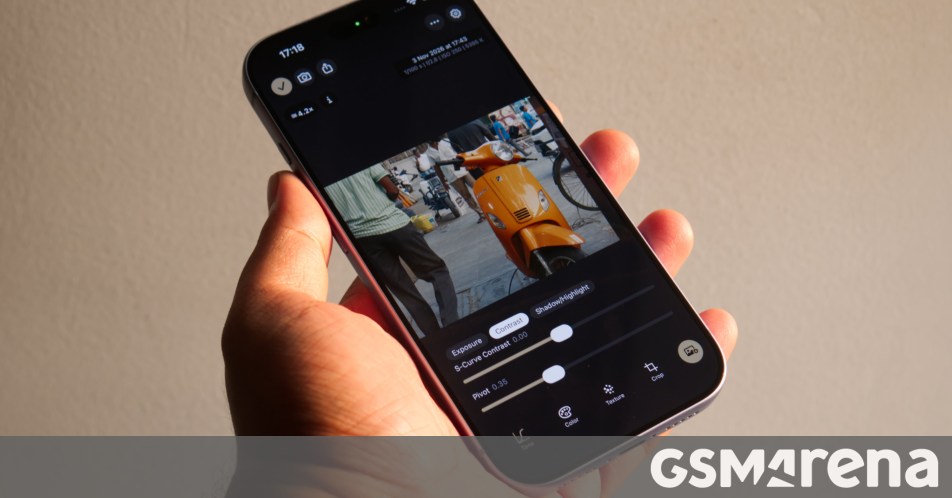
Last week, a corner of the Internet began to see a new app. The app in question was Chromagraph, a photography app for the iPhone, and one with some serious credentials to back it up.
The app was first brought to people’s attention by one of the co-creators himself. Many of you would be familiar with Rian Johnson, but for those who aren’t, Johnson is the writer/director behind films like Star Wars: The Last Jedi, Looper, and most recently the Knives Out trilogy. Johnson tweeted how he wanted a good iPhone photography app that would bypass the iPhone’s default image processing and look and instead capture something that looked like the movies he was working on.
So I recently tapped my cinematographer @steveyedlin to make my ideal iPhone still camera app. It shoots RAW, bypassing the iPhone’s look processing and instead using the same image processing we use on our movies. https://t.co/makZzhFd2Q
— Rian Johnson (@rianjohnson) October 28, 2026
Johnson made this request to his friend, colleague, and cinematographer Steve Yedlin, who worked with him on all his films, and the two called their friend Eric Cameron to make the app. And so Chromagraph was born.
Chromagraph isn’t your typical iPhone camera app that captures the image using the phone’s imaging pipeline and then perhaps layers on a filter to get the desired look. The app captures raw image data and then processes it with its own pipeline and color science that Johnson and Yedlin used on their films. You can tune the output a bit, but the overall look is one that was predetermined for you, and one that the creators wanted.
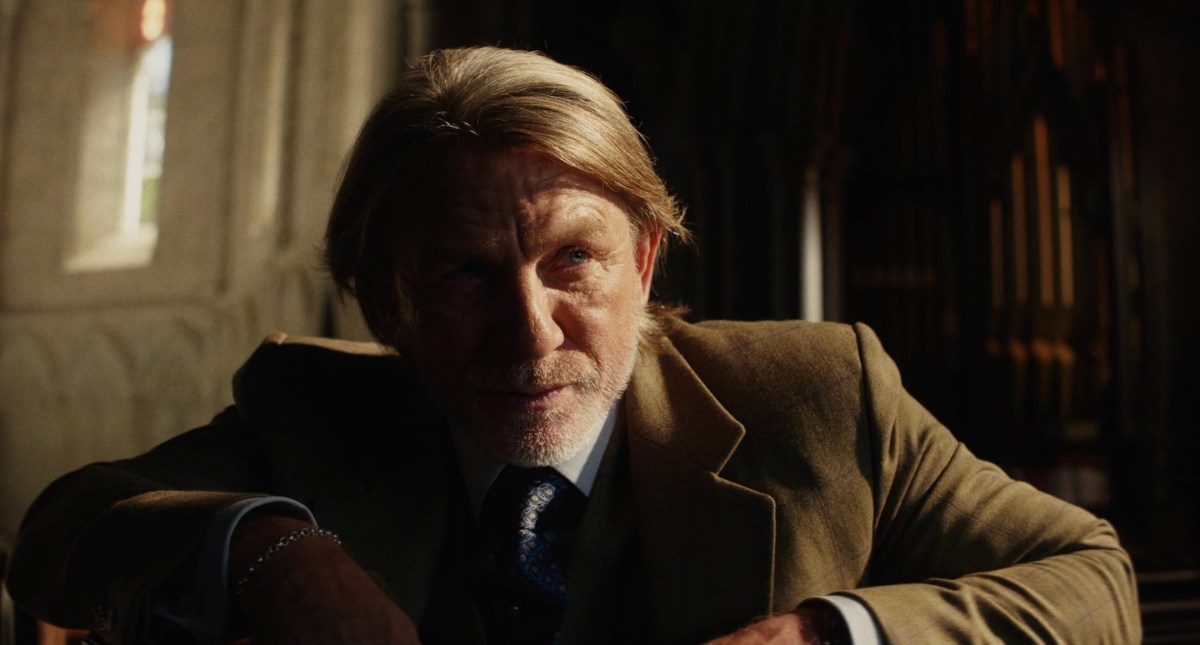
Stills from Rian Johnson’s latest film, ‘Wake Up Dead Man’
Testing the app on the iPhone 18 Pro, I noticed that the UI is quite basic with a black and gold color theme. Most of the options on the screen will be familiar to anyone who has used phone camera apps before; after all, this isn’t one of those “pro” camera apps that give you a billion options. It’s meant to really only do one thing, and all available options are in service of that.
Through the settings, you can change things like how the images are saved, the aspect ratio, the default lens, the export format and the compression quality. You can also adjust the default look of the images, but more on that later.
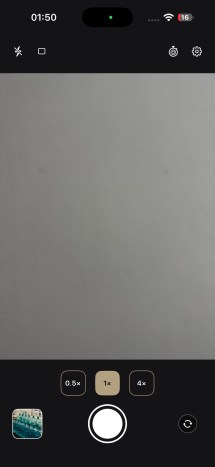
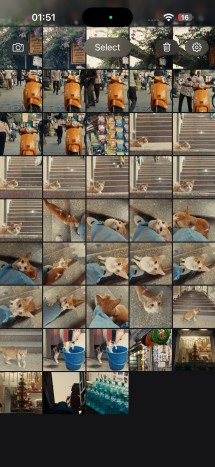
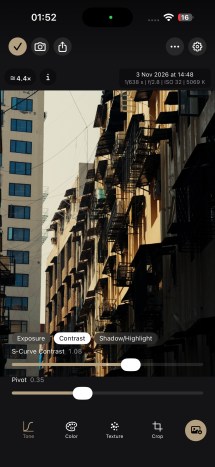
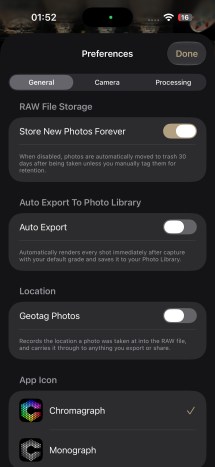
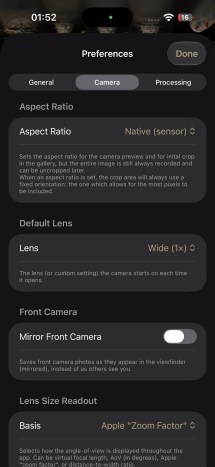
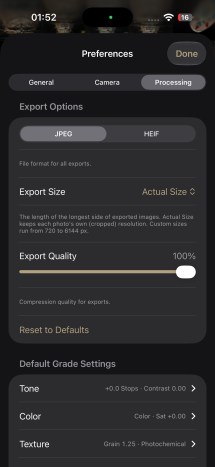
Chromagraph UI and Settings
The images that the app captures are mainly stored in the app as RAW files. You can also have the app automatically save a JPEG version, but I found it better to manually save only the images I want. When you open a captured image, you have the option to make basic adjustments including exposure, contrast, shadows and highlights, white balance, saturation, film grain, halation and crop. You can also set a crop factor as your default when shooting, and the viewfinder will change to reflect that. Of course, since it’s RAW, the crop isn’t saved, and you can always go back to the full sensor crop.
The settings that Chromagraph offers are more like condiments and not really meant to completely change the look of the image. If you’ve seen Johnson and Yedlin’s films, they all have this lush, warm tone with rich colors and soft halation over the highlights. They are not shot on film, but they are supposed to evoke that look. This is what Chromagraph is trying to recreate with the iPhone hardware.
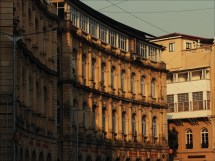
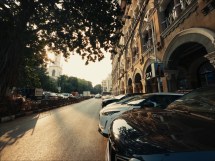
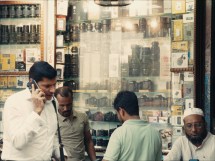
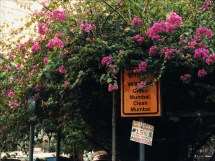
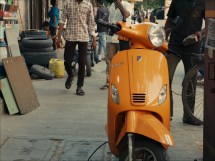
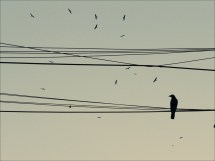
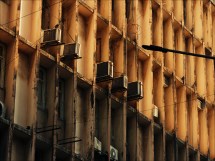


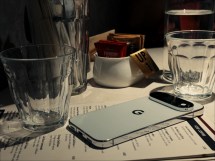
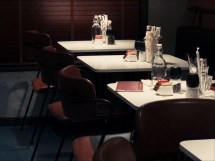
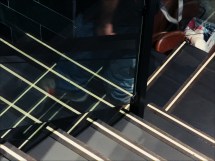
Chromagraph samples (shot on iPhone 18 Pro)
All images shot from this app by default have the same warm tones with a beautiful golden undertone. There’s no nonsense here about preserving highlights or blowing up shadows to score some imaginary internet points. There is a soft bloom around high-contrast edges. The details are what the sensor and lens capture without artificial sharpness. There is noise, some natural, the rest tastefully added by the app. It works on emotions with conscious flaws rather than chasing technical perfection.
The results can be impressive, if situation. Chromagraph absolutely shines on sunny days and high contrast scenes. If there is a little natural light, the app will churn out print-worthy stills. The default tuning is not very forgiving, so it either works really well or doesn’t work at all, depending on the scene. Many times, if the lighting still helps how the app works, you can still get great results with a little tuning afterwards. You can also just change the default parameters a bit so that the app always captures the images like this.
However, it is very easy to reach the limit of the app. Under indoor artificial lighting, especially of the fluorescent type, the results of standard tuning can be quite unusual and borderline unpleasant. It’s up to you then to apply your own sensitivities and deliberately tune for cooler colors so that the app’s default warm hues don’t clash with the actual lighting.
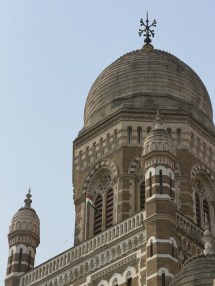
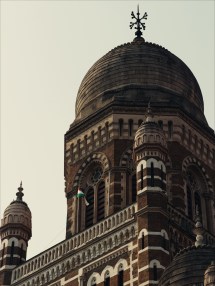

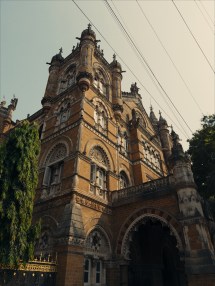

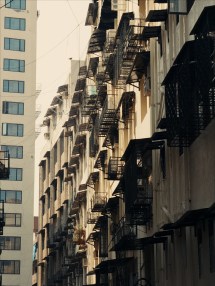
iPhone stock vs Chromagraph look
The default color tuning is understated and a bit undersaturated. This means you won’t get vivid, punchy colors for things like food and clothing unless you really move the saturation slider in the settings. As such, it’s probably best if you avoid shooting those, unless you prefer things to look that way.
Image aside, the app itself can be a bit annoying at times. Opening a captured image is a quick and easy process, but returning to the viewfinder requires fumbling with the small camera button on top. The app also can’t remember which camera you used last, and every time you open the gallery it goes back to the main camera, or whichever one you set as default in the settings. Finally, the viewfinder also took a while to load sometimes, even on the latest iPhone 18 Pro, and there were times it wouldn’t load at all.
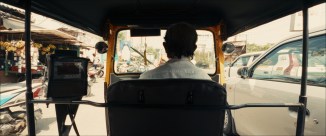
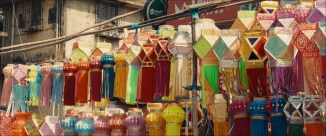




Chromagraph’s anamorphic 2.39:1 aspect ratio
All this makes Chromagraph extremely situational. It sometimes feels clunky to use, and the results don’t always work for every theme. However, it was also the most fun I’ve had shooting with a phone in a while. Sometimes, working within the strict limitations of a piece of hardware or software is exactly what you need to get your creative juices flowing and push yourself to do better. I’ve also seen that the app has been getting regular updates since Rian Johnson first tweeted about it, so it’s possible that some of the issues mentioned here will be fixed by the time you read this.
Is this the best or only iPhone camera app you should have? No, far away, actually. There are some great camera apps out there for the iPhone that do the whole zero-processing thing, including Halide and Mood, where you can bypass the phone’s aggressive default processing to get clean RAWs that you can edit to your liking. Chromagraph is built to achieve a specific look, and if you’re into it, it’s absolutely worth checking out.