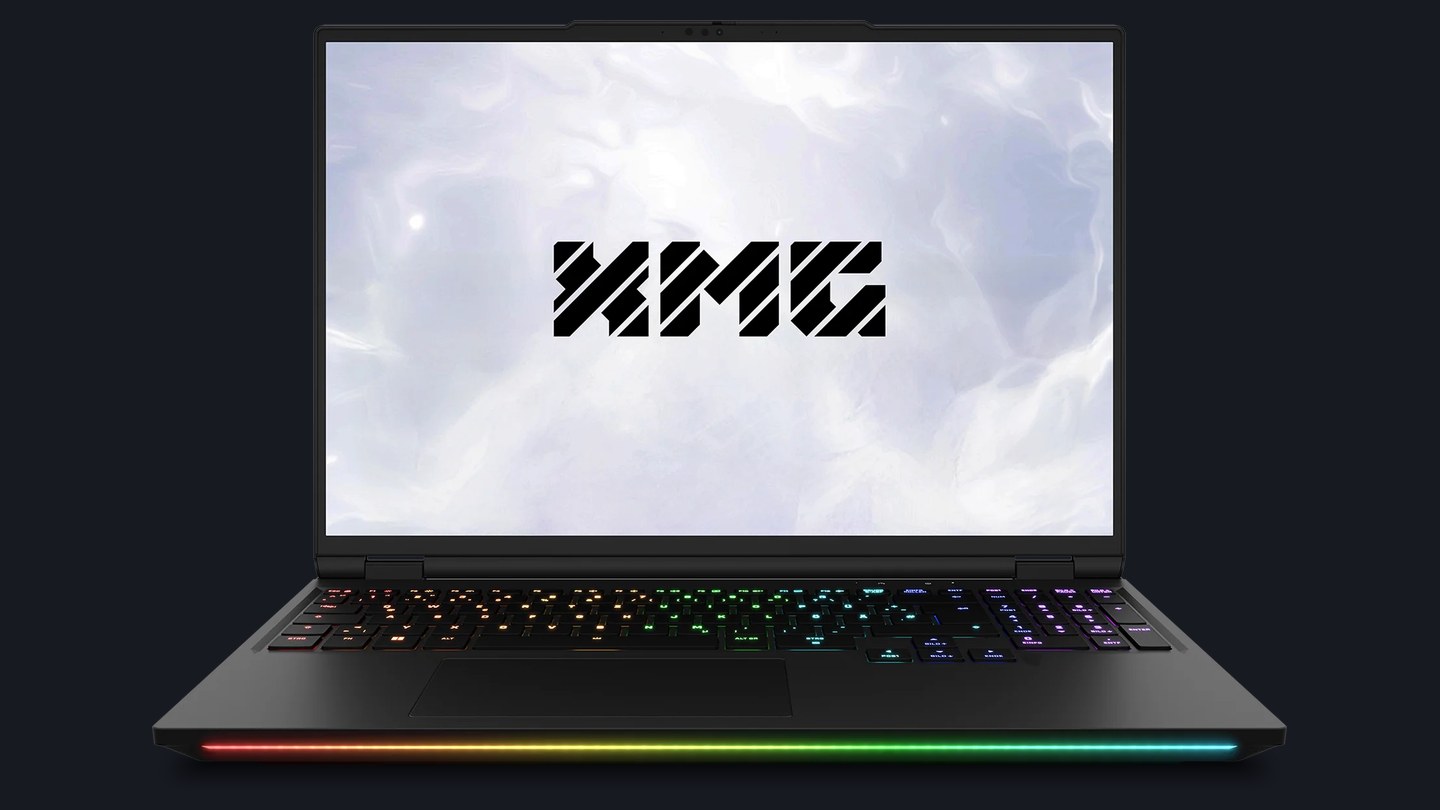
Most gaming laptops struggle with heat with larger fans. The XMG Neo 16 (M26) fights it with plumbing. XMG’s flagship 16-inch machine docks with an external liquid cooler, the XMG OASIS, and the dock changes what the hardware inside is allowed to do: an Intel Core Ultra 9 290HX Plus and up to an NVIDIA GeForce RTX 5090 laptop GPU with 24 GB of GDDR7, kept at power levels its air cooler does not configure.
On air alone, the Neo 16 holds 240 watts combined across CPU and GPU. Plug in the OASIS and the ceiling rises to 300 watts, with less noise at full load. The laptop sells from €3,399 in XMG’s own store, in stock, with increasing configurations.
Price: €3,399 (standard configuration, incl. VAT)
Where to buy: bestware
The water loop speaks
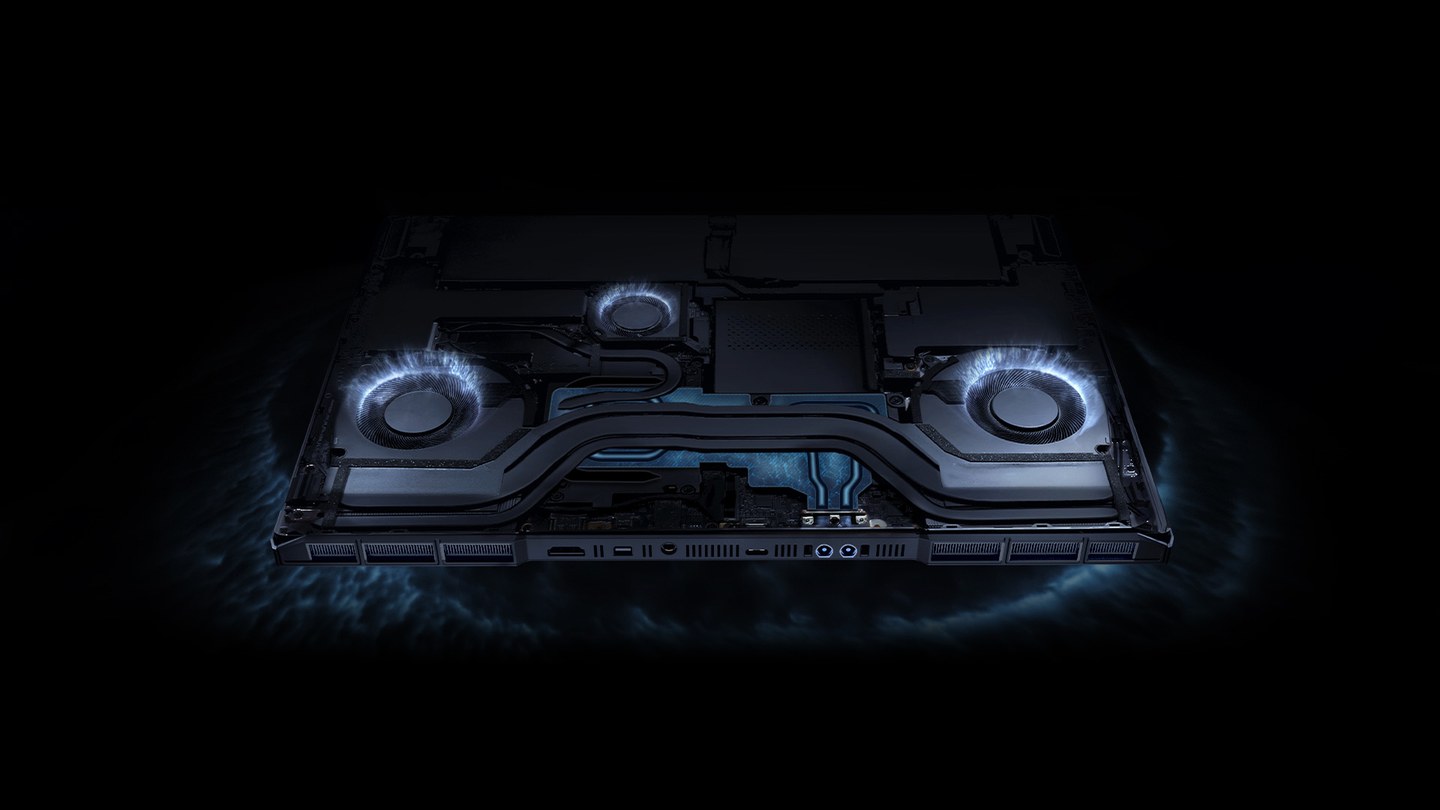
The OASIS is a separate box that lives on the desk: a pump, a radiator in the 120 mm class and a fan. It circulates distilled water through a cooling channel built into the laptop’s thermal module, draws heat from the chassis and dumps it through the radiator. Self-sealing connectors keep the loop closed when you power off, and the unit draws power through the laptop’s adapter, adding a cable path instead of a second brick.
In XMG testing at the top configuration, a combined CPU and GPU stress load keeps the GPU at around 173 watts, while the CPU power rises from 65 to 110 watts, and the GPU temperature drops from 81 °C to 71 °C. A CPU-only Cinebench R23 run managed 199 watts on water versus 159 watts on air, good for about 13 percent on the score. At maximum load in the Steel Nomad benchmark, the noise drops from 52.4 to 47.4 decibels. These are the numbers of the manufacturer of the manufacturer’s bench, and they accurately describe the trade: the loop buys sustainable watches and quiet, and it costs a desk.
The OASIS Mk2 adds €199 when you select it in the laptop’s configurator, or €219 purchased on its own. The laptop never needs it. Each configuration runs at its full air-cooled spec with the loop unplugged, keeping the OASIS where it belongs, an enthusiast upgrade rather than a ransom.
There is already a 240-watt laptop on the air
Strip away the loop and the Neo 16 is still built to hold power. Two large main fans move the air, a third fan cools the memory, and the GPU sits on its own board, separate from the mainboard, a semi-modular layout carried over from the model it replaces. The RTX 5080 and RTX 5090 configurations ship with a 420-watt adapter, sized to cover the water-cooled ceiling, while 330 watts covers the laptop on the ceiling. The sustained 240-watt combined figure is the honest baseline, and it’s high for a 16-inch chassis. With the loop connected, the ceiling rises from 280 watts in last year’s model to 300.
Choose your panel carefully
Each Neo 16 is a 16-inch, 2560×1600 machine, but the three panels divide the lineup into three different laptops. The OLED runs at 240 Hz with 500 nits SDR brightness and up to 1000 nits HDR, full sRGB and DCI-P3 coverage, and variable refresh from 60 to 240 Hz through NVIDIA Optimus. It does not support G-SYNC. The mini-LED is the gamer panel: 300 Hz, 750 nits SDR, 1,000 local dimming zones that you can switch off for editing work, and NVIDIA G-SYNC with Advanced Optimus, validated by NVIDIA.
It costs the same as the OLED and €145 more than the IPS panel. The IPS option runs at 300 Hz and 500 nits, and XMG only sells it with the RTX 5070 Ti.
One proprietary detail runs with the mini-LED: these configurations currently require XMG’s own OEM NVIDIA driver, as the panel’s new G-SYNC hardware ID has not yet landed in NVIDIA’s public driver. It’s a small thing, and it’s exactly the kind of small thing that bites into owners three months in if no one mentions it beforehand.

A desktop replacement that admits it
The aluminum chassis measures 356.7 x 259.9 x 27.9 millimeters and weighs about 2.6 kilograms with the OLED fitted, 2.8 with the mini-LED, before the 420-watt adapter goes into the bag. No one commutes with this by choice. What buys the bulk is ports and headroom: Thunderbolt 4, HDMI 2.1, Mini DisplayPort 2.1, the power input and the OASIS connectors all sit on the rear edge, with three USB-A ports, a second USB-C, 2.5-Gigabit Ethernet, a full-size SD card reader and an audio jack along the sides. It drives four displays simultaneously.
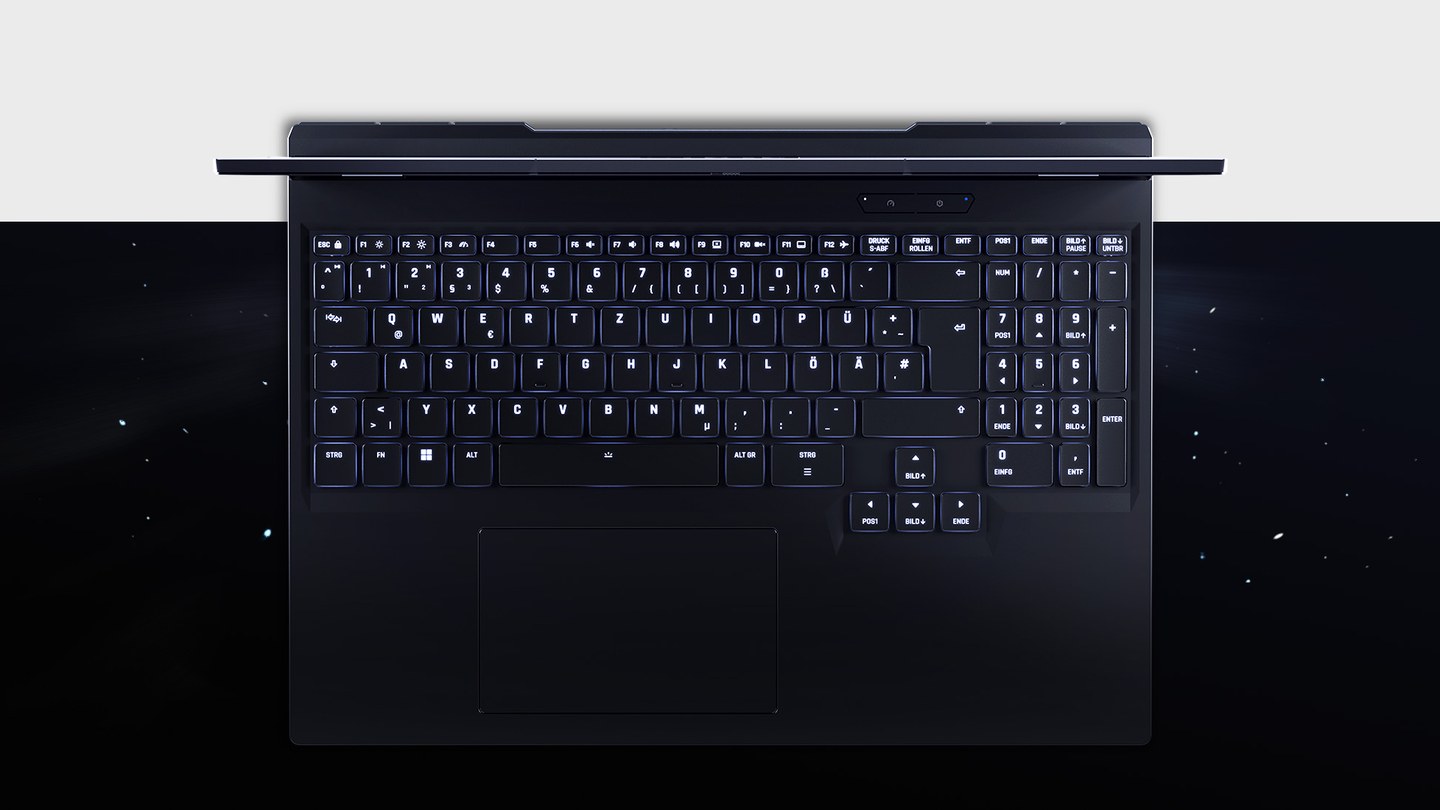
Inside, two M.2 slots take up to 16 TB of SSD storage with the primary drive on PCIe 5.0, and XMG’s stated maximum configuration runs on 128 GB of DDR5 memory. The 99.8 Wh battery is the largest a laptop can carry and still fly unrestricted, screw it for replacement, and three charging profiles let you stop the charge level to slow wear. The keyboard is per-key RGB with a full numeric pad and N-key rollover, and XMG’s Control Center exposes the tuning this buyer actually uses: performance profiles, manual power and fan limits, RAM tuning and CPU undervolting.
Who should buy the Neo 16?
The Neo 16 is a slim machine, and it knows it. If your gaming laptop lives on a desk, if you render or compile between sessions, and if you want sustainable clocks with lower noise than an air-cooled 16-inch laptop, the water loop is a real answer rather than a gimmick: 300 watts sustainable, 10 degrees from the GPU, about 5 decibels from the fans. When the laptop travels, the loop stays at home, and what you bought instead is a heavy, expensive air-cooled machine, a good one, at a price that emphasizes bigger brands with wider service networks.
Price: €3,399 (standard configuration, incl. VAT)
Where to buy: bestware
The border is geographical, and it is clearly stated: XMG sells directly from Leipzig, collected in Germany, through its own store, and there is no US retail or Amazon route at any price. For a European enthusiast with a permanent desk, the Neo 16 is the most interesting gaming laptop of this cycle. For everyone else, it’s the one that got away.
Love our content?
Check in for our newsletter today.
No ads, no spam, just links to our latest articles!