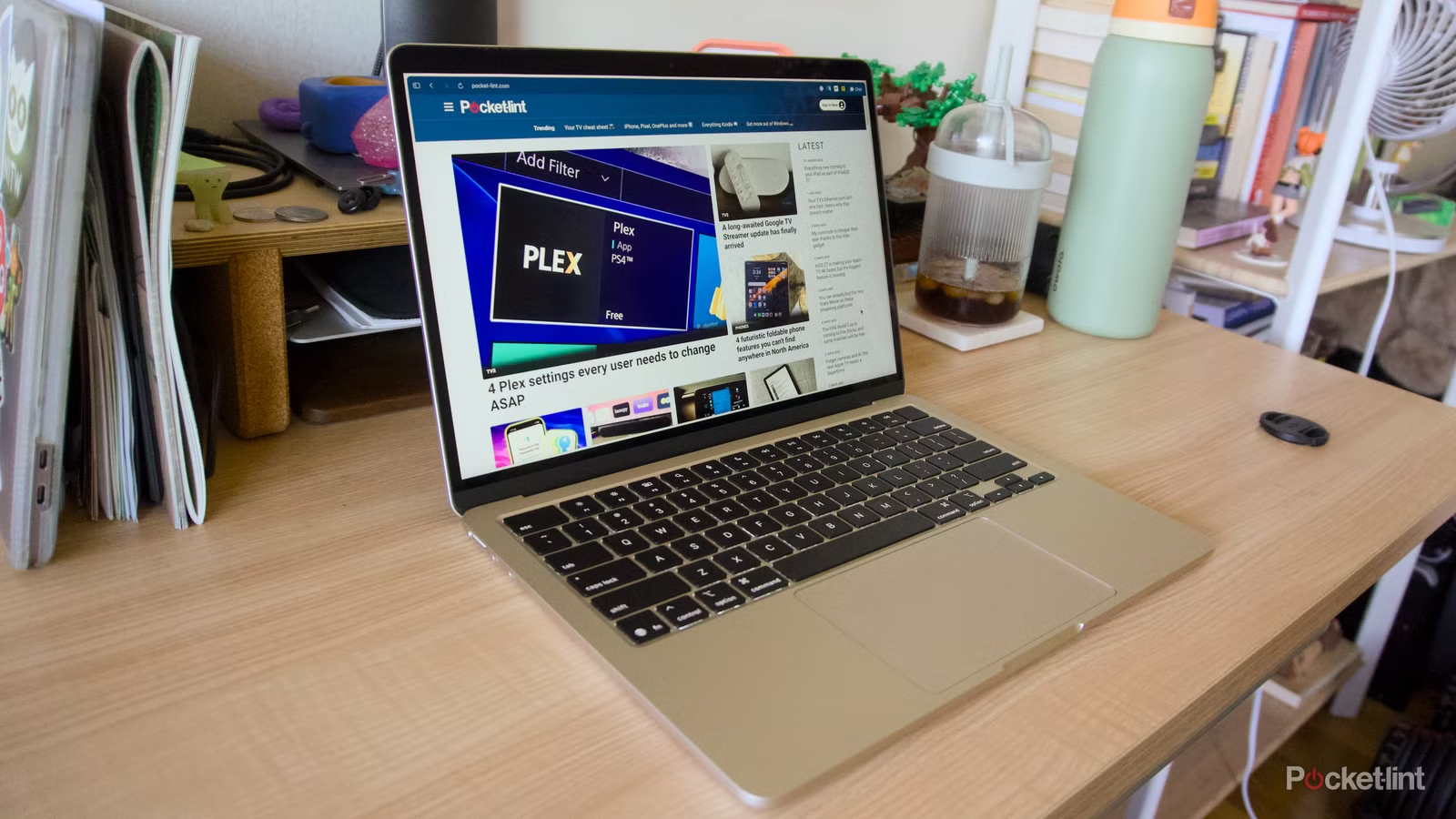
After years of waiting, Apple finally released its first touchscreen laptop on November 6, 2026 with its latest MacBook Pro model. Former Apple CEO Steve Jobs was notoriously against touchscreen laptops, but the company has not been afraid to go outside its typical ecosystem with several first-of-its-kind products in recent years. It was hard to imagine Apple creating a budget-friendly MacBook like the Neo, but here we are. We may never have expected a foldable iPhone either, but Apple just released its own earlier this fall.
The new MacBook Pro comes with a hefty price tag that currently starts at $2,899, almost $1,000 more than its previous model. But with the hype around, people might be willing to pay that amount. Now, this latest release raises the question: will we see future touchscreen MacBooks, or was this just a one-off? Regardless, going down a touchscreen MacBook Air route might not be the ideal direction for the company.
Why Apple Shouldn’t Push a Touchscreen MacBook Air
It could significantly affect future Air Model sales
Whether it was Apple’s intention or not, the MacBook Air has become the lighter and, more importantly, more affordable version of the MacBook Pro, without sacrificing much performance. Earlier in March 2026, the latest MacBook Air was released, with the Apple M5 chip and a starting price of $1,299, $700 less than the last M6 MacBook Pro non-touchscreen model.
Although it doesn’t have the latest chip, this 2026 Air laptop can handle a decent amount of heavy video editing, AI production and various other multitasking duties. Apart from daily tasks involving constant work with large files and processing, or PC gaming, the Air can easily be a daily driver laptop at home, at school or in the office. There is also the fact that it is light and built for transport, with a robust aluminum frame.
Creating a MacBook Air model with a touchscreen will likely increase the price of the laptop by at least $700, just like its Pro counterpart. So, spending over $2,000 on a MacBook Air can defeat the purpose of buying one in the first place, especially when at that point you can probably buy a MacBook Pro model for about the same price, but get faster processing speed and more power.
Is a touchscreen MacBook Air worth the risk?
Durability concerns could become an issue

Considering the MacBook Air and its design to have a slimmer body than both Pro and Neo models, it will be more vulnerable to damage than those laptops. And adding a touchscreen creates an even bigger concern.
The MacBook Airs are also designed to stay cool despite their fanless design. Introducing an OLED touchscreen would raise concerns about internal heat. As of now, Apple has addressed this same concern on the touchscreen Pro models by redesigning the thermal system, according to the company.
We will have to wait and see if this new system holds up when the device is pushed to its limits. Still, Apple would really have to prioritize this with a hypothetical touchscreen Air because it’s lighter and often has less thermal hardware than the Pro. So we come back to the point: If the company had to redesign the Air’s thermal system, would that compensate for the lightweight design and competitiveness that the laptops are known for?
It could be a potential route where Apple pushes touchscreen MacBook Air laptops
It could involve the Neo models

I could see a scenario where Apple makes a further push for touchscreen Air and Pro models by upgrading the Neo. Having touchscreen laptops will increase prices compared to previous MacBook models, and prices were already rising due to supply costs and other tech market factors. But if that’s the case, Apple could bring some features from older Air and Pro models to future Neo generations.
The MacBook Neo currently uses the A18 Pro chip, the same chip as iPhones. However, it wouldn’t hurt if Apple implemented older M-chip models in future generations; so, it could handle more processing and use more Apple software features without increasing costs too much. Doing so would make the Neo a budget-friendly laptop, still potentially under $1,000, while Apple could continue to push touchscreen technology in both the Air and Pro models.
It remains to be seen if Apple will actually go through with a touchscreen MacBook Air. But now the company should not push for one in March 2027 or even in 2028. Because if it rushes into high-end touchscreen MacBook models, it may compromise the value of the MacBook Air. There are already many different types of touchscreen devices that Apple produces, including the iPad, iPhone, and now the MacBook Pro. The latest iPad Pros already compete with MacBook Airs in performance, and creating a touchscreen Air could further blur the lines. So if Apple wants to push further into the touchscreen laptop space, it’s in no rush.