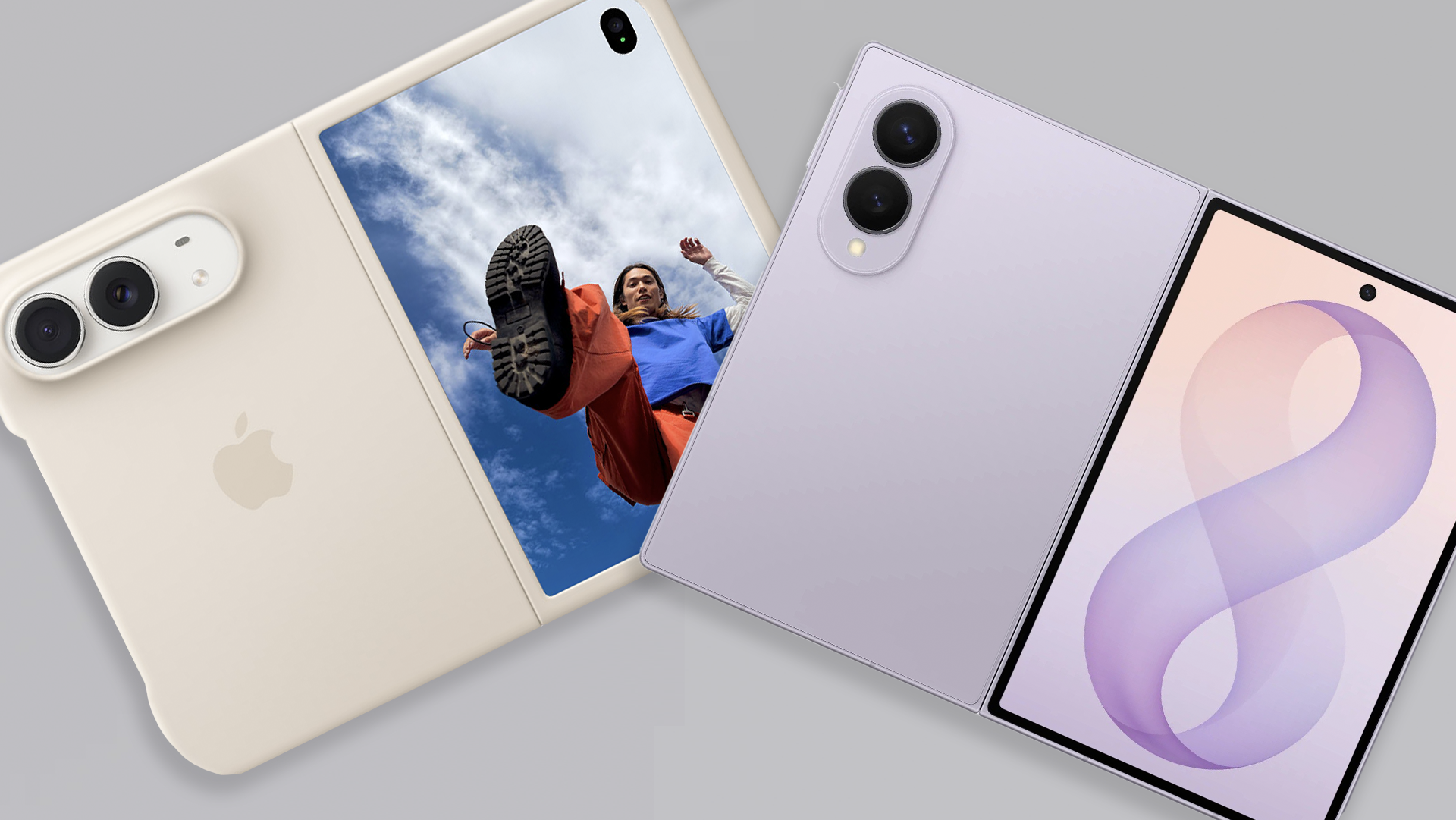
Apple’s mega-keynote this week — the first for the company’s new CEO, John Ternus — saw the Cupertino company unveil its first foldable iPhone duo.
As someone who has seen and tested the majority of the best folding phones ever made in the last seven-or-so years, I have to say I was even more impressed with Apple’s first outing than I expected.
I use the Samsung Galaxy Z Fold 8 every day, by choice, because I really like the passport-sized foldable and everything it offers – even the wider than average format has made other phones feel too big and narrow for me now.
This “pass” scale is exactly what the iPhone Duo also opts for, as both it and the Samsung have a 5.4-inch external and 7.6-inch internal foldable display. They are very similar, therefore, but by no means the same.
Apple’s first foray into this space, however, highlighted some particularly stand-out features for me – and also left some lingering questions – which are key points I wish the wider Android market would take note of to further improve in future generations.
1. Titanium and ceramics
Look up
One of the major problems that foldables face is inherent in their designs: the folding part of the display has to sit on a hinge that “dips” a marginal amount and, further emphasizing that it is the bending point, leaves a visible “creep” in the center of the display.
Now, no flip phone has completely countered this issue, but there are several positive steps to mitigate it. The current best is the Galaxy Z Fold 8, which uses a titanium plate for rigidity – except Samsung’s ‘Flex Titanium’ solution is etched so it can fold, taking advantage of the full display.
Outside the UK and US, there’s the Oppo Find N6, which arguably has an even better solution – microscopic 3D-printed relief provided per phone to compensate for the dip between hinge and display for the flattest solution.

(Image credit: Apple)
Now Apple has come up with a variety of solutions. It also uses AI to map the hinges per product, while support ribs are applied for added rigidity – and ceramic fibers that can bend are used to ensure strong antenna connectivity.
It also uses a titanium base plate for rigidity. But all these layers have been applied in a way that unfolds similar to a spine-bound book, giving flexibility but rigidity at the same time. All of which suggests that Apple’s first folding phone attempt is up there among the best.
2. Enter stylus support
(Image credit: Apple)
Controversially, Samsung ditched all stylus compatibility with its folding devices a few generations ago. There is no need for the additional layer required in the screen for such functionality.
However, Apple has declared its intention for the absolute opposite: its pencil (with USB-C) stylus will be compatible with the iPhone Duo – both on its external and internal displays.
While that’s not a feature I’d rush to use personally, I suspect there are many who would relish the opportunity – especially if you’re using the internal display. That’s a feature that bridges the gap between iPhone and iPad in this duo design.
Other Android manufacturers offer stylus compatibility in their foldable devices, with Honor’s Magic V6 being a prime example. Buy the brand’s Magic Pen and you’ll have the feature available now — no time to wait, according to Apple’s “later this year” feature.
3. Software Continuity
Look up
This might be the biggest of the lot though. Much as I love my Galaxy Z Fold 8’s dual-screen formats, switching between them can cause some hiccups with loaded apps.
Now, I’m not saying that iOS solves that for third-party apps. I suspect you’ll still have to reload your game app if you want to switch between displays mid-session, for example, unless a specific version is made for the iPhone Duo.

(Image credit: Apple)
That has already started, however, with Apple showing examples in Zoom, Slack, Netflix and more to take advantage of the larger display. I suspect that’s only the beginning, given Apple’s significant market share, so watch this space.
That said, Samsung’s One UI 9 setup on the Z Fold 8 is solid. The split-screen and multi-window functionality works well, it’s just greater fluidity with all apps and scale that would be at the top of my wish list.
4. There is an under-display camera

(Image credit: Apple)
The Galaxy Z Fold 8 has a selfie camera on the external screen and another on the internal folding screen. So does the iPhone Duo – just that its the last one you can’t see clearly all the time, because it’s a sub-display solution.
I suspect this will divide people when they see it in person, mind you, as sub-display options have been used for many years in various Android devices. If anything, they have largely ceased to be used – as the mottled “half-resolution” pattern across the camera area can be a bit distracting.
In the iPhone Duo, however, I can see the advantage in having that full and uninterrupted display. You really won’t notice it much when watching media, for example, and given the size of the punch hole on the front of the device, avoiding a second seems like a necessary solution.
5. But it’s not all perfect
For all the positives, however, there are some undeniable downsides and lingering questions surrounding Apple’s first foldable bar.
Hard rounded corners

(Image credit: Apple)
As you can see from the front-on silhouette of the device, the top and bottom right corners are heavily rounded. That can cause problems in some apps – similar to with Google’s Pixel phones – blocking visibility.
Camera position

(Image credit: Apple)
While I have highlighted the potential positives of the sub-display camera, it is not all golden – the off-center position and the lack of resolution information (I would therefore bet ‘low’) are points against this solution.
The rear cameras can also fall into a classic ‘problem’ that the Galaxy Z Fold 8 experiences: ‘Desk Wobble’. Placed flat on a surface and the rear protrusion means the phone spins when you’re not using it in your hand – and the Duo seems to present a similar potential problem.
eSIM does not fit all
When Apple announced that it was eSIM worldwide – a first for any smartphone device that I can remember – I squealed a little bit. It is futuristic, safe, and it allows more battery and component space inside.
But eSIM just doesn’t suit everyone at this stage. The progression from physical to virtual is happening at pace, but this bold move will be a jarring switch for others.
Asking price is huge

(Image credit: Apple)
This is pretty obvious: but the iPhone Duo is outrageously expensive. It looks amazing, it looks ‘worth it’ – however you want to measure that – but it’s a lot of money.
The £/$1,999 starting price for the 256GB model is significantly more than the Galaxy Z Fold 8’s £/$1,699 price. Both are a lot of money, no doubt, but Apple wants almost 18% more money for its duo in your pocket.