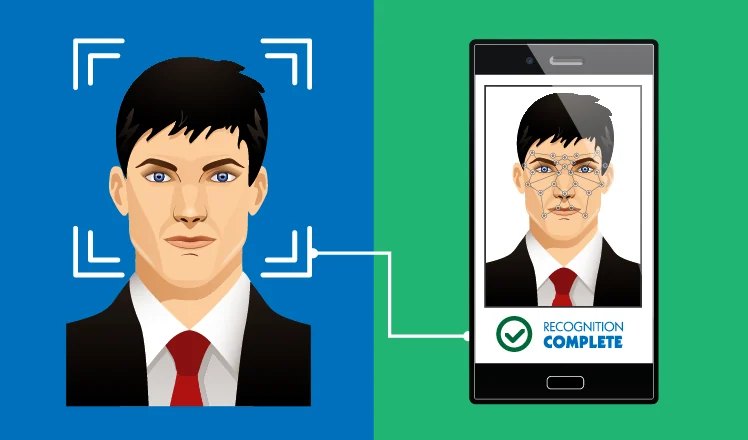
Editor’s Note: 3D biometrics is already a requirement for modern mobile technologies. Read on to learn why it is more powerful than 2D biometrics and feel free to contact ScienceSoft for professional application development services for demanding industries, including healthcare, insurance, and investment.
Since its appearance on the mobile market, biometrics is expected to introduce a higher level of security than that offered by passwords, patterns and PINs. iPhone and Sony fans have already appreciated the capabilities of this technology after the introduction of Touch ID – a momentary lock triggered by a fingerprint. But now, when many have joined the feature, mobile manufacturers claim that 2D biometrics is not secure enough and are moving towards 3D verification based on complex image analysis instead.
Why 2D biometrics is not enough
Different types of 2D biometric scanners on mobile devices target different parts of the body, from fingerprints and eyes (iris or retina) to an entire face. A few years ago, this type of technology sounded like something straight out of science fiction and was believed to guarantee top-notch security. However, as other technology sectors have also evolved, they have unintentionally paved the way for a hack for these sophisticated biometric locks.
Today’s photography offers high enough quality to capture all the details needed for scanners to analyze a sample and match it with the one stored on the mobile device. So whether it’s an iris or a finger, the pattern can be clearly captured: any face detection errors are all the more out of the question. A pattern can then be printed and with the help of some easily accessible materials (a transparent contact lens for an iris and glue/plaster for a fingerprint) become a biometric ‘lock-pick’.
Mobile 3D facial recognition pioneer
In the summer of 2017, Apple was surrounded by rumors about its Touch ID feature soon to be replaced by 3D facial recognition. Although the company’s representatives at first refused to comment on this issue, it was later confirmed that Apple is indeed doing serious research based on its patent app. The app is able to detect a user’s face, as well as their movements and skin tone, even when the device is in sleep mode. There is no telling if the research will be completed by the time of a new iPhone release or not, but the results should have a big impact on future Apple products anyway.
(Update 12/09/2017 : Now that we have an iPhone X release date, it’s clear that Apple made it in time.)
The dust from Apple’s announcement had not yet settled when Sony and its partner KeyLemon presented a demo of 3D facial authentication at the Mobile World Congress in Shanghai. KeyLemon spokesperson explains that their scanner creates a 3D depth map that also analyzes non-frontal facial parts, making it impossible to trick with a 2D photo. Unfortunately, for legal and business reasons, there’s a high chance that US users won’t see this feature on Sony phones – just like they can’t get their hands on fingerprint identification, literally.
Desktop 3D biometrics is already on the market
Using an attached camera with 3 lenses, Microsoft Windows Hello creates a 3D projection of the user’s face and can recognize it from about 0.5-4 feet away. The camera is compact, but still is fixed because it didn’t fit in the company’s Surface Laptop a few years ago. Needless to say, Microsoft saw no point in implementing 3D recognition on their phones (although their mobile app development team tried to create a 3D capture scanning app). Maybe now that Apple and Android device manufacturers are taking a step forward.
End note
It is not that 3D biometrics is absolutely secure. Three-dimensional printing is also technically possible, and it has already helped Michigan police create a fingerprint sample and unlock a murder victim’s phone. Still, 3D printing is definitely not that easily accessible, as long as 2D printing remains more ubiquitous and advanced, 3D biometric authentication will remain more secure.
As seen from this overview of RiskIQ’s mobile security report, mobile users are not fully aware of how close the danger of having a device hacked is for all of us. Nevertheless, judging by the attention that new authentication technologies receive, there is hope that people are not just for the gimmicks and look for more security measures from their deep understanding of existing security risks.