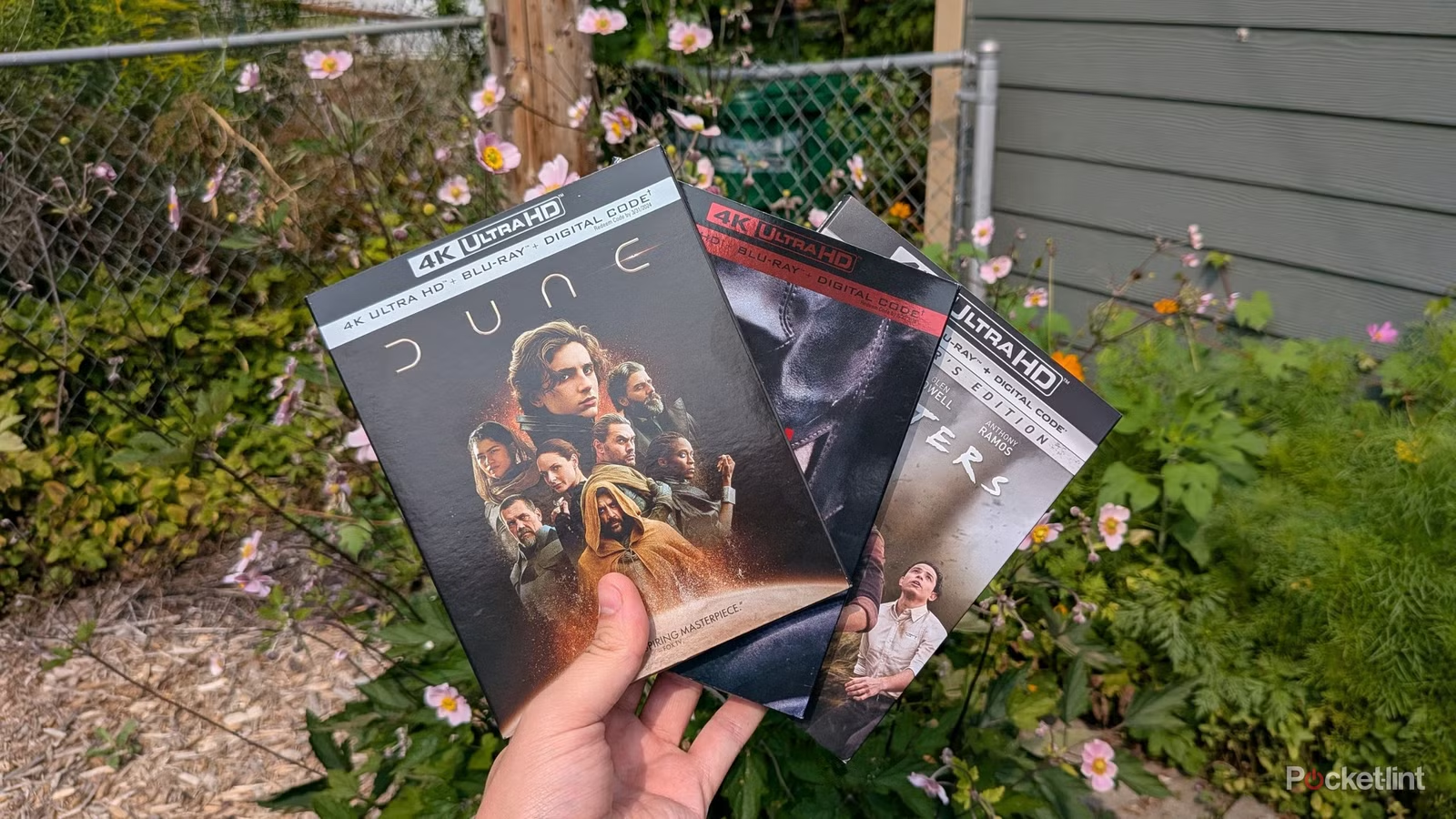
As streaming and subscription services continue to raise prices, consumers have pushed back with renewed interest physical media. And it’s not just the cost that’s becoming a problem. A lack of quality and current ownership has also spurred entertainment enthusiasts of all kinds to rethink how they engage with and retain their favorite stories.
It’s all too easy to stream a movie, buy an e-book from Amazon for your Kindleand download a video game from the PlayStation Store. Companies make it convenient to enjoy entertainment because it makes them a lot more money. Therefore, and I say this without hyperbole, buying physical media and actually enjoying it is itself an act of rebellion.
Digital copies do not exist forever
One of the biggest problems with digital media is that you don’t actually own the material or content, even if you buy it. Any streaming service you subscribe to allows temporary access to a library. The monthly fee you pay gets you access to a catalog. It does not guarantee what is in that catalog or any property whatsoever. So, when you pay for Netflix, the company gives you a means to stream titles and presents you with a list of titles. This list may change weekly or monthly; nothing is guaranteed, and you have none of it.
Also, when you borrow a digital ebook, you get a license to access the title, not the title itself. And when it comes to purchasing a digital copy, this title is only available to you through a specific platform. So you have to make sure that the platform always exists. Now, it’s unlikely that the PlayStation Store or Google Play Store will suddenly disappear, but it doesn’t mean that every purchase you make now won’t come with some extra costs or disadvantages later. And once you have access to these titles, you won’t often be able to lend them to someone. You may not resell or trade or exchange the title; it is accessible through a specific portal, so you must maintain access to it.
When you buy a physical Blu-ray, vinyl or book, it’s yours. You own it and can do whatever you want with it, without restrictions or guidelines. You can take it with you wherever you go, and you can access it without worrying about an internet connection or download speed or anything else. No one even needs to know what you are watching or reading.
Your physical books and discs will not change

By buying and maintaining physical media, you ensure that the stories remain as they were intended, told by the original authors or creatives, and not tampered with by any money-making corporate interests. Preserving the authenticity of stories, no matter how troubling or problematic or dated they may seem, is an act of rebellion. That’s because many companies want to change the past.
A new release of Pretty Little Liars has revealed how fake digital media is. Changes were made to the story as a way to update the text for a new generation of readers, replacing dated pop culture references with supposedly more familiar terms. The backlash was swift, claiming the changes were both ridiculous and disturbing. If changes could be made to update references, why couldn’t changes be made to remove parts a company didn’t like? Or that the government does not like?
Consider how automatic updates will arrive on your phone, tablet or other digital device. There is no reason to think that your digital stories won’t suddenly one day be changed, with sections changed or removed completely. It is not far-fetched to imagine that some documentaries or books could suddenly become unavailable, especially since books are regularly removed from libraries around the United States
You can also watch streaming services where several supposedly problematic episodes of sitcoms have been removed. Whether you agree or not, the fact that you don’t control the digital media you receive means you are powerless. Preserving stories in their original form, and allowing people to access and read them, and make judgments for themselves, is essential to storytelling and creative autonomy. Don’t let a company dictate how stories are presented.
Physical discs offer more detail and immersion

When it comes to Netflix, Disney+, and any other high-end streaming service, the best quality offered at the highest price still doesn’t come close to the quality of a physical disc. The goal of a streaming service is to get titles to you in the fastest, most convenient way possible. To do that, the quality has to be reduced. A movie file is simply too big for you to get over Wi-Fi and expect the fast clip streamers.
Even if your Smart TV is connected to the Internet via a LAN cable, the limits are still too great. A physical disc, be it Blu-ray or DVD, holds more information and therefore offers better quality. You will see more detail and enjoy a title that adheres more to a director’s vision. There is no buffer on a DVD. If a streaming service encounters a slow Wi-Fi connection, it won’t pause the title if it can help. Instead, it will just reduce the quality until the speed increases again.
Companies want consumers to trade quality for convenience. It is cheaper for them if viewers accept something of lower value and consumers are used to paying less for less. If you’re going to spend a bunch of money on a nice TV, you want to make sure you’re getting the best.
A digital future must be prevented

Perhaps the biggest red flag about a digital-only future came when PlayStation announced that it would eventually stop making physical versions of new video games. Instead, fans must “buy” a digital version of each new product. This is troubling for many reasons, not the least of which is that gamers can’t display their disc collection. Some people like cases and discs, they can look great at home!
Most worrying is the control that PlayStation will own and the money they will raise. A digital copy cannot be traded, loaned or resold. You may get a title, but it will basically be yours alone. Games cost a lot of money and there’s no reason a player shouldn’t be able to sell the game when they’re done playing, or trade it with someone else, or simply have a friend try it out.
Digital copies do not require mass production or packaging or shipping, saving Sony a lot of money. The company is simultaneously reducing its costs while increasing the cost to consumers, so players are buying something they don’t physically own. And there is no reason to think that this will not lead to more problems. Sony is the first to do this, and surely other companies will take note. Paperbacks are in serious danger; there is still a market for blu-rays, but who knows how long that will last?
Buy physical media as often as you can to show companies that there is still a demand. Maintain ownership and control of the titles you love. Don’t miss out on a digital media future.