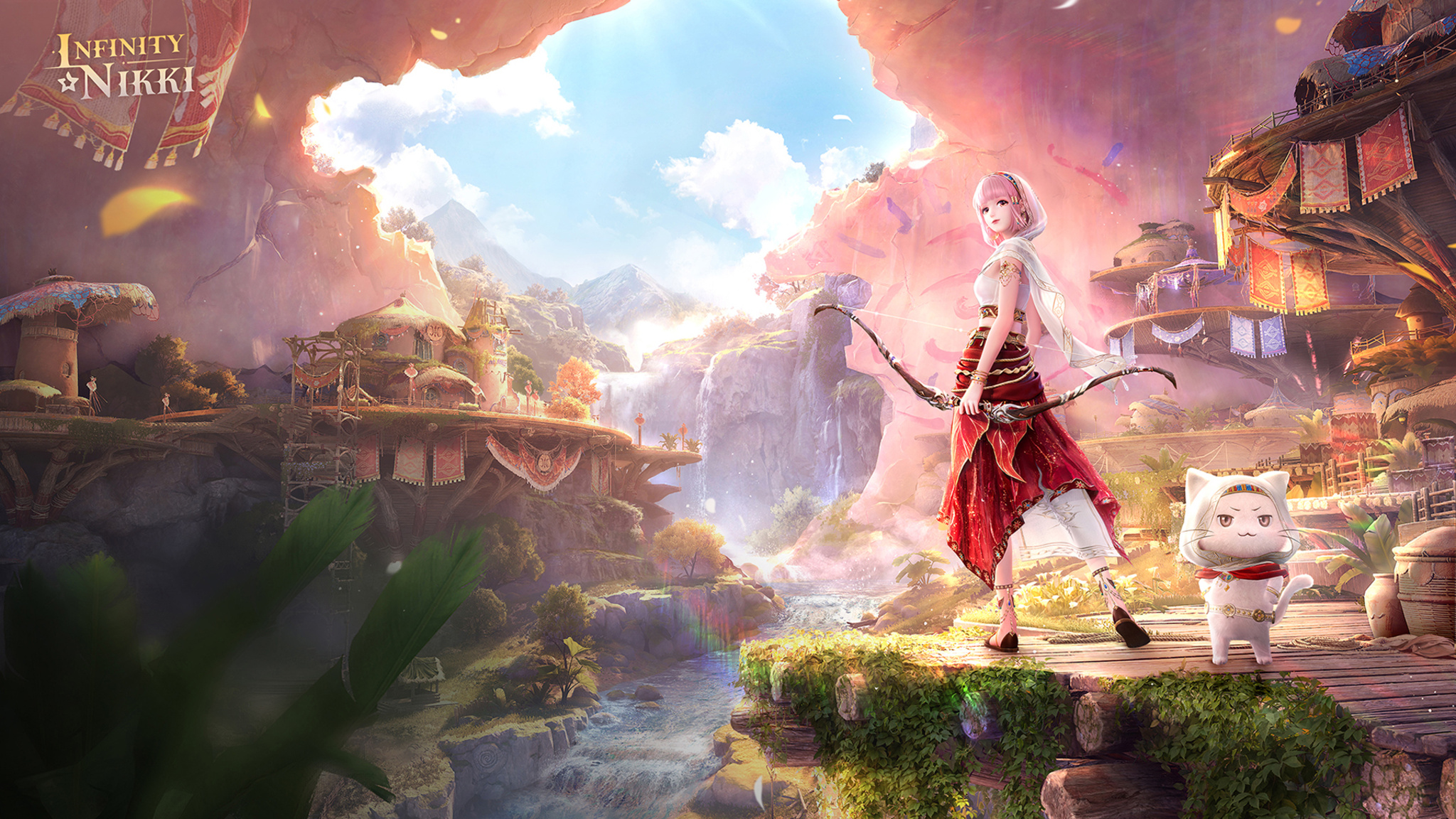
Infinity Nikki is a literal shining example of what video game graphics can be.
The fifth in a series of clothing titles from Infold Games, Infinity Nikki is also the first to embrace elements of RPG action-adventure. But instead of chasing down guns and fighting bad guys, this installment finds its wide-eyed heroine solving puzzles by collecting enchanted outfits found throughout a series of wondrous lands.
Infinity Nikki
- Available at: iPhone, iPad
- Based on: Shanghai
- Awards: Apple Design Award Winner for Visuals and Graphics (2025), App Store Awards Game of the Year Finalist (2025), App Store Editors’ Choice
Download Infinity Nikki from App Store >
The fashion-forward gameplay still remains, of course. Nikki’s dress sways and waves every step of the way, while capes flash and swirl in the wind. Different outfits are imbued with different abilities that allow players to guide Nikki – and her cat companion, Momo – through clever puzzles. And from picturesque cobblestone towns to distant mountains, every corner of the game’s Miraland – brought to life with state-of-the-art visuals – is overwhelmed with beautifully realized lighting and effects from advanced shadowing techniques such as Global Illumination. (Executive producer Kentaro Tominaga previously worked on several installments of the Legend of Zelda series.)
It is a wonderland of texture, light and animation – and the 2025 Apple Design Award winner for visuals and graphics. To find out more, we caught up with Douhu, Infinity Nikki’s Lead Gameplay System Designer for Outfits; Ade, lead programmer; and Dodie, art director.
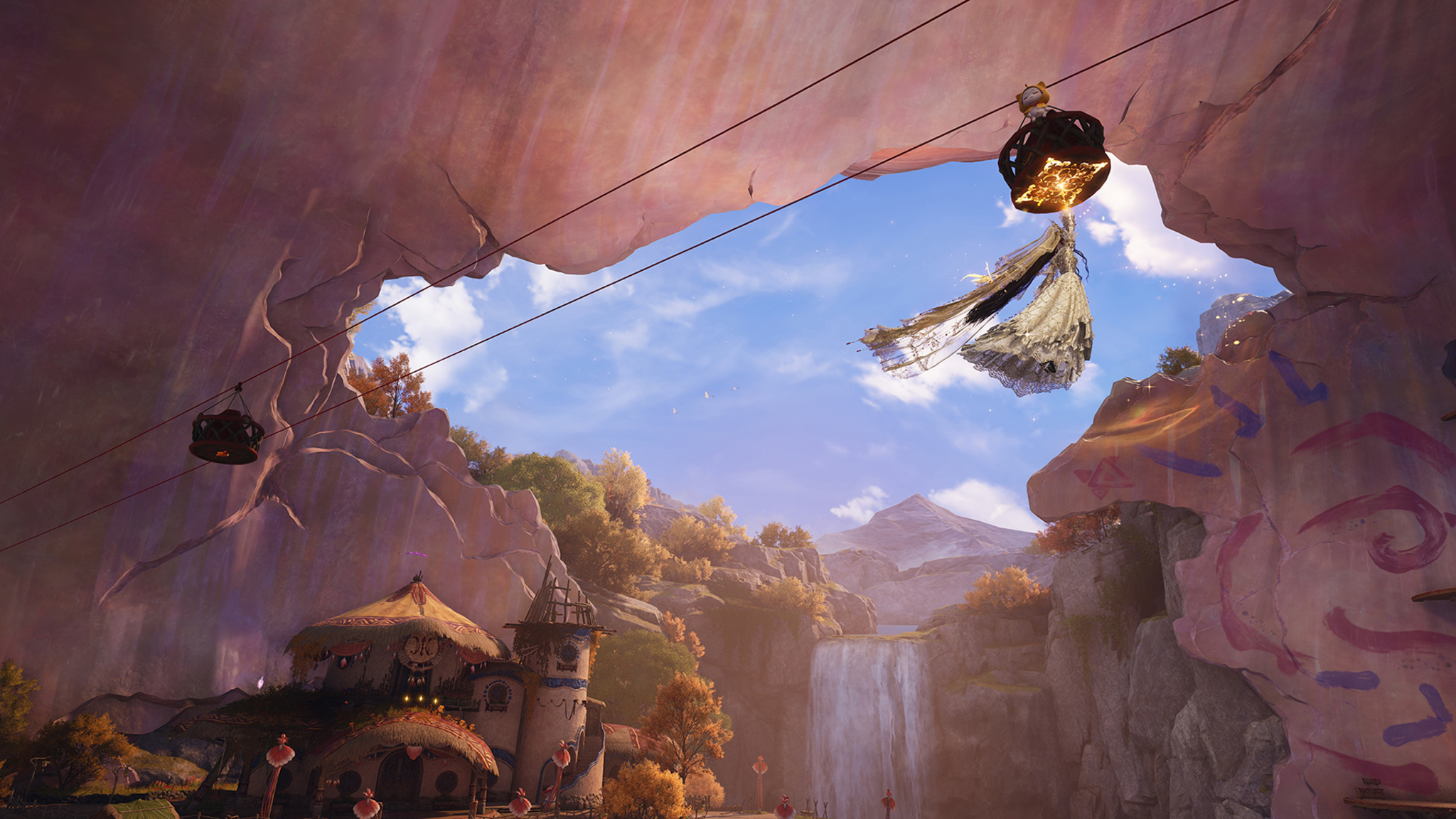
Why did you decide to make this fifth installment an open world RPG?
Douhu: When we started thinking about this six years ago, we already knew it was going to be an open-world game. So we asked ourselves: How do we bring Nikki into that space? And how do we differentiate it from other open-world games on the market?
To make these worlds as immersive as possible, we maintain all the details, all the time.
Douhu, lead gameplay system designer for outfits
This is the first Nikki game that includes action-adventure elements and light combat.
Douhu: Yes, but we knew that combat wasn’t part of the game’s core gameplay. The Nikki series has such a defined style. We thought a lot about how to maintain this.
How many people worked on the visuals for it?
Douhu: Oh, it’s a big team – about 800 people. It is a fun but complicated job. We have many visual pipelines all at once: cutscenes, the NPC ecosystem, lighting, performance. The complexity of production is so high.
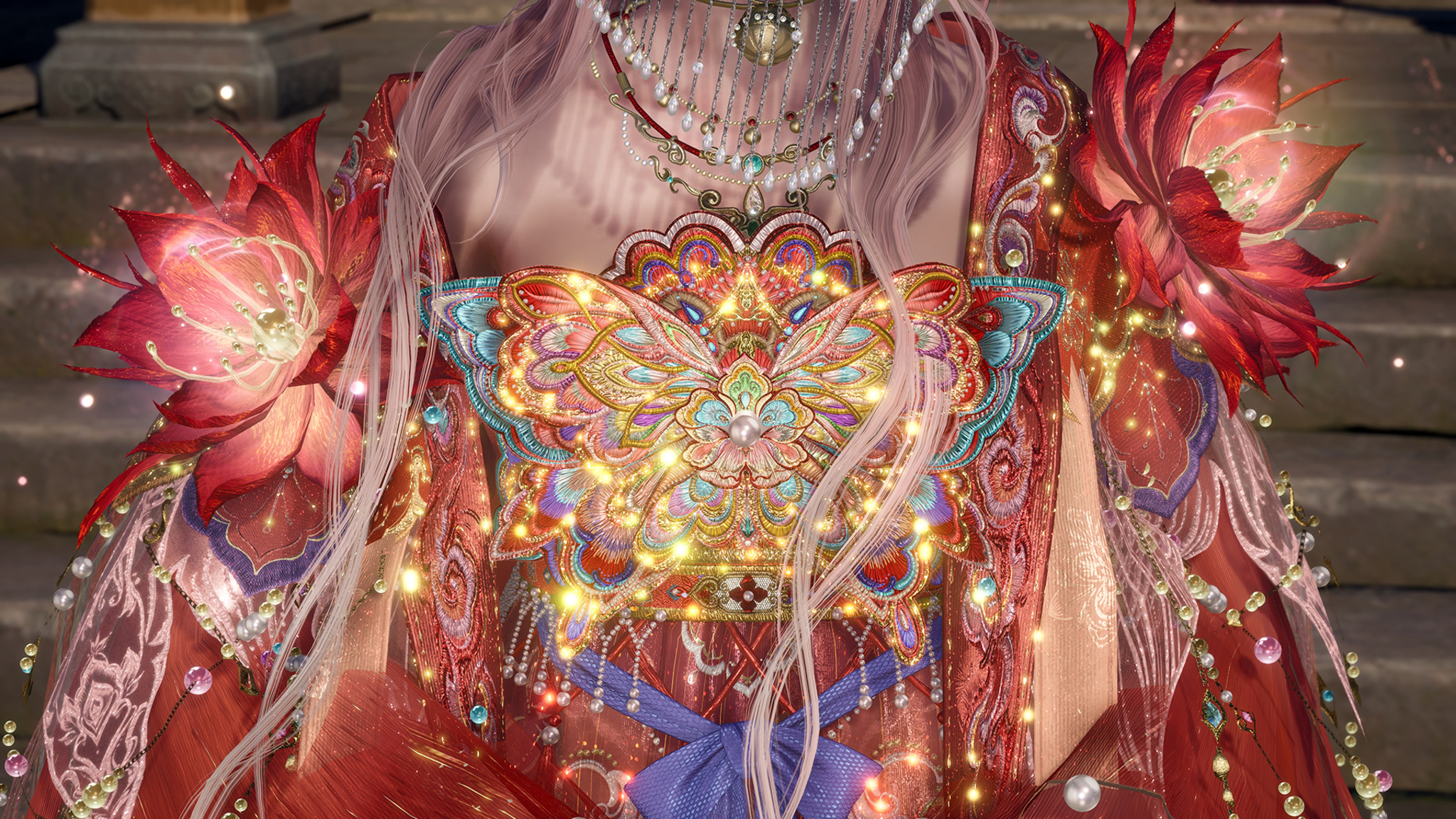
The payoff for this work seems to be everywhere: the game is full of fabrics, sparkles, environments and natural elements.
Douhu: And we think of all of them. For example, when Nikki goes up a flight of steps in a cutscene, we don’t want her to push her feet down. We want her to move easily and elegantly. All the sounds you hear are based on real-world sounds, although we added some imagination to them in post-production editing. To make these worlds as immersive as possible, we maintain all the details, all the time.
Nikki’s double jump is particularly elegant; it came in almost like a glider for the softest of landings.
Douhu: That’s because we want players to have plenty of time to experience the world. Our core game is based on jumping, but it is not a very fast movement. It is slow, like a micro-response for the specific swimming motion. And that’s because we want the players to breathe and appreciate all the details of Miraland.
How is day 1 on the visuals for something like this?
Douhu: As this is our fifth game with Nikki, we’ve already fleshed out the character and philosophy, so the first few days are more about sketching out the new world and its various maps.
Ade: To begin with, we reconstruct the structure and physical performance of the tissues in the engine, mainly based on reality. Then we make extreme evolutions in the fabrics. We have so many fabric categories in our library, and many of them are heritage from previous titles. But we make all kinds of adjustments, and add all kinds of effects to make the game feel like it’s beyond reality.
Douhu: We have a large closet in our office! But we want to emphasize that we do not only export real fabrics or try to recreate reality. We add layers of fantasy. We add intricate embroidery, more patterns and shiny special effects to show a funnier, fanciful version of reality. That’s why Nikki’s outfits look more gorgeous than in real life. Hopefully!
Can you pick an element in the game and share a bit about how it was brought to life?
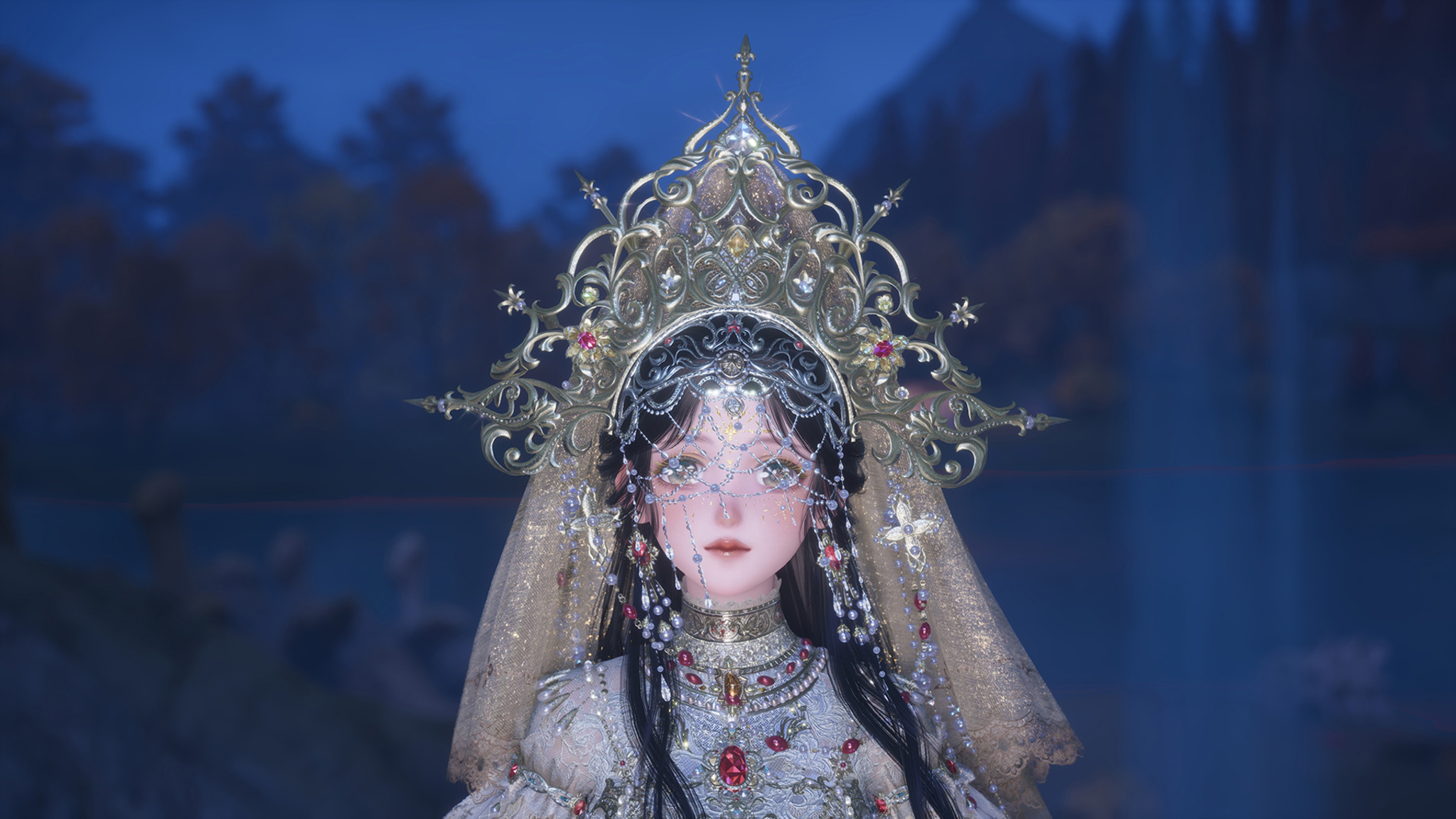
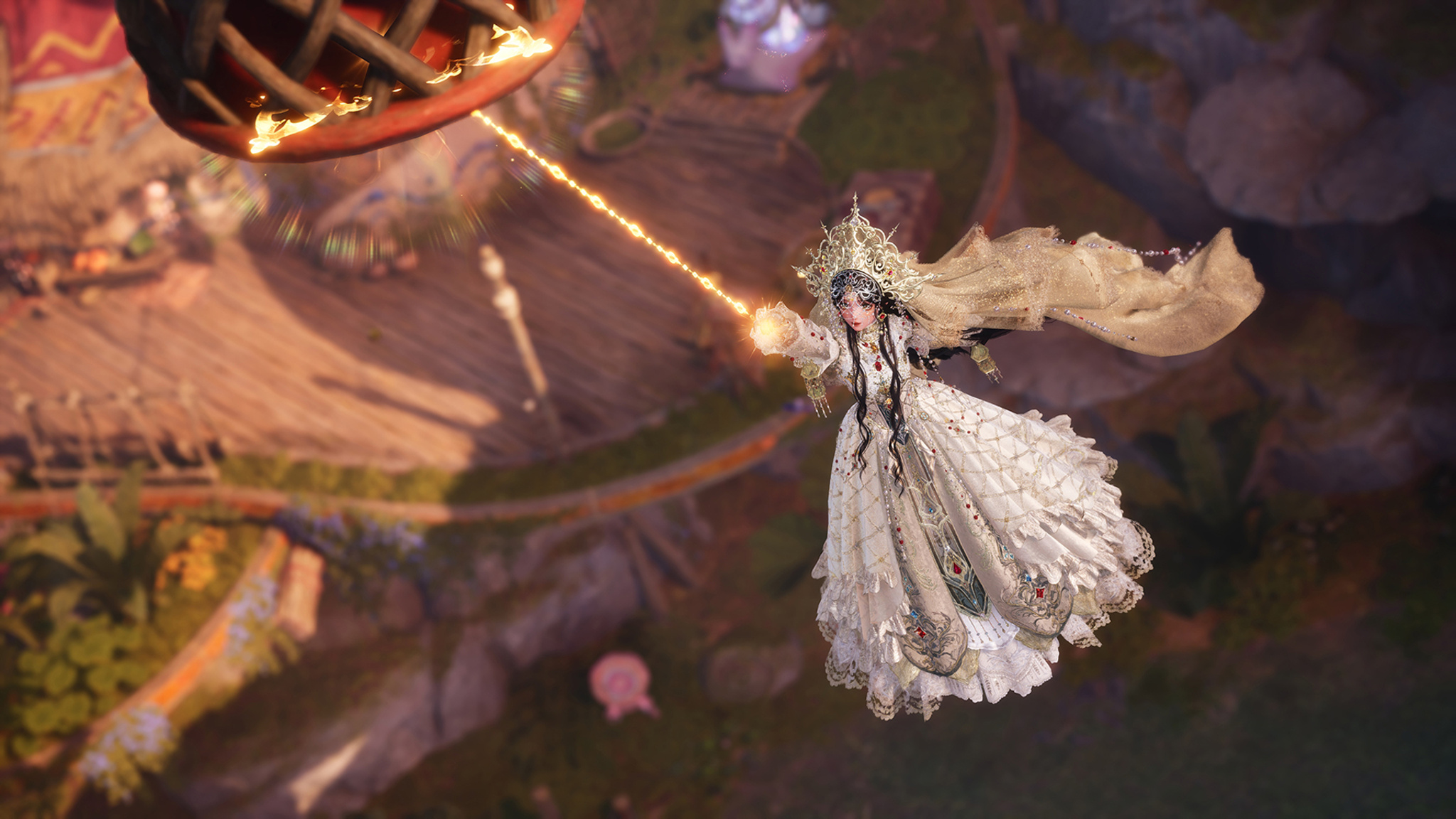
Dodie: Color has always been central to our art creation, so I will share two examples of version 2.0: the five-star outfit Behind Prayers and the location called Snail Ranch.
The core design concept of Behind Prayers is “an imprisoned divine virgin”, so it means a maximum design approach. The divine maiden yearns for freedom, but she is draped in heavy layers of ornate garments and precious stones. These represent both holy glory and the weight of restraint: dazzling and radiant, but undeniably burdensome.
We chose gold as the primary color to express brightness and brilliance, and we introduced touches of green to break potential visual monotony. We further embellished the outfit with a rich palette of multi-colored gemstones and enhanced it with prismatic glow effects, allowing it to shine alive – even at night.
Snail Ranch, meanwhile, is the player’s first destination in Itzaland – the place where Nikki first encounters the Shroomlings and the snails.
The lighting in this area is deliberately bright and inviting. Sunlight filters through enormous leaves, creating a warm and relaxing atmosphere, while even small puddles along the way reflect the deep blue of the sky. The scene takes on a fairy tale quality, inviting players to believe and lose themselves in the land.
Talk about your approach to creating these fabrics and outfits.
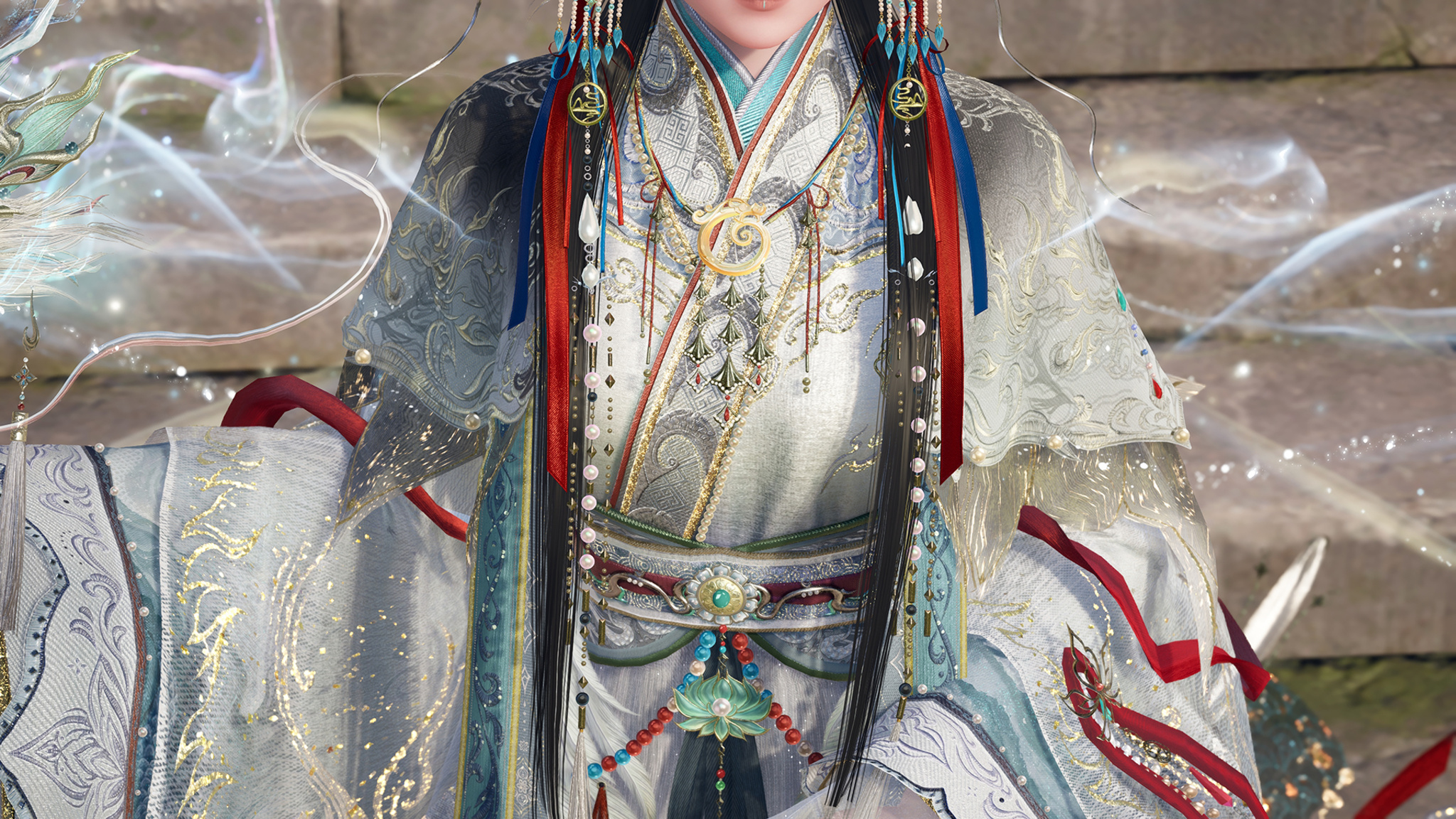
Ade: Infinity Nikki introduces a revolutionary material system. At its core is a newly engineered fabric algorithm that preserves the benefits of four-layer UV blend textures while requiring only minimal parameter adjustments to accurately simulate a wide range of materials, including the natural coarseness of cotton and linen, the smooth sheen of silk and satin, as well as the delicate tactile velvety qualities of various flannel qualities. The system also offers deep support for custom reflections and various glow reactions, making it easy to create distinctive highlights and dreamy glows, such as the unique interplay of gauze and silk in the Fairytale Swan outfit.
Visual richness and Infinity Nikki goes far beyond fabric. We developed a specialized jewelry material system with advanced algorithms to simulate the brilliance of gemstones, including complex refraction, 3S light transmission, and highly variable specular highlights, as seen in the pearls and diamonds of the Fairytale Swan outfit. Dynamic presentation also broke through previous limitations. To support animated patterns in high-end outfits like Threads of Reunion, the team developed an innovative solution to reduce Unreal Engine 5’s interference from motornative motion blur on UV animations. This enables crisp and vivid celestial motion effects: three independent tracks allow full customization of planetary shapes, angular velocities and trajectories, layered with flowing asteroid belts and moon phase changes.
And how do you approach physical simulation?
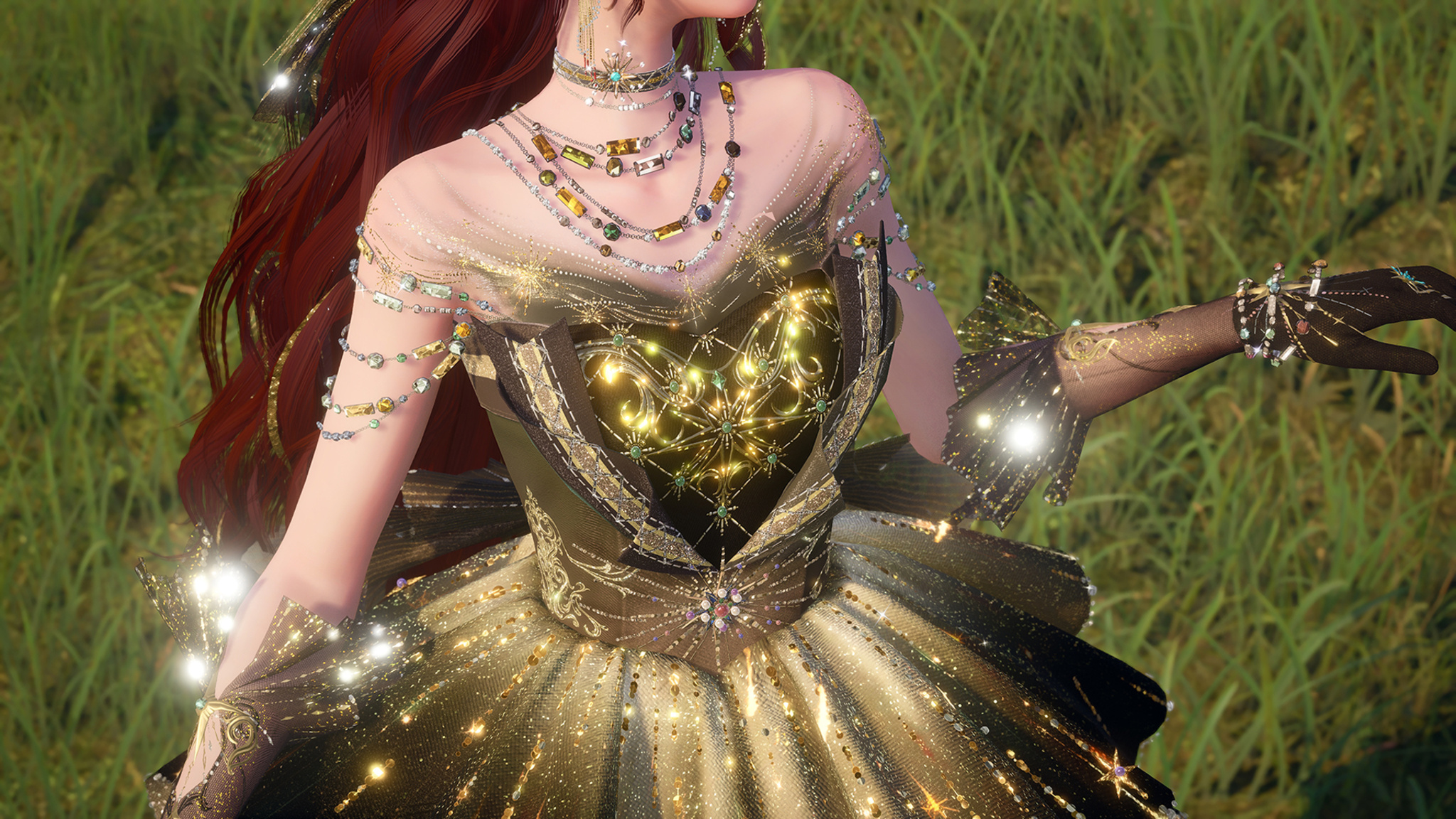
Ade: We make flexible use of skeletal physics and chaos fabric to achieve natural, expressive movement. Through proprietary skeleton chain algorithms and enhanced fabric solvers, the team replaces expensive and unstable traditional collision-based algorithms with more stable and controllable constraint-based algorithms. Let’s take Nikki in a loose dress as an example. We introduced a flexible and soft-driven constraint stage during preprocessing to ensure that even under dramatic movements, the initial garment avoids clipping the body.
While pursuing physical realism, the system also preserves the intended artistic silhouette of garments, especially structured garments with petticoats. These outfits must flow naturally like fabric, while maintaining behavior consistent with their physical construction. Our custom algorithms incorporate collision handling between different clothing types and different clothing layers, enabling free outfit combinations without sacrificing stability. By carefully balancing visual effects and performance, we achieve consistent results across multiple platforms.
Continue reading
Developer Stories explore best practices and philosophies from some of the most inventive developers in the Apple community. In each story, we go behind the scenes with developers, designers and engineers to find out how they brought their remarkable creations to life.
Browse all developer stories >