Blue Moon Lunar Concept of Operations.
Credit: NASA
Blue Moon Lunar Concept of Operations.
Credit: NASA
The diagram shared by NASA showed Orion docking with the Blue Moon lander in an elliptical lunar orbit, about 8,500 km above the moon’s surface. However, NASA is also working to have the option of docking with Orion in low lunar orbit.
According to Jeremy Parsons, the manager of the Artemis program for NASA, such an orbit several hundred kilometers above the moon would significantly reduce the fuel needed by the Blue Moon to bring astronauts down to the lunar surface and back up. This mass could be used elsewhere on the vehicle. The lower orbit would also provide more, and faster, opportunities for astronauts to get off the lunar surface if needed. In short, it makes some aspects of a lunar landing much easier for Blue Origin.
Extended centaur
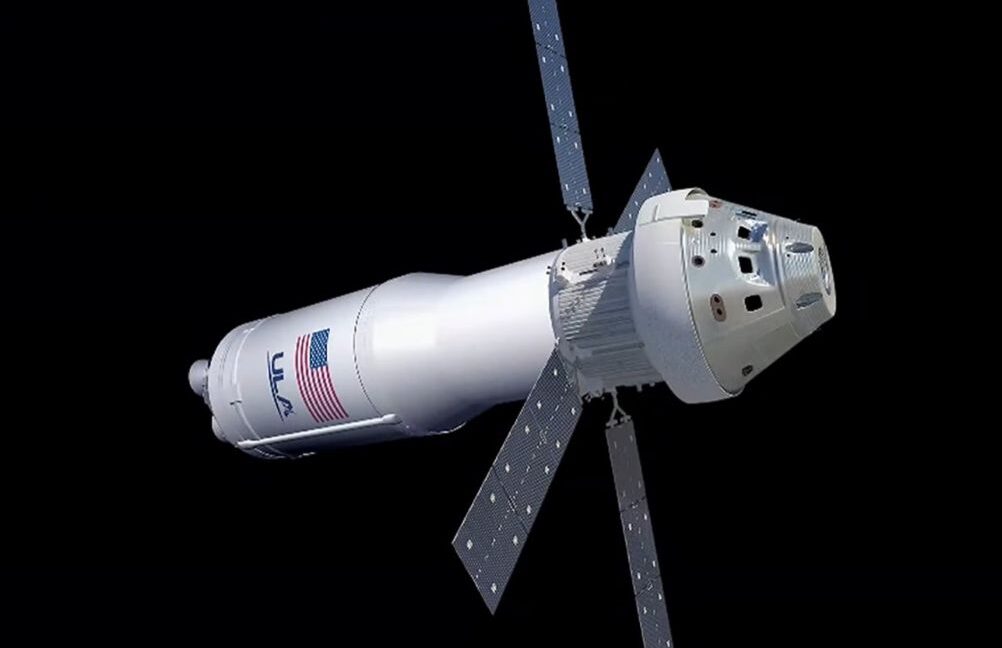
As part of this, NASA announced on Friday that it is working with United Launch Alliance to develop an “extended” version of the Centaur V upper stage. Related to the core stage of the Space Launch System, this upper stage would allow Orion to reach low lunar orbit.
This is a big deal. It has long been a point of embarrassment for NASA that Orion, with its low-performance service module, does not have the Delta-V capability to launch from Earth, reach low lunar orbit and return to Earth to splashdown in the Pacific Ocean. But no one seemed willing to fix this problem before.
“Getting Orion into low lunar orbit means solving propulsion and spacecraft integration problems that have gone unaddressed for far too long,” Isaacman said Friday.
Instead, NASA created solutions like the Lunar Gateway, which was placed in a near-straight halo orbit that Orion could safely reach. The burden of performance to reach the lunar surface was pushed to the lunar landers and the companies that develop them.
Because of the urgency of the situation, NASA tried to help lunar lander companies in any way it could, Isaacman said.
“We listen to the data, and see what’s happening around us,” he said. “What progress are our landing partners making? Where are they struggling? What can we do to help? Their lives will be easier as we get Orion closer to the Moon, significantly. We could choose to continue on our path and say, maybe they’ll show up and meet our timelines. Or we could say, let’s start turning these knobs to help.”