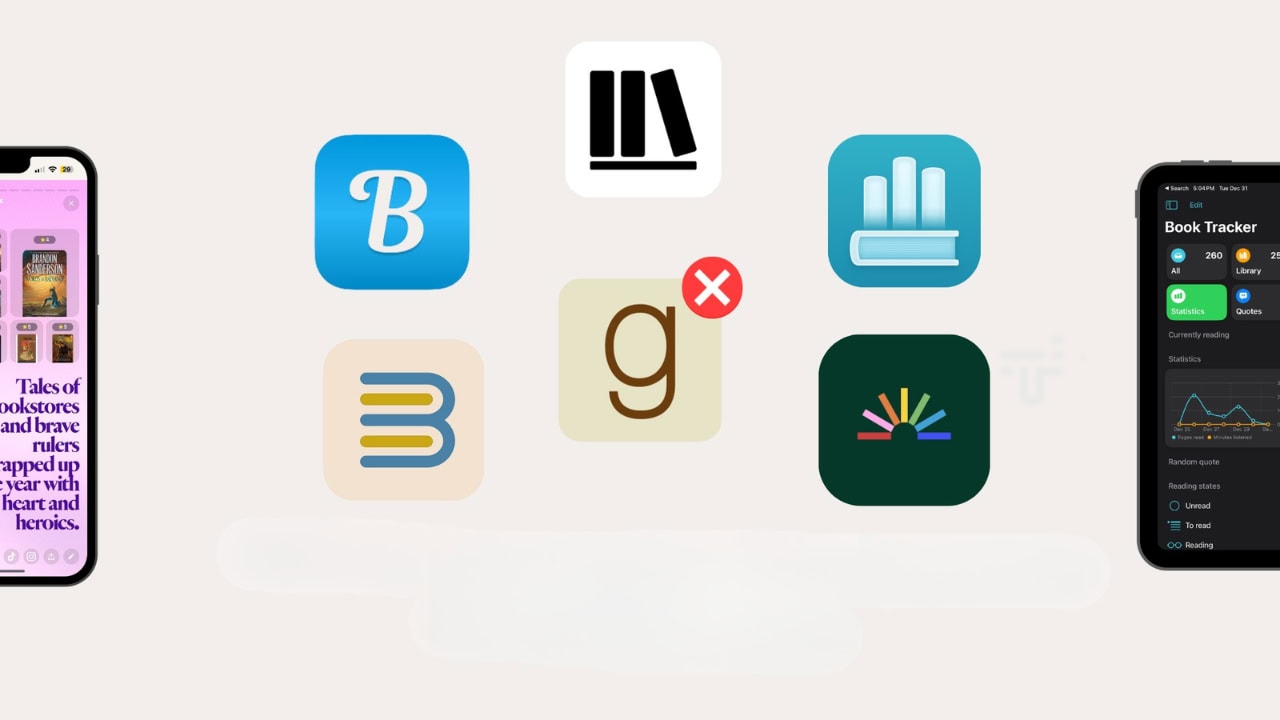
Several new book-tracking apps have moved past Goodreads to offer deeper personalization, community features, and reading analytics. Fable, Bookshelf, Pagebound, StoryGraph, and Margins all take a different angle on the reading experience. The timing works well for Pakistan. Reading culture here is making a visible comeback through new libraries and book clubs.
The first app, Fablecombines book tracking with a social platform centered on community. Specifically, it offers reading lists, strips, reviews, virtual book clubs and personalized recommendations. The app runs for free on both iOS and Android. Fable Plus adds custom goals and advanced analytics for $5.99 per month, or about Rs. 1,680.
Bookshelf comes next as a strong Goodreads alternative, but only for iPhone users. The app organizes libraries, saves favorite quotes and uses AI to generate book summaries and key insights. The free version works fine. Premium adds unlimited collections for $6.99 per month, or about Rs. 1,960.
pagebound builds its appeal around pro-title discussion forums. Readers can discuss specific books in dedicated threads. In addition, the system organizes answers by reading progress to hide spoilers of later chapters. The free version works on iOS and Android. However, a $9.99 monthly subscription, or roughly Rs. 2,800, adds profile customization.
StoryGraph is especially popular in Pakistan already. In fact, many Pakistani readers have adopted it as their main Goodreads replacement. The app offers mood-based, topic-based, and pacing-based recommendations rather than popularity-driven lists. In addition, StoryGraph Plus adds detailed statistics and custom charts for $4.99 per month, or about Rs. 1,400.
margins rounding out the top five with mood-based discovery and a distraction-free reading experience. For example, readers may search for books by vibe or atmosphere rather than genre alone. The app also includes a Reading Time Timer that blocks social media apps. Margins remain fully free on iOS and Android with no paid tier.
Pakistan’s reading culture is now in the midst of a quiet revival. For example, the citizen-run Kitab Ghar opened in Lahore in 2021 and expanded to Karachi in October 2024. Islamabad also sees a growth spurt of book clubs jumping in every sector; the most notable of which is the Islamabad Readers Book Club, which plans a monthly signing session.
In addition, the British Council celebrated 10 years of its Pakistani libraries this year. The anniversary will launch a Regal Book Club series across Lahore and Islamabad. These spaces attract students, young professionals and artists who want to read together in person.
New Pakistani authors are also fueling the comeback. Writers like Kanza Javed, nominated for the 2026 Dylan Thomas Prize, give local readers fresh books to discuss. As a result, book clubs are springing up in Karachi, Lahore, and Islamabad through bookstores, cafes, and British Council events.
This is exactly where the apps come in handy. Pakistani readers can now use StoryGraph or Fable to track books and connect with other Pakistani readers online. In addition, Pagebound’s spoiler-safe forums work well for personal book clubs that read at different paces.
For Urdu content, Pakistani readers have local options. For example, the Rekhta app offers an extensive library of Urdu poetry and literature with bookmarking features. Similarly, Kitabi offers a growing catalog of Urdu books on iOS.
For now, the practical setup pairs StoryGraph with Rekhta or Kitabi. This combination covers both international reading goals and local language literature.