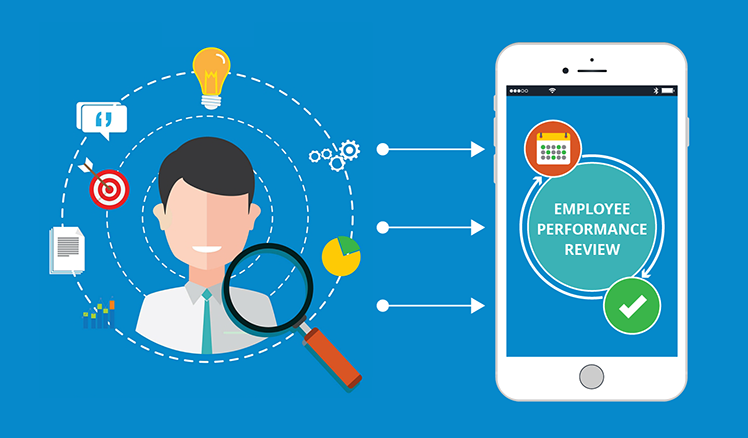
Editor’s Note: Adapting performance reviews for mobile devices can provide a number of benefits for management and employees. Read on to learn more about the mobile performance review strategy and feel free to ask for help in its implementation from ScienceSoft, a company specializing in application development for demanding industries, including healthcare, insurance and investment.
The study on performance reviews by the Corporate Leadership Council (CLC) research group showed amazing results: 95% of managers are dissatisfied with their performance review systems and strategies at work; 59% of employees say that performance reviews are not worth the time, while 56% say the reviews do not give them the information on what to improve.
CLC is not alone. Other studies, including those of the Society for Human Resource Management (SHRM), show that “many executives and senior managers did not support or even use their performance management system”, and that many HR departments ultimately decide to move on from performance reviews.
This article analyzes the pros and cons of leaving annual performance reviews behind and shows how to improve performance management with mobile.
The decline of the performance review system
The final principle of the Agile Manifesto, written in 2001 so that the world’s IT vendors could optimize all their processes, reads: “At regular intervals, the team reflects on how to become more effective, then adjusts and adjusts its behavior accordingly.” Adobe recalled this statement in 2012, when they announced that annual performance review did not fit their human resource management and business strategy, and they would instead implement a more frequent feedback system. Microsoft stopped performance reviews in 2013, and was followed by many other organizations, including Accenture, General Electric, Deloitte and PwC.
Dr. Elaine Pulakos, the author of Performance Management: A New Approach to Driving Business Results explains that the performance review does not actually fulfill its initial purpose of boosting employee motivation. Since reviews and rankings are done once a year, successful employees are not rewarded in time for their achievements and unsuccessful ones are deprived of their bonus for a whole year. Feeling unappreciated or connected to their past mistakes, these employees can’t move on—and neither can their company.
Why giving reviews failed and what we learned from it
While HR experts hoped that without annual reviews they would improve manager communication and employee engagement, help managers to give fairer pay and give them time for informal conversations, CEB Global warns that the results so far have been exactly the opposite. When organizations abandon performance appraisals, their manager conversation quality drops by 14%, employee engagement drops by 6% and top performers get 8% less satisfied with their pay.
When in 2016 both Deloitte and PwC returned to the ranking system, it only supported the fact that less than 5% of managers are able to do without ranking. HR professionals at large companies who took the risk of moving away from performance management ended up with a double-edged sword: although annual reviews held back productivity when they were implemented, businesses were no better off without them.
Certainly, the purpose of these risk-taking companies was to implement an active and regular management feedback policy. However, most of them simply left the entire review matter unattended, expecting the workforce to go to management with informal feedback. This may not be an effective strategy for business. No matter how democratic and flexible today’s workplaces are, certain things must remain regulated in order to function properly.
Mobile technologies create effective performance management
A shift to mobile technology can be the golden mean of agility and regulation that is so necessary for performance management today. Mobile performance management apps – with different UIs for managing staff and regular workforce – could naturally instill cooperation, engagement and order.
Below are some of the winning characteristics of a performance appraisal app concept, illustrated with examples of supported functions:
As often as necessary
As for feedback, the word “regular” is quite vague. For some managers it means once a week, for others it means monthly. A more reasonable option is to align the feedback frequency with an employee’s productivity level. In other words, feedback should follow certain progress. By reporting their achievements, employees will continuously create a sort of social network-like feed of updates to respond to their line managers.
Helpful and prompt feedback
Employees, especially millennials, are motivated with responsibility and opportunities for growth. They don’t want to discuss their mistakes long after they’ve made them on their own – they want prompt feedback that guides them and helps them become more successful.
With a performance appraisal app in their pocket, line managers find it easy to support and give advice to workers at any time. When an employee fills out a short report or a progress summary in the app, a line manager receives a notification about an update. In urgent matters, managers can contact an employee and discuss the issue directly, but in minor cases they are free to give their feedback directly in the app.
Feedback templates
To help managers facilitate a quick but informative follow-up, the mobile app can include standard forms developed and customized by a company’s HR department. The form can be shaped like the one on eBay or Amazon: with 3-5 questions (“How much professional attitude did the employee show when performing the task?”, “Did the employee give everything to successfully complete the task?”) to rate on a scale of 1 to 5 stars and a text box for a precise comment.
Depersonalized criticism
No person is completely immune to criticism. Even if they are constructive and aimed at improvement, some feedback can demotivate employees and hinder their further growth. Therefore, HR managers advise to depersonalize negative feedback as much as possible.
A performance review app allows negative feedback to be provided through electronic ‘suggestions’ forms. In addition to giving the manager time to regain their temper, such forms can include standard questions such as “Which employee’s weak points require more attention?” or “How can an employee’s performance be improved?” These phrases alone will put down any harsh criticism, and will keep even the most emotional manager within the bounds of tact and composure.
Agile ranking
Annual rankings are hardly justified, as the performance of employees changes overtime and newcomers arrive over the year. Mobile Performance Ranking can be set to form weekly, biweekly or monthly reviews, and can automatically filter employees according to their stars. In this way, top performers are noticed and rewarded in time.
End note
By providing a performance review app, a mobile development team can help HR managers to be constantly on the same page with their workforce: support them in their daily activities, provide constructive and emotionally neutral comments, as well as fair pay checks. However, while understanding the importance of functional and mobile active management, companies should not underestimate live chat. With criticism depersonalized and all procedural issues resolved via mobile software, face-to-face conversations can be reserved for discussing future plans and positive impressions that motivate both employees and managers for a more engaged and productive work.