Apple took a decent chunk of time out of its latest iPhone presentation to detail the new variable aperture it added to the iPhone 18 Pro, and it got a lot of attention because of it. It was trumpeted in such a way that you might think that this is the first time that one has appeared in a smartphone, even before you consider whether it is the photo revolution that it can be imagined.
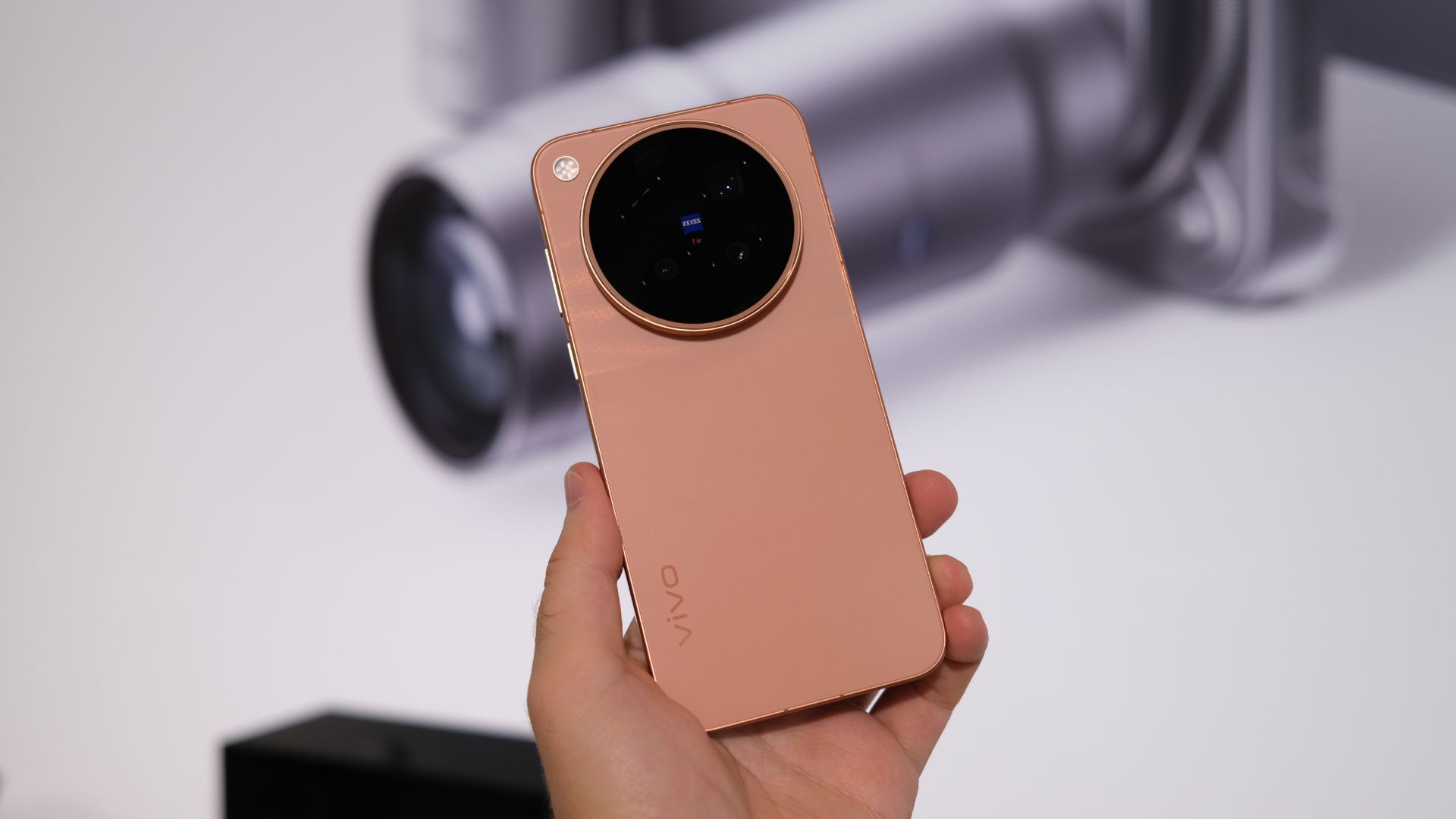
I’m in Shanghai now, with Vivo, at its launch event for the X500 series, and it’s a pretty succinct confirmation of how big other smartphone makers are going on the photography (and videography) side of things.
Again, as on the X300 before it (Vivo skips the 400 nomenclature), a big part of the attraction here is the option of photography accessories that are almost hard to believe (unless you’re an Oppo fan, of course). It helps that there’s also an impressive-sounding phone underneath.
The phones will all run Vivo’s new Origin OS 7, which will roll out on top of Android starting today on the X300 Pro. While it’s still a question whether this type of lineup will make it to shores beyond China, Vivo says it is indeed planning international versions of the new phones.
(Image credit: Future)
For now, the specifications shown are for the Chinese models, and they are impressive. There are three models, from the X500 to the X500 Pro and then the X500 Pro Max. They all run MediaTek processors (the new 2nm Dimensity 9600 Pro in the two Pro phones), but all three models come with 12GB of RAM as standard, which is welcome.
The real stars here, however, are the cameras, which continue Vivo’s collaboration with Zeiss, along with Sony – resulting in some theoretically impressive sensors. The Pro Max has a 200MP telephoto lens, for example, and even the selfie camera is a new 50MP wide-angle one. The Pro phones will boast 4K 240fps slow-motion recording and 4K 120fps HDR video with direct HDR output, making it clear that video is also a focus this year.
This is underlined by a new sensor in the Pro Max in collaboration with Sony, which offers 17 EV UltraHDR video – basically making its lighting potential huge, and its color capture hopefully super impressive.

(Image credit: Future)
That’s before you add the many optional extras that turn the phones from standard smartphones to basically modular cameras. This includes attached zoom lenses, a grip for physical camera controls, and more than one type of modular case to secure these add-ons.
Not surprisingly, the X500 Pro Max also once again highlights the way Chinese brands have moved first on battery capacities – it has a 7800mAh battery. That’s one of the biggest we’ve seen on a phone this year, and it’ll no doubt be pretty big for battery life, which surely remains the biggest concern for many people replacing older phones.
When you see spec lists like this, of course, the other big question that pops up is pricing – and Vivo is only talking in Chinese currency for now. The lineup starts at ¥5499, but goes up to ¥6499 and ¥6999 for the Pro and Pro Max respectively, which comes out pretty similar to the X300 series, which could be had in the US for around $800 or less, so expect a conversion that stops around that mark again.