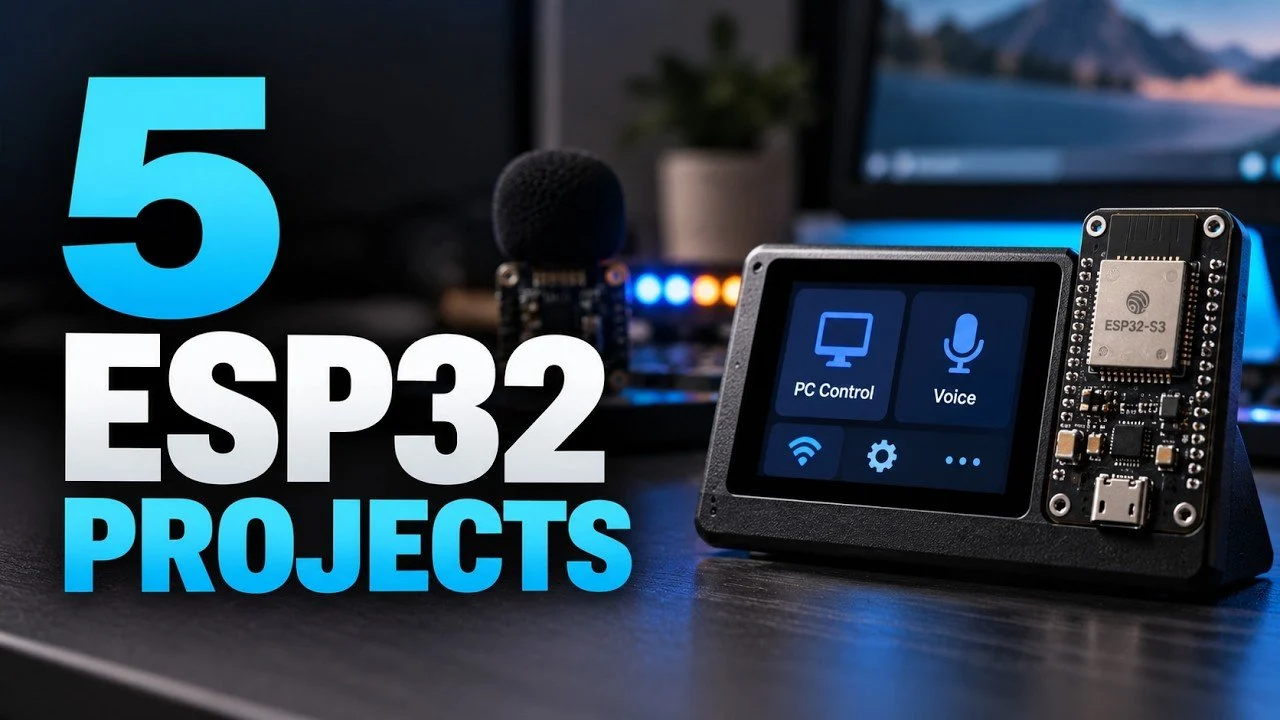
The ESP32 microcontroller has become a go-to choice for hobbyists and developers, thanks to its affordability and wide-ranging capabilities. In a recent feature from innoCircuitsLab, five standout projects show how this versatile platform can be used to tackle practical challenges while building valuable skills. For example, the LED binary counter project offers beginners a hands-on introduction to programming logic and GPIO control by using eight LEDs to display binary counting. This simple but effective project highlights the ESP32’s ability to make abstract concepts more concrete through direct visual feedback.
Discover how these projects will increase your understanding of microcontroller programming and IoT development. You’ll gain insight into creating smart home integrations with the ESP32 Apple Home Controller, learn to map Wi-Fi coverage with a portable dead zone finder, and even build an offline voice control system that prioritizes privacy. Each project is designed to address real-world needs while showcasing the ESP32’s potential, making this guide a handy resource for anyone looking to expand their technical expertise.
5 Awesome ESP32 Projects
TL;DR key takeaways:
- The ESP32 microcontroller is very popular for its affordability, versatility and powerful features, making it suitable for both beginners and advanced developers.
- Projects like the LED Binary Counter and Wi-Fi Dead Zone Finder provide hands-on learning opportunities for basic programming and wireless communication concepts.
- Advanced applications such as the ESP32 Apple Home Controller and Wireless PC Dashboard demonstrate its potential in IoT, smart home automation and real-time monitoring.
- The Offline Voice Control project highlights the ESP32’s ability to process voice commands locally, ensuring privacy and low latency without relying on cloud systems.
- These projects demonstrate the ESP32’s adaptability, allowing users to tackle real-world challenges while fostering creativity and technical skill development.
1. LED binary counter
For new microcontroller projects, the LED binary counter is an excellent starting point. This project uses eight LEDs to display binary counting, providing a practical approach to understanding programming logic and GPIO (General Purpose Input/Output) control. By programming the ESP32 to switch LEDs in binary sequences, you delve into essential concepts such as arrays, loops, and functions.
Why invest your time in this project? It is simple, profitable and offers immediate visual feedback. You will not only learn the basics of binary numbers but also gain basic skills in microcontroller programming. This interactive project is perfect for beginners who want to create something functional while mastering the core concepts.
2. ESP32 Apple Home Controller
If you’re interested in smart home technology, the ESP32 Apple Home Controller project is a great way to get started. By integrating the ESP32 with Apple HomeKit using the HomeSpan library, you can transform the ESP32 into a HomeKit accessory. This allows you to control devices such as LEDs, relays or sensors directly from the Apple Home app.
This project emphasizes the importance of User-friendly interfaces in home automation. By bridging the ESP32 with Apple’s ecosystem, you can seamlessly create smart home solutions that improve convenience and functionality. It is an excellent opportunity to explore IoT (Internet of Things) development while building a practical and modern device for your home.
Find more information about ESP32 by browsing our extensive range of articles, guides and tutorials.
3. Wi-Fi Dead Zone Finder
The Wi-Fi Dead Zone Finder is a highly practical project that uses the ESP32’s Wi-Fi capabilities. By pairing the microcontroller with an OLED display, you can measure and visualize Wi-Fi signal strength (RSSI) in real time. This portable device helps you identify areas in your home or office with weak or strong Wi-Fi coverage, allowing you to optimize your network setup.
This project not only addresses a common problem, but also introduces you to it Wireless communication concepts. You will learn how environmental factors affect signal strength and how to use the ESP32’s features to analyze and improve connectivity. It is a great example of how technology can effectively solve everyday problems.
4. Wireless PC dashboard
The Wireless PC Dashboard project highlights the ESP32’s ability to enable two-way communication. By connecting the ESP32 to your computer via Wi-Fi, you can display real-time PC statistics, such as CPU usage, memory usage or network activity, on a small OLED screen. In addition, the ESP32 can send commands back to the PC, allowing for remote control functionality.
This project is ideal for those who combine software and hardware skills. It includes Wi-Fi communication, user interface design and hardware integration, providing a deeper understanding of how devices interact wirelessly. The result is a practical tool which bridges the gap between your computer and external hardware, providing both monitoring and control capabilities.
5. Offline voice control
For developers concerned about privacy, the offline voice control project is particularly attractive. Using the ESP32 S3’s local voice recognition capabilities, this project processes voice commands directly on the device, eliminating the need for cloud-based systems. This is guaranteed low latency and enhanced privacy.
You can program the ESP32 to recognize specific commands and trigger actions, such as turning on a light or activating a motor. This project demonstrates the ESP32’s ability to handle complex tasks independently, making it a robust solution for safe and efficient voice-controlled systems. It’s an excellent way to explore the intersection of AI and embedded systems without compromising user privacy.
Why These Projects Matter
These five projects showcase the ESP32’s versatility and adaptability, catering to a wide range of skill levels and interests. Whether you’re learning the basics of programming with an LED binary counter or diving into advanced applications such as offline voice control, the ESP32 provides a platform for Creativity and problem solving. Its affordability, robust feature set and ease of use make it an essential tool for beginners and experienced developers alike. From home automation to wireless communication and real-time monitoring, the ESP32 enables you to turn your ideas into reality while addressing practical challenges.
Media Credit: innoCircuitsLab
Filed under: Guides, Hardware
Disclosure: Some of our articles contain affiliate links. If you purchase something through one of these links, Geeky Gadgets may earn an affiliate commission. Learn about our disclosure policy.