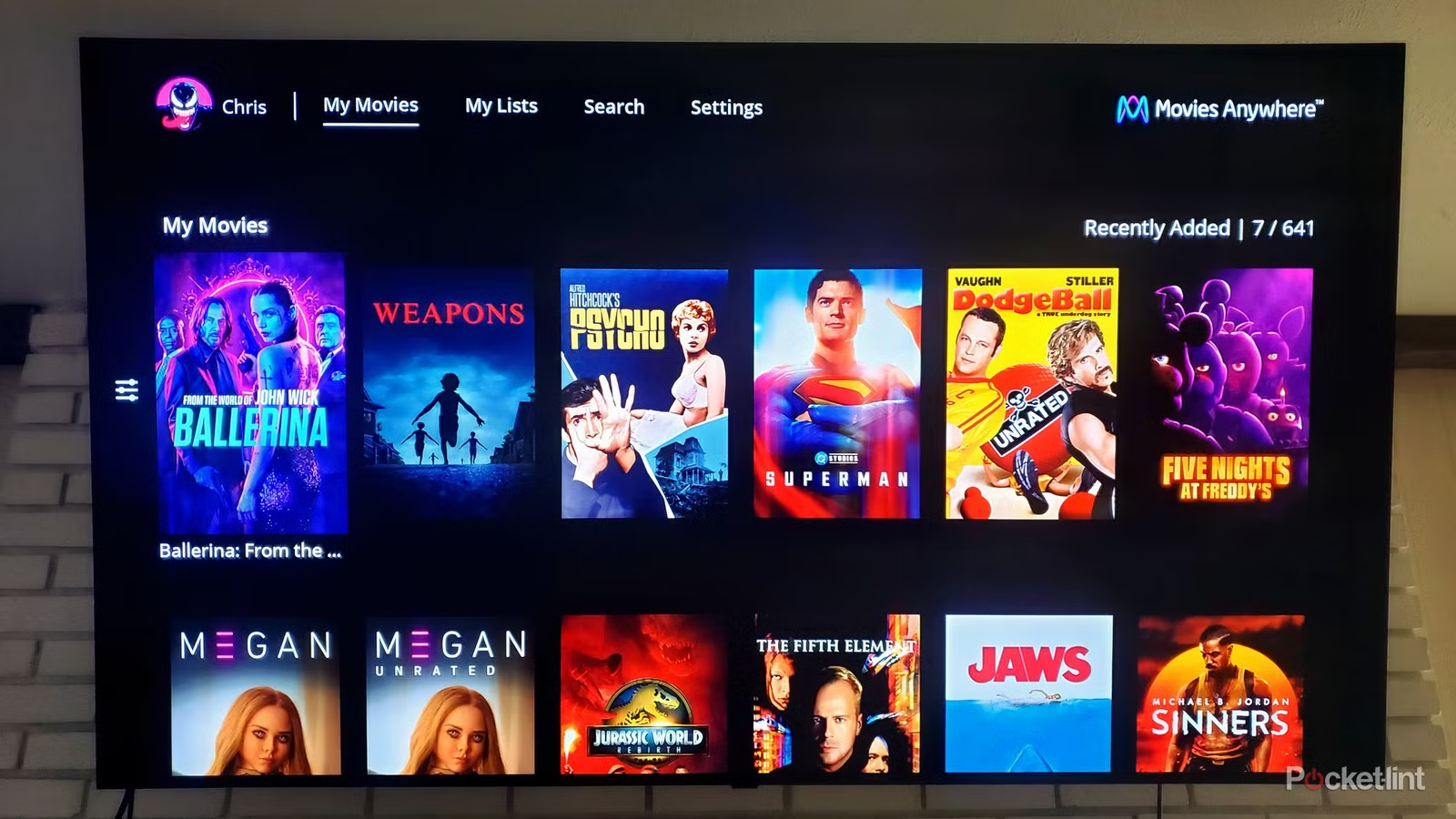
Have you ever made a purchase and then realized you didn’t get what you wanted out of the transaction? You can look back at the list and realize, “Gee, I missed that” or “I must not have read that clearly.” In your defense, companies often keep details thin and don’t always put all the specifics upfront or in big bold letters. I am not making accusations of dishonesty, but it seems to have always been the nature of the sales pitch since the dawn of mankind. If a business can present a product in a more favorable light (aka minimize what it lacks), it can get the traction they’re looking for monetarily. Believe it or not, the same is true for digital goods, including movies.
Two listings for the same movie can actually be very different outside of the core movie. There are several storefronts available, such as Apple TV, Fandango, Movies Anywhere, and Amazon Prime Video. Listings between these storefronts can vary not only in price (or limited time sale), but also in format, features and other different edition elements. At the end of the day, you want to get the most value for your money. So, before you buy a digital copy of a movie on any platform, be sure to check for a few key items to make sure you’re getting exactly what you expect.
Check for picture quality, movie editing and bonus features
Not all digital copies are equal
At first glance, you can see a sale of a movie that you want to add to your digital library. Sometimes we assume that the latest and greatest comes in the best format: 4K UHD. But this is not always the case. Depending on your region, the movie’s licensing agreements with platforms, and more, sometimes a movie is only available on a certain storefront in HD. It’s not extremely common, but it does happen. In addition, studios have been known to strike a deal that offers 4K on one platform while other platforms are downgraded to HD (1080p). If resolution is important to you, then this is one item you should definitely verify on any listing before clicking that button. You’ll also want to look for HDR formats like Dolby Vision or HDR10 if you have compatible TV sets. On many stores there is a “More Info” option that you should check. This includes all the necessary visual and audio enhancements that come with the purchase.
Film buffs also inevitably look for specific editions. While almost every storefront offers the theatrical cut of a film, some platforms get exclusivity for extended editions, unrated versions or director’s cuts. For example, Blade Runner (1982) famously has several cuts of the film available. On Fandango, the theatrical version is just labeled “Blade Runner.” But if you actually do a search for the movie, you’ll see that the platform also has separate listings for “Blade Runner (Director’s Cut)” and “Blade Runner: The Final Cut.” Prime Video does not have the director’s cut available. Of course, you won’t see the elusive “Workprint” cut anywhere but on Blu-ray Disc. So, that’s a fun case to make for physical media. Still, it’s important to note which edition you’re buying. Some storefronts may even bundle multiple editions together.
Bonus features are not dead with the advent of digital movie libraries. On the contrary, many movies still come with extras if you know where to look. In fact, some services offer more extensive bonus features than others. I have come across movies that have no bonus features at all on a specific service, as opposed to another service that includes “extras” like featurettes and other options. If these extras are important to you or add value to your purchase, then compare the listings.
Read the fine print
Also read the fine print

By now, many consumers have no understanding of what “digital ownership” actually means. If you read the terms of service, you will see that each storefront only gives the buyer a license to access the movie indefinitely. This means you don’t actually own the movie like you would with a disc. Access can be revoked at any time if something changes with the Storefront, your account or licensing agreement related to specific movies, although there are specific steps you can take to protect digital purchases. Rarely are movies actually removed from customers’ libraries. The services are likely to do everything they can to defend this possibility, because it will break their business if customers stop trusting that their purchases will stay in place. But it can happen. In recent years, shifting agreements and store updates have led some consumers to experience situations where specific 4K UHD movies have been downgraded to HD, which is another possibility to be aware of.
That leads me to the next point regarding upgrades. The policies in each storefront are not always reflected. Some platforms offer free upgrades in specific cases; others pay for all upgrades. Familiarize yourself with the policies of your chosen platform so you know how this is handled going forward. You should also make sure that your favorite devices actually work with the platform and play the movies you buy. Some digital libraries also have restrictions on the number of devices that can be used. For example, I know from experience that Fandango at Home does not allow the same movie to be streamed from two separate devices at the same time. Keep this in mind when sharing your library with more people. Buying a brand new release for a Friday movie night could turn into a battle over control of the movie if others using your account also have the same idea.
At the end of the day, carefully preview your purchases. Be conscientious about what you want from your digital movies before you click that button. If you’re a much more casual viewer and these details don’t really matter, then more power to you. But for those looking to amass a collection of quality digital movies and features accessible anywhere, analyze the details of each storefront so you know what to expect.