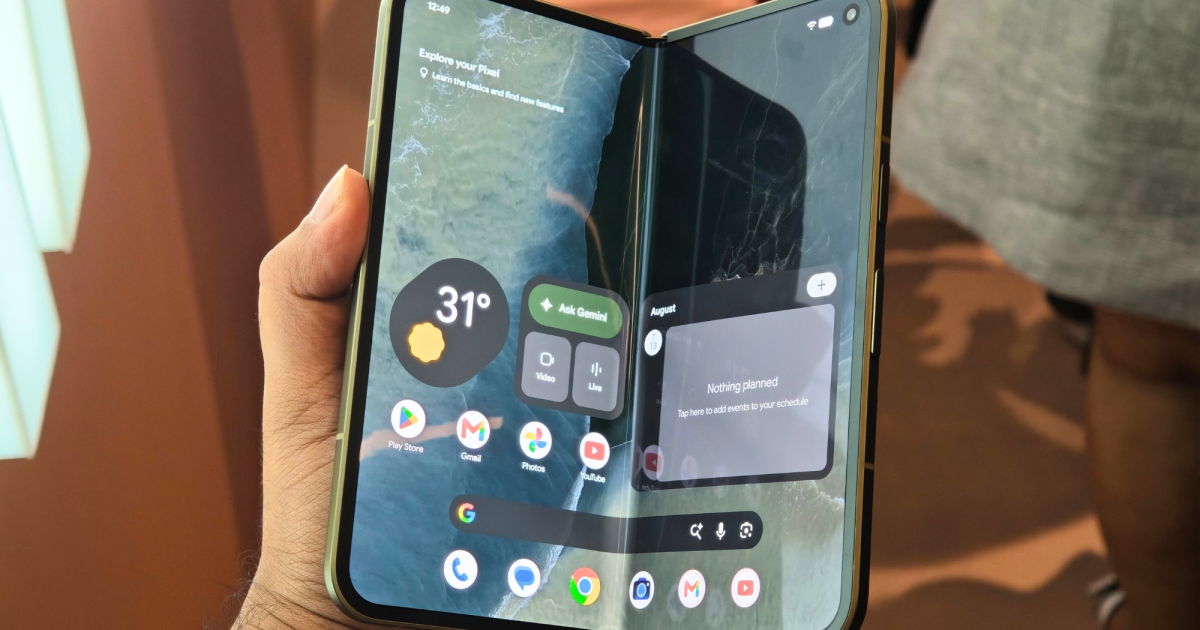
Google has updated its adaptive compose capability to help developers adapt existing Android apps for laptops, flip phones, tablets and other form factors, including the upcoming Googlebook platform. The goal of this update is to help AI coding agents customize apps for different screen sizes and input methods without requiring developers to maintain separate codebases for different devices.
The new capability goes beyond responsive layouts, adding support for desktop-focused features and collapsible-specific interface adjustments. Google is also signaling that adaptive app experiences will be more prominent on Google Play, with the company planning to pay more attention to how apps and games work on foldable devices next year.
Compose adaptive ability gets desktop and foldable enhancements
Specifically, the new Compose adaptive capability can enable AI agents to look at an actual Jetpack Compose app interface and suggest changes that make it more suitable for desktop use. This includes keyboard shortcuts, custom pointer cursors, hover states and tooltips for buttons and other controls.
The capability can also help agents learn an app’s navigation structure, migrate layouts to responsive layouts like Grid and FlexBox, and manage application state throughout the experience. The goal is to make existing apps look more natural on larger displays, not just stretch a phone interface to fit a laptop screen.
Foldable devices are another target. The updated capability includes posture-aware optimizations that allow agents to refactor media and camera screens for tabletop layouts. These tweaks could allow interfaces to take better advantage of a foldable partially open state, instead of treating any screen configuration as a conventional smartphone display.
Google says the same adaptive approach can be applied to phones, foldables, Googlebooks, tablets, parked cars and XR devices. Developers can use the ability, along with Android’s adaptive quality guidelines, to prepare their apps for different device categories.
Google Play to pay more attention to adaptive apps
The update comes as Android moves beyond traditional smartphones to a wider set of form factors. For developers, adapting an existing app to these devices may involve changes to navigation, input handling and screen layouts. AI coding agents could automate some of that work and take over parts of it.

Google also plans to open up more ways for developers to showcase apps and games that have been optimized for the foldable experience. Google Play will take a closer look at how these products will run on foldables next year, the company says.
However, Google has not detailed the specific requirements for developers to meet the Play Store. It says more details will be available later this year.
Developers can now use the updated Compose adaptive capability and follow Google’s adaptive quality guidelines for apps. Developers preparing their games for the growing variety of Android devices can refer to the separate adaptive games guidelines.