There was a real buzz about the 2026 Paris Motor Show but it also felt like an event that arrived as a festival of retro design and celebration of the heritage of European car brands. Chinese manufacturers, on the other hand, were all clearly focused on the future, especially Xpeng.
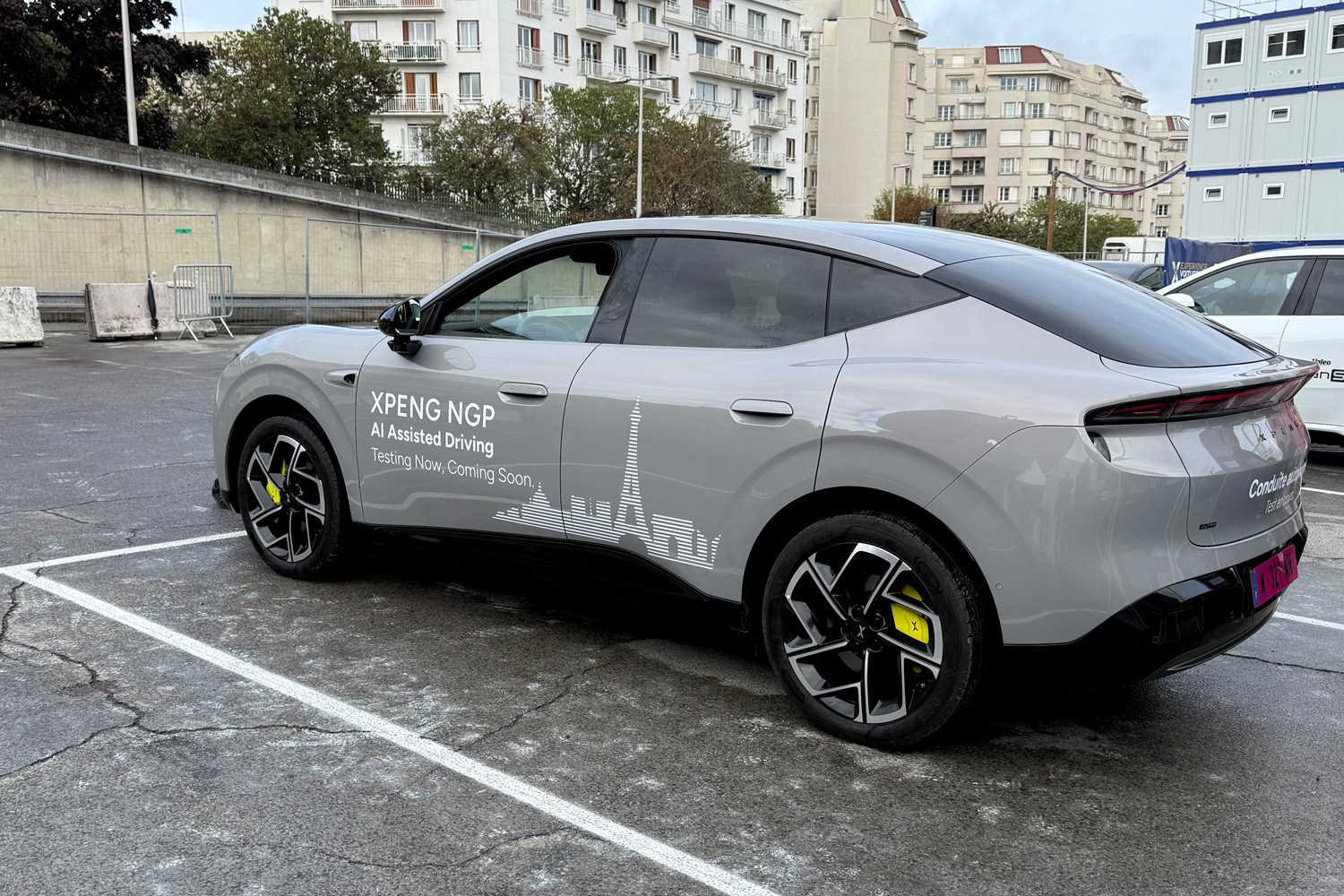
The relatively young technology company that only builds electric cars wanted to show off their new Xpeng L03 coupe SUV, but not content with a static display at their booth, they also had several cars in the parking lot ready to tackle Paris traffic.
I have already experienced Xpeng’s intelligent driving system called Navigation Guided Pilot, or NGP, over in China, where it was extremely impressive. When I got the opportunity to take a tour through the traffic-clogged streets of Paris, I jumped at the chance. This time I wasn’t sitting behind the wheel – that was left to the Xpeng engineer to oversee, but I got to sit in the passenger seat.
From the off, it was obvious to see that there is a lot of computing powering the system, which relies on Xpeng’s very own Turing chips produced in-house. The car seems to be easily able to handle large amounts of data fed to it from an arsenal of cameras and ultrasonic sensors. This combined effort produced a result that felt effective as the system learns along the way and it must be taken into account how many unpredictable things happened along the way.
Inviting the media to try out Xpeng’s NGP on the streets of Paris was a bold move, but it also perfectly illustrated how versatile the system really is. Xpeng’s VLA 2.0 is described as a multimodal AI driving architecture, which sounds fancy, but it was the system’s ability to deal with any kind of unexpected activity that made it the same way it did in China.
Many Parisians don’t seem to care too much about rules and regulations, so there were a lot of unplanned events on our route, which lasted just under half an hour. The way the Xpeng L03 behaved was impeccable. The system was also brilliant at anticipating potential issues, then taking evasive action without any bumps, jumps or skids. It was super smooth.
The engineer sitting behind the wheel seemed so comfortable with the way things were going that he offered to turn on my massage seat and also turned on the seat cooling. I was relaxed as it was, but Xpeng’s massage functionality in the L03 added another level of relaxation to the journey. This was my first time in the Xpeng L03 on a run and it felt very nice on the inside so I’m looking forward to getting behind the wheel in time.
Considering Tesla seemed to be the only other automaker at the show letting people experience live demos of its intelligent driving system, Xpeng looked like it had little to worry about. Sure, Tesla is the bigger name and has a more prominent global profile, but Xpeng has a product that feels as good if not better than Tesla’s FSD, now also known in Europe as Tesla Assisted Driving.

Granted, compared to China, there is a long way to go before any of these systems get the full green light in many places. Still, Xpeng’s system left me in no doubt that it is ready and able to take on any kind of city driving challenge, including Paris and its semi-anarchic drivers.

