A simple phone can still leave someone playing technical support. Contacts need to be updated, settings need to be adjusted, and navigating a family member through menus over a call isn’t always easy.
Price: TBD
Where to buy: HMD
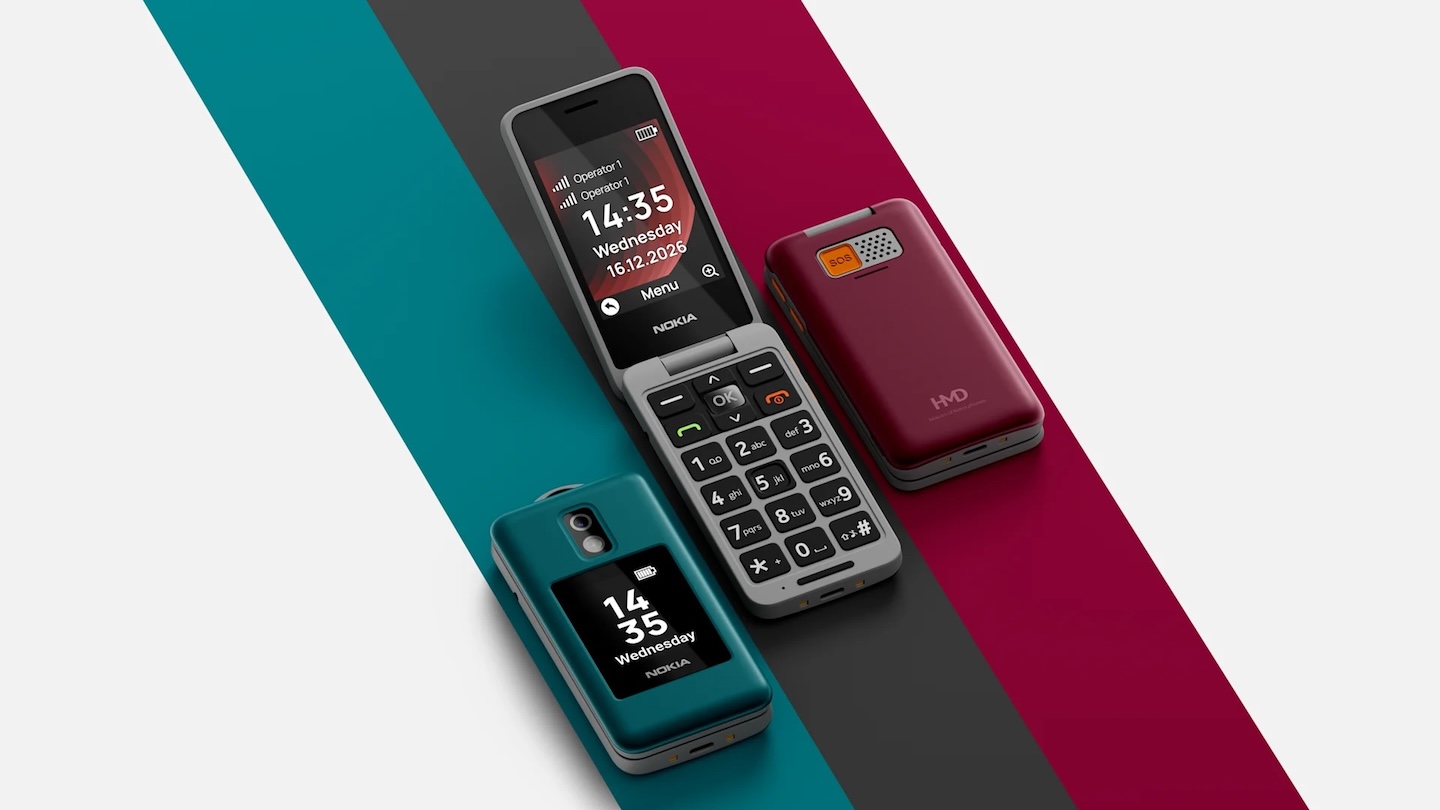
The Nokia 2360 Flip gives families another option. Its Family Assist app lets family members configure select settings from their own smartphones, while the person using the flip phone can make calls and send texts with physical buttons.
It is mainly designed for seniors, with parental controls for children as well. There’s a catch before you buy: the phone only works on 2G networks, so where you live determines whether you can use it.
Add The Gadgeteer to Google Add The Gadgeteer as a preferred source to see more of our coverage on Google.
PHOTOS OF US ON GOOGLE
Family Assist Allows Remote Setup
The Nokia 2360 Flip works with HMD’s free Family Assist application, available through Google Play and Apple’s App Store. Family members can use it to add contacts, create reminders, adjust volume settings and configure emergency contacts without handling the handset.
Family Assist communicates via SMS rather than mobile internet. Nokia does not require a data plan for remote management, although standard messaging charges apply to the management device.
For example, a family member can add the doctor’s new phone number without explaining the process over a phone call. Reminders and volume adjustments can be managed in the same way, provided the phone receives the necessary messages.
These features could reduce the need for repeated technical assistance, but updates depend on cell phone coverage and SMS delivery. Family Assist manages specific supported functions rather than full remote control of the handset.
The Nokia 2360 Flip includes a dedicated SOS button to contact designated people when help is needed. HMD says it will hold for three seconds, triggering calls and text alerts for configured emergency contacts.
Family Assist allows family members to configure recipients and messages. Emergency numbers can also be updated remotely when circumstances change, avoiding the need to navigate handset settings.
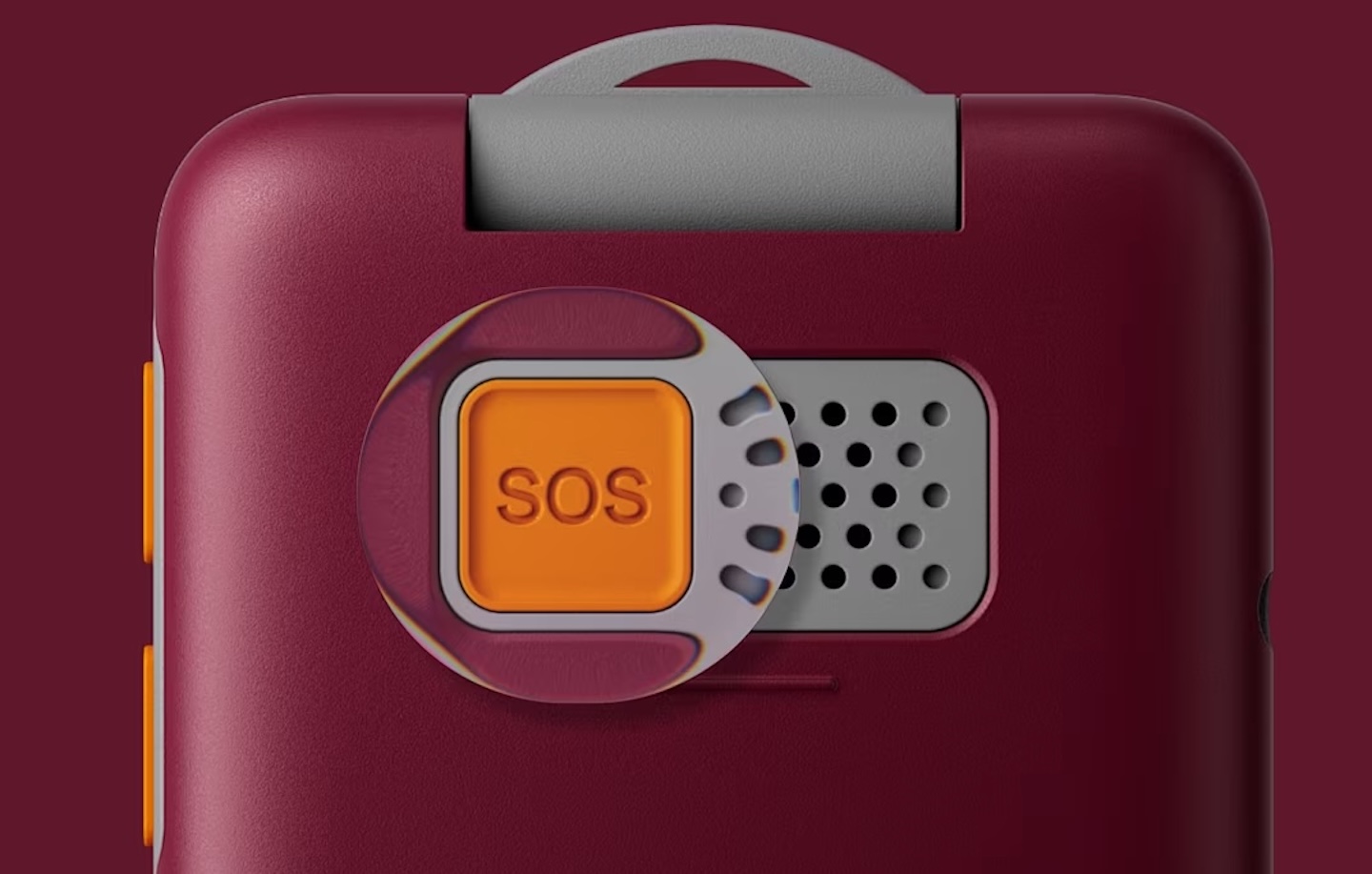
This arrangement could help someone who finds searching through contacts difficult during a stressful situation. However, the SOS function is not a substitute for public emergency services and depends on compatible network coverage, correctly configured contacts, and successful call and message delivery.
Familiar controls and two displays
The Nokia 2360 Flip has a 2.8 inch QVGA internal display with large menu icons and clear text. A smaller 1.77 inch QQVGA external screen displays call information without having to open the handset.
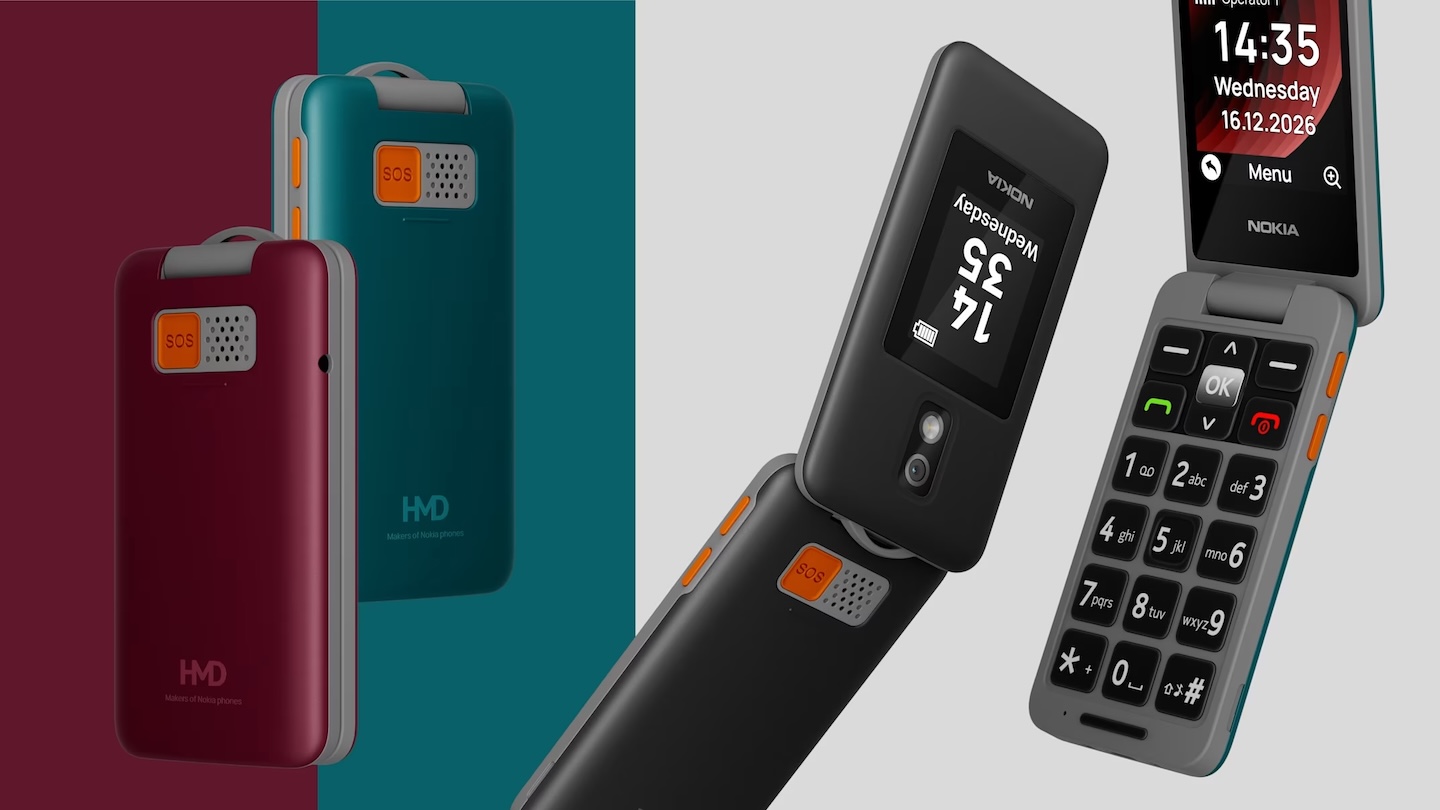
Physical buttons offer an alternative to touchscreen navigation. Users can answer calls by opening the phone and end calls by closing it, while dedicated volume buttons provide instant access to sound adjustments.
HMD includes a speaker and HAC2011 hearing aid compatibility support. These features may be useful for people with specific hearing needs, although compatibility with individual hearing aids should be checked.
The handset measures 111.85 × 55.56 × 18.95 mm when closed and weighs approximately 121 grams. It has a removable 1,450mAh battery. HMD lists gray, burgundy, and blue color options.
HMD rates the phone for up to 15 days of standby time or 27.5 hours of talk time. These are manufacturer figures rather than independently verified results, and actual endurance will depend on usage and network conditions.
Parental controls for a child’s first phone
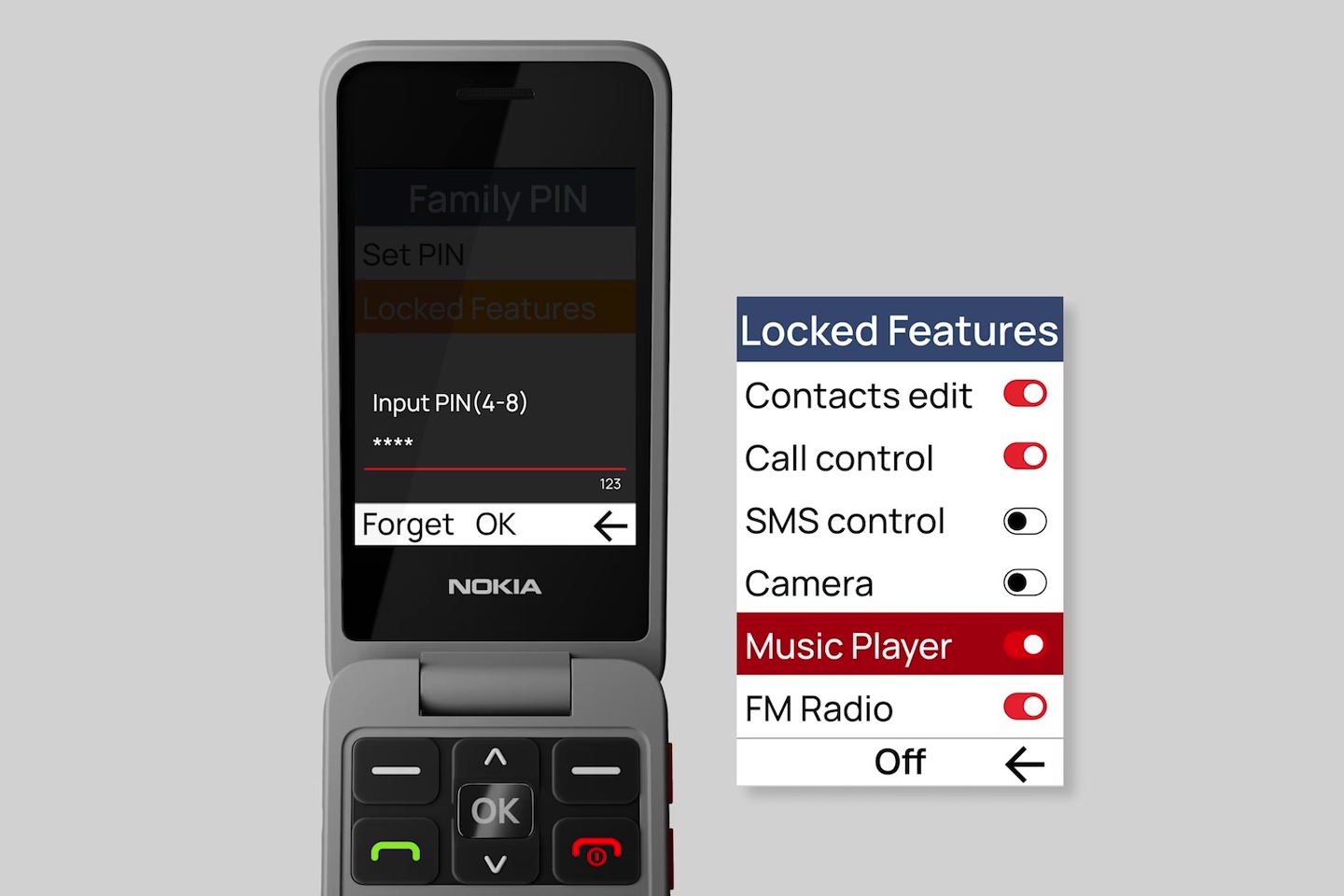
The Nokia 2360 Flip also includes parental controls for families considering a basic communication device for children. School mode limits the phone to the clock and emergency calls, while contact whitelisting limits calls and messages to approved numbers.
Parents can also block individual applications or functions, including the camera and games. These restrictions are protected by a Family PIN and configured directly on the handset without requiring Family Assist.
For parents who want children to remain within reach without unrestricted smartphone applications, these controls offer an alternative. They do not eliminate all potential risk but allow families to limit how the phone is used.
The 2G limitation changes the purchase decision
The Nokia 2360 Flip works exclusively on GSM 900/1800MHz networks and does not support 4G LTE. This is a significant limitation as many mobile operators have discontinued 2G service.
For US buyers, the handset is not a practical choice for mainstream cellular service. Buyers should confirm compatibility with their carrier before considering it.
The phone runs HMD’s S30+ software with 4MB of RAM and 4MB of internal storage. It includes a basic QVGA camera with an LED flash, FM radio, USB-C connectivity, and a 3.5 mm headphone jack. The storage can be expanded with a microSD card of up to 32GB.
The handset also supports two mini-SIM cards. HMD lists IP54 dust and splash resistance, but says the phone is not suitable for submersion.
HMD’s global product page doesn’t show a retail price or specified launch markets.
Who should consider the Nokia 2360 Flip?
The Nokia 2360 Flip is aimed at families who want a simple calling and texting device that can help families manage it remotely. Its physical keyboard, emergency contacts, and Family Assist functions could be useful for older users, while the parental controls provide a separate reason to consider it for children.
However, its 2G-only connectivity is a major hindrance. Buyers must confirm that a compatible network remains available before considering the phone.
Price: TBD
Where to buy: HMD
For families in supported markets, the Nokia 2360 Flip combines familiar controls with remote assistance. For US buyers, a 4G-capable feature phone with similar accessibility and emergency features is the more practical choice.
Love our content?
Check in for our newsletter today.
No ads, no spam, just links to our latest articles!