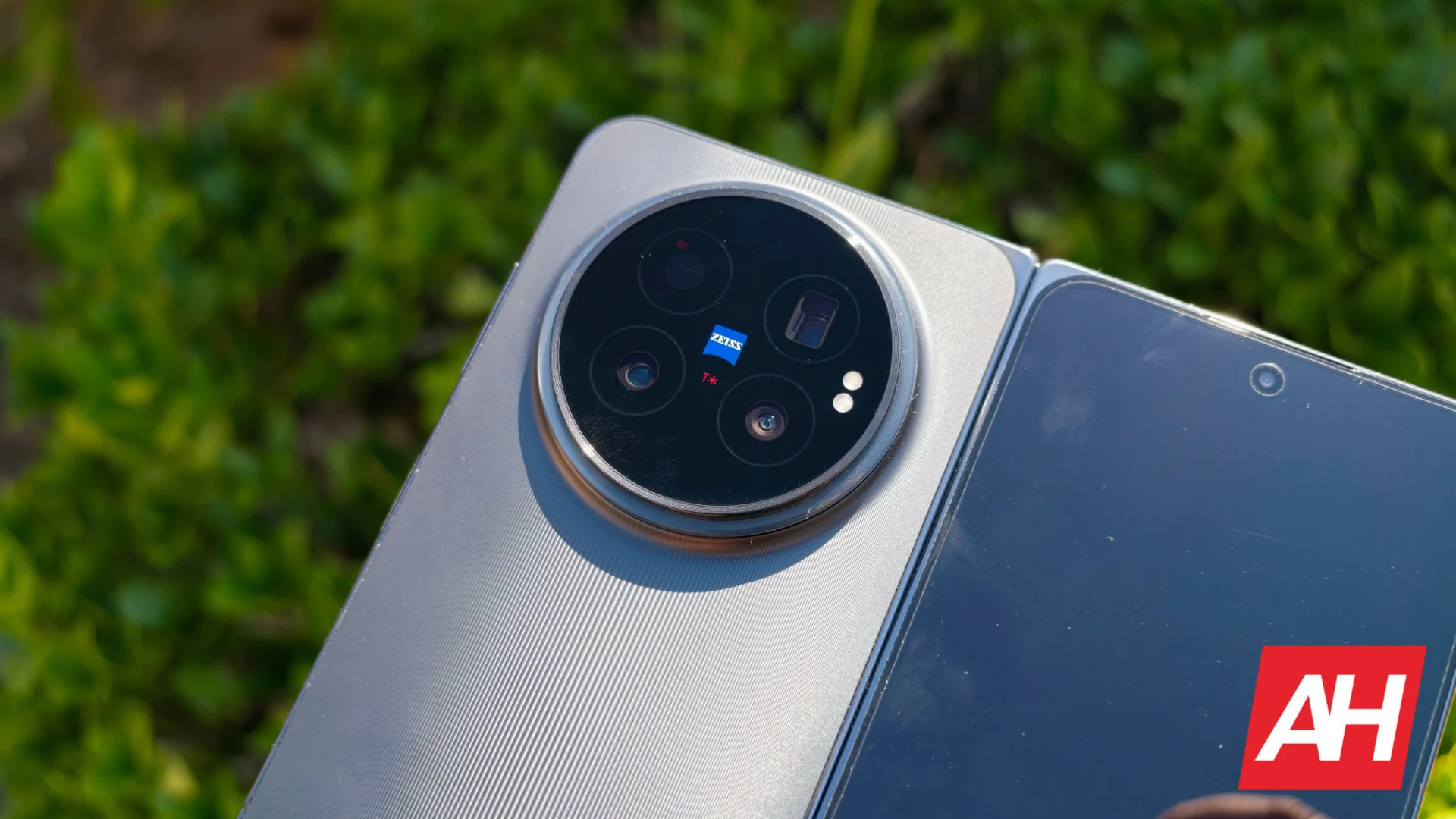
Vivo announced its new flagship foldable smartphone back in June in China, and a global variant of that phone was announced on October 1st. At this point, I’ve been using the phone for over a week, and I’ve captured a ton of photos with it. This camera system is one of the main things that excited me about the Vivo X Fold 6. There’s a good reason for that: on paper, it looks like one of the best, if not the best, camera setups on foldable smartphones… in general. It turns out that it’s actually the best camera on a foldable phone, at least in my opinion.
The Vivo X Fold 6, in my opinion, is the best foldable smartphone camera out there
Before we get into it, note that the Vivo X Fold 6 review is coming. It will probably drop next week because I am deep in writing, but I wanted to share this experience with you separately as well. I really enjoyed using the camera system here, and I could actually rely on it alone without needing anything better. That’s saying a lot, because I’m kind of a camera aficionado. I’m used to cameras on phones like the Vivo X300 Ultra and OPPO Find X9 Ultra. I consider the Vivo X300 Ultra to be the best camera smartphone currently on the market. So the Vivo X Fold 6 being the best foldable phone camera isn’t exactly that surprising.
Let’s talk about the camera setup first. There are three cameras on the back of this phone, all backed by ZEISS optics and expertise. A 200-megapixel ZEISS main camera with an f/1.68 aperture and a 1/1.4-inch sensor size leads the pack. Both PDAF and OIS are supported here, by the way. A 50-megapixel ZEISS Ultrawide camera is also included, with an f/2.05 aperture, a 1/2.76-inch sensor size, PDAF, and a 119-degree FoV.
The last camera on the back is a periscope telephoto unit, a 50-megapixel ZEISS APO telephoto camera. Vivo has chosen the Sony LYTIA 602 sensor here, which is a 1/1.95 inch sensor. This camera also comes with an f/2.57 aperture lens, and it offers 3x optical zoom. Both OIS and PDAF are supported here, in case you were wondering. All three cameras also feature ZEISS T* coating to combat reflections/lens flare. There is also the V3+ imaging chip, which is powered by the MediaTek Dimensity 9500 Super Edition chip.
Vivo X Fold 6 camera specifications
| Main camera | 200 MP (Samsung HPB sensor, 1/1.4 inch sensor, f/1.68 aperture) |
| Ultrawide camera | 50MP (Samsung JN1 sensor, 1/2.76 inch sensor size, f/2.05 aperture) |
| Telephoto camera | 50 MP (Sony LYTIA 602 sensor, 1/1.95 inch sensor, f/2.57 aperture) |
| Main camera | 20MP (CMOS, 1/3.6-inch sensor, f/2.4 aperture) |
| Cover display camera | 20MP (CMOS, 1/3.6-inch sensor, f/2.4 aperture) |
After over 800 pictures I am impressed
All that sounds great on paper, especially for a foldable smartphone. The thing is, the performance is pretty impressive too. I took over 800 photos in a period of about a week, and have a pretty good idea of what the camera has to offer. We’ll talk a lot more about the cameras in the full review, of course. However, I wanted to share some pictures and information with you on the site. The camera performance of this smartphone certainly deserves it, as foldable phones are usually noticeably inferior to normal smartphones in terms of camera capability.
The camera samples I show you throughout the article were mostly taken in Vivid and ZEISS Natural color styles. The Vivid option boosts the colors a bit, compared to the ZEISS. Some of them were taken with a custom photography style that I added (yes, you can do that too). Much like the Vivo X300 Ultra, this phone allows you to either set up photo styles manually or import them via the QR code or a regular code that comes with the created style. I found a lot of use for this on both the Vivo X300 Ultra and this phone. You can fine tune your end result photos and get exceptional results.
The ultra-wide is undoubtedly the least impressive of the three cameras
You’ll notice through the camera samples that the ultra-wide camera gravitates particularly strongly to warm tones compared to the main and periscope telephoto units. It’s also clearly the least impressive of the three cameras. I’m very good with that, as I use the main and periscope telephoto cameras (ratio 60:40, roughly) 99% of the time. I rarely ever use the ultrawide cameras. You can, though, so it’s important to note. It has the smallest sensor, by quite a margin, so it is not surprising that it is behind the other two cameras. It’s still passable though. However, you will see a drop in challenging situations, especially in low light.
The main and periscope telephoto cameras, on the other hand, are excellent. I mostly preferred the ZEISS Natural mode here, because the colors ended up looking great, mostly accurate, and the photos were mostly sharp and detailed. Even challenging HDR photos turned out great. Note that you may need to tap to focus on a subject in some HDR situations so that it is not underexposed and to overexpose the entire shot. You can see examples of that below.
The phone managed to control the lens flare with ease
The phone managed to control the lens flare with grace, even in the most demanding situations in low light with lots of street lights. I’m used to this when it comes to Vivo phones, so it’s not surprising, but it’s definitely worth noting. Many phones handle this terribly, and you end up with a very noticeable lens flare in your image. That is not the case here. Low light photography in general is very good on this phone, better than I’ve seen on any other foldable. The OPPO Find N6 also does a great job, but I would give the edge to the Vivo X Fold 6. It has a notably more capable periscope telephoto camera, for one.
I haven’t noticed any noticeable problems with gain or anything of the sort in low light. Also, the switch was pretty quick all things considered. It was of course the fastest on the main camera, but the periscope telephoto camera was also very good in that regard. The ultrawide snapper was naturally the slowest when it comes to shutter speed in low light. During the day, with good lighting, all three are quite direct.
Vivid and ZEISS Natural photography modes are both great, and a little different
In the gallery below you can see some samples of Vivid vs ZEISS Natural modes, just to get the idea of the differences. Of course, it will look noticeably different in some scenes, but you can clearly see the enhanced colors in Vivid mode. It’s all a matter of preference, as both modes do a great job. There are a bunch of additional color styles available in the camera app, but these are the two main ones I’d suggest you use. You can always switch to the black and white style if you’d like to shoot in color, but there are some other fun options.
The bottom line
If you’ve been hesitant to buy a foldable phone because of the poor camera setups they usually offer, this phone should do the trick. Its camera performance is better than on some regular flagship smartphones I’ve tested. Spoiler alert: the phone is actually great overall, but you can read more about it in our full review which is right around the corner. Stay tuned; it will probably come early next week.