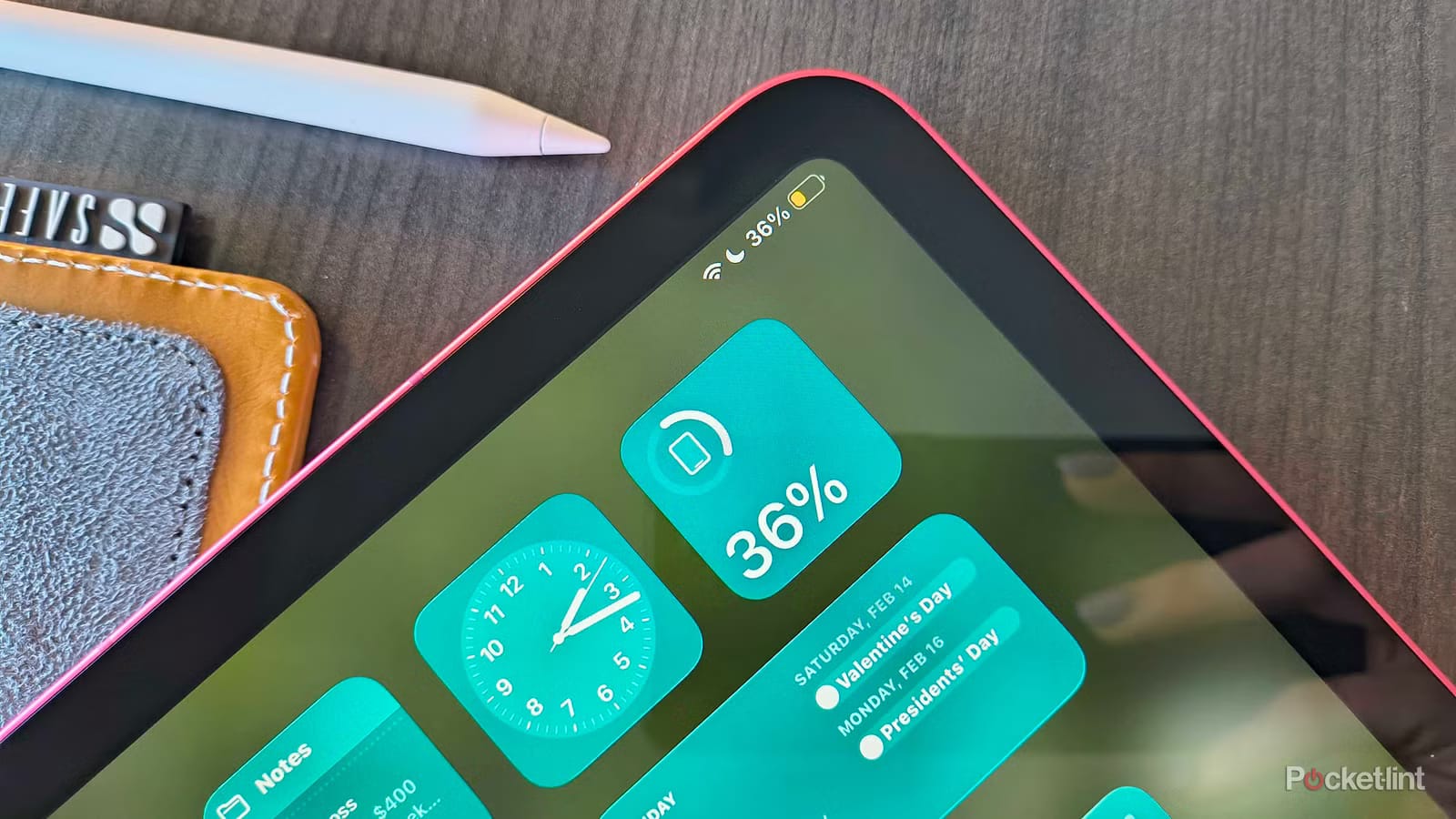
One of the main reasons to buy one iPad is its great battery life about and iPhone. Apple understandably skews that comparison, but it’s true – the devices share many of the same apps, but you can spend hours emailing, browsing and streaming on an iPad without worrying about whether you have enough juice to make it through the end of the day. A top-off iPad can comfortably sit on standby for a few days, while an iPhone is finally running on steam.
Unfortunately, the slow degradation of an iPad’s battery is inevitable. No matter how well you treat it, it will eventually become unusable, whether practically or in absolute terms. I’ll fill you in on both scenarios, and offer some basic tips to stretch battery health as much as possible.
How long can an iPad battery last?
You can’t beat the laws of chemistry
All iPads rely on lithium-ion batteries that can only last so many 0 to 100% charge cycles. Over time, the peak capacity will gradually decrease, until one day your iPad simply won’t charge at all. You can also kill a battery by draining it to 0%, then not charging it for a few months – but if you care that little, longevity probably isn’t on your radar.
As for the number of charging cycles an iPad can handle, Apple has official specifications. The company says that all iPad batteries are designed to maintain 80% of their original capacity (aka health) at 1,000 charge cycles, noting that Apple’s definition of a cycle is “normalized between 80 percent and 100 percent of original capacity to account for expected reduced battery capacity over time.” Your mileage will vary, in other words. You can check the battery health at any time Settings -> Battery.
Doing some quick math, you can extrapolate that the absolute limit of an iPad is 5,000 cycles, but that’s not quite right. Realistically, degradation accelerates below 80% capacity, and problems like voltage sag can prevent any use beyond a late game threshold.
That brings me to practicality. Around the 80 to 90% mark, people tend to notice that their iPad isn’t lasting as long as it used to. This is viable, as long as you adjust your habits and expectations. If you take your iPad on vacation, for example, you need to use that layover time to do it instead of crossing your fingers that you can get on the next flight through The Return of the King.
Below 80%, expect frustrations to mount, but you can still have a usable tablet. Some people only ever use an iPad in short bursts, or are content to leave it plugged in most of the time. I’m in the latter camp – I prefer to use my 2020 Pro as a second screen for my laptop. Some people turn to an iPad to replace a desktop workstation, in which case there’s really little incentive to unplug it.
I would suggest that most people should shop for a replacement iPad until it reaches 70% battery health, and definitely around 50%. Apple rates the 2025 Pro for “up to 10 hours of web browsing on Wi-Fi or video watching” when fully charged and fresh out of the box. At 50% health, you’re already down to 5 hours or less per day, and browsing and streaming are hardly the most intensive tasks an iPad can handle. Throw a 3D game or 4K video editing into the mix, and you might be lucky to get 2 hours of mobile use. That’s a fraction of what a healthy iPhone Air can handle.
How to extend iPad battery health?
Some tips and tricks

One mystery stems from the way health is assessed. If you avoid letting an iPad dry out, you’ll need fewer full charge cycles. Partial charges count towards your ultimate limit – but you’re not working the battery nearly as hard to reach a level you can use. For chemical reasons, the optimal charge percentage is between 20 and 80%. It’s okay to mash up to 100% if you need the runtime you paid for, though, because it doesn’t do any serious damage.
If you leave your iPad plugged in most of the day, I would recommend Settings -> Battery -> Battery Health and turned on 80% limit. If you need maximum runtime, you can return to this screen and either disable the limit or select a temporary override.
You can also reduce charge cycles by using less power in the first place. Turn off the screen before you leave, even if Auto-Lock is on. Disable Bluetooth, Wi-Fi and/or Cellular when you don’t need them, as those consume power with background syncing or scanning for available connections. Also, keep the screen brightness as low as you can get away with while making text and images comfortably readable.
Also pay attention to temperatures. If the ambient temperature rises above 95F (35C), your iPad’s capacity may shrink permanently while it is being used or charged. Cold weather can also shrink capacity, but only temporarily — your iPad will bounce back when it returns to room temperature.