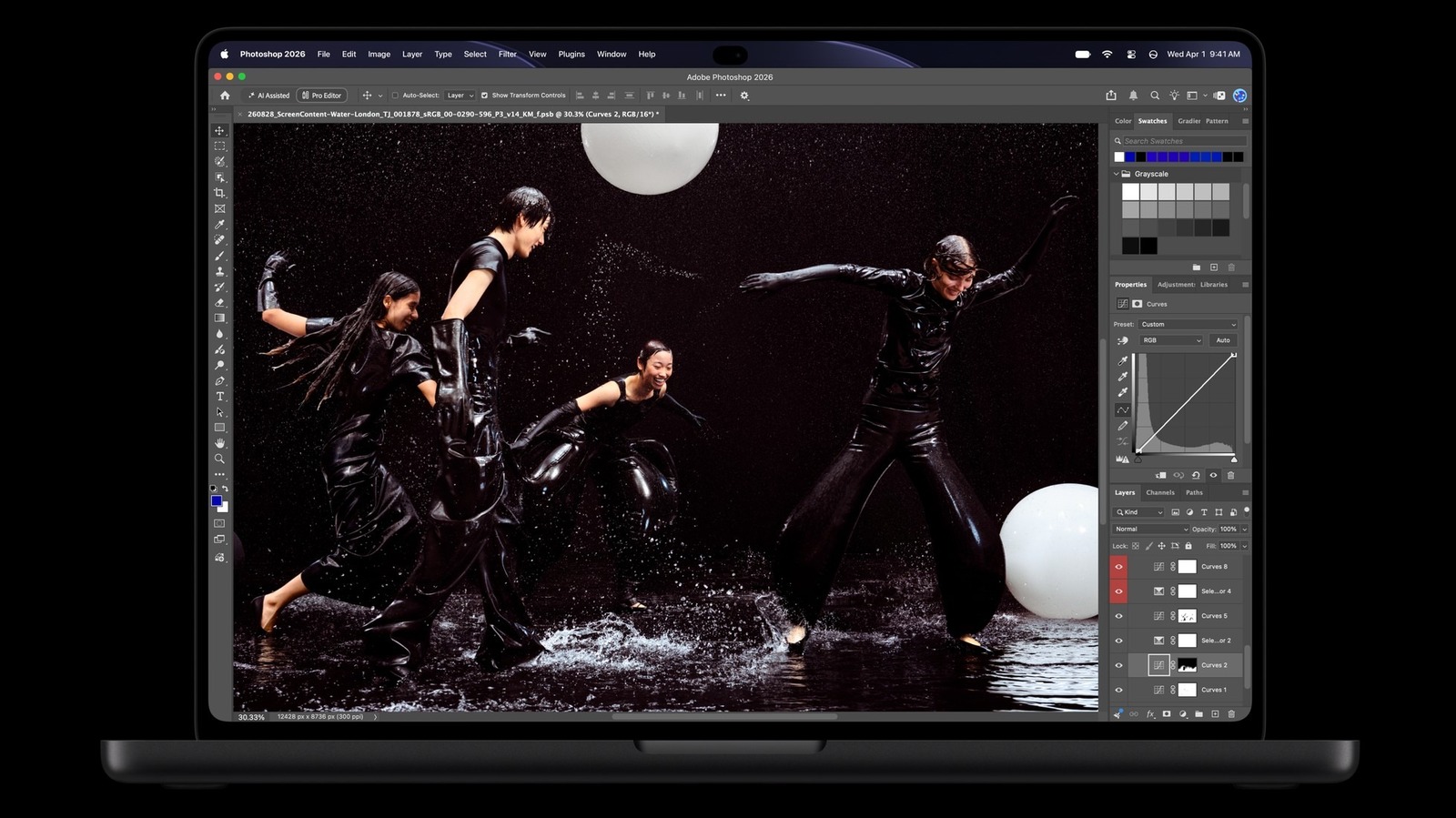
With all the buzz about Apple finally releasing a touchscreen MacBook Pro, you may have forgotten about the other key display technology of the new model: OLED, or what Apple calls PROLED XDR. It’s typical for Apple to change a standard tech term to a catchy marketing-focused name, but in this case the designation “PRO” seems justified.
The new MacBook Pros are aimed squarely at photographers, artists and video editors, who justify the high price for a high-quality touch display. To appeal to these people, Apple didn’t just integrate a touch feature into OLED display and call it a day. Rather, it has built what looks like one of the best pro laptop displays ever, with high brightness and contrast, excellent color accuracy and even a display engine that adapts to the age of a pixel.
For the new models, Apple used Tandem OLED technology (first employed in the M4 iPad Pro) which stacks several organic layers into a single display panel. Judging by an Apple graphic in its press release, it seems to use a triangular pixel arrangement and not a striped RGB OLED system that can provide sharper texts (we reached out to the company for clarification on this).
There are several key advantages to Tandem OLED tech, namely high peak HDR brightness, a lower burn risk and a longer panel lifetime. It’s also brighter and more color accurate when viewed from an angle. At the same time, it also maintains and improves the primary advantage of OLED displays: extremely high contrast.
Apple says the new MacBook Pros with PROLED XDR deliver up to 2,000 nits peak HDR, compared to 1,600 nits peak HDR for current models with Mini LED tech. That’s very high for an OLED display and at least as bright or brighter than any other OLED laptop on the market (if accurate). Apple also has an “industry-leading” 10,000,000:1 contrast ratio, much higher than current MacBook Pro models.
The PROLED XDR screens also offer high color accuracy. Apple says the new models now cover both the P3 (HDR) and Adobe RGB color gamuts “with notably wider coverage in green and cyan areas.” They cover 80 percent of the Rec.2020 gamut for HDR video editing and color grading, an impressive figure for a laptop display.
 Apple
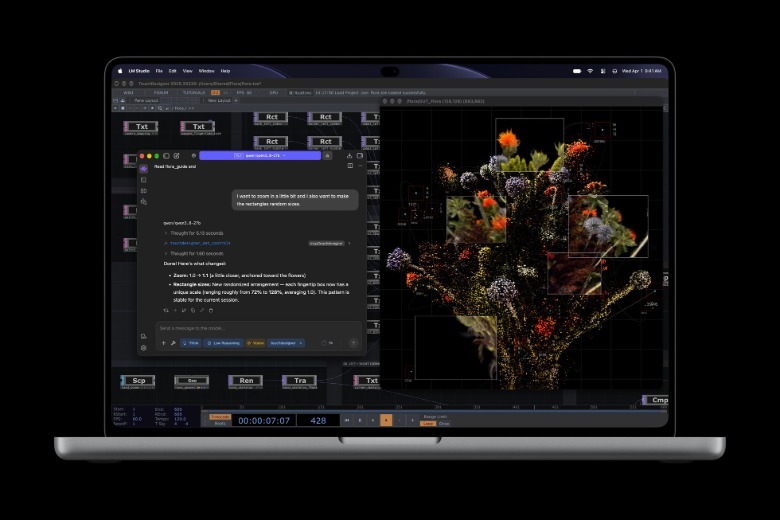
The company also touts “cutting-edge factory calibration” to ensure brightness, white point and color gamut with standard targets, making it useful for “filmmaking, design and even medical imaging”, claims Apple. Its advanced display engine also controls the color and brightness of each pixel “at the sub-millisecond level” to compensate for content, temperature and environment. This tech also addresses a key problem with OLED (organic pixel degradation over time), by adapting the age and use of each pixel.
The new laptops use Apple’s 120Hz ProMotion display for reasonably high refresh rates when gaming or creating content. And if you occasionally work outdoors or in a bright environment, you can get the new models with Apple’s nano-texture option, which is “now precisely etched into the cover glass,” Apple says, to further reduce glare.
The new MacBook Pros with PROLED XDR Touch Displays probably aren’t worth the higher $400 base price for most people. With all the technologies it is stuck in the display, but the models will be terribly tempting for users who earn their money by creating content.