Share
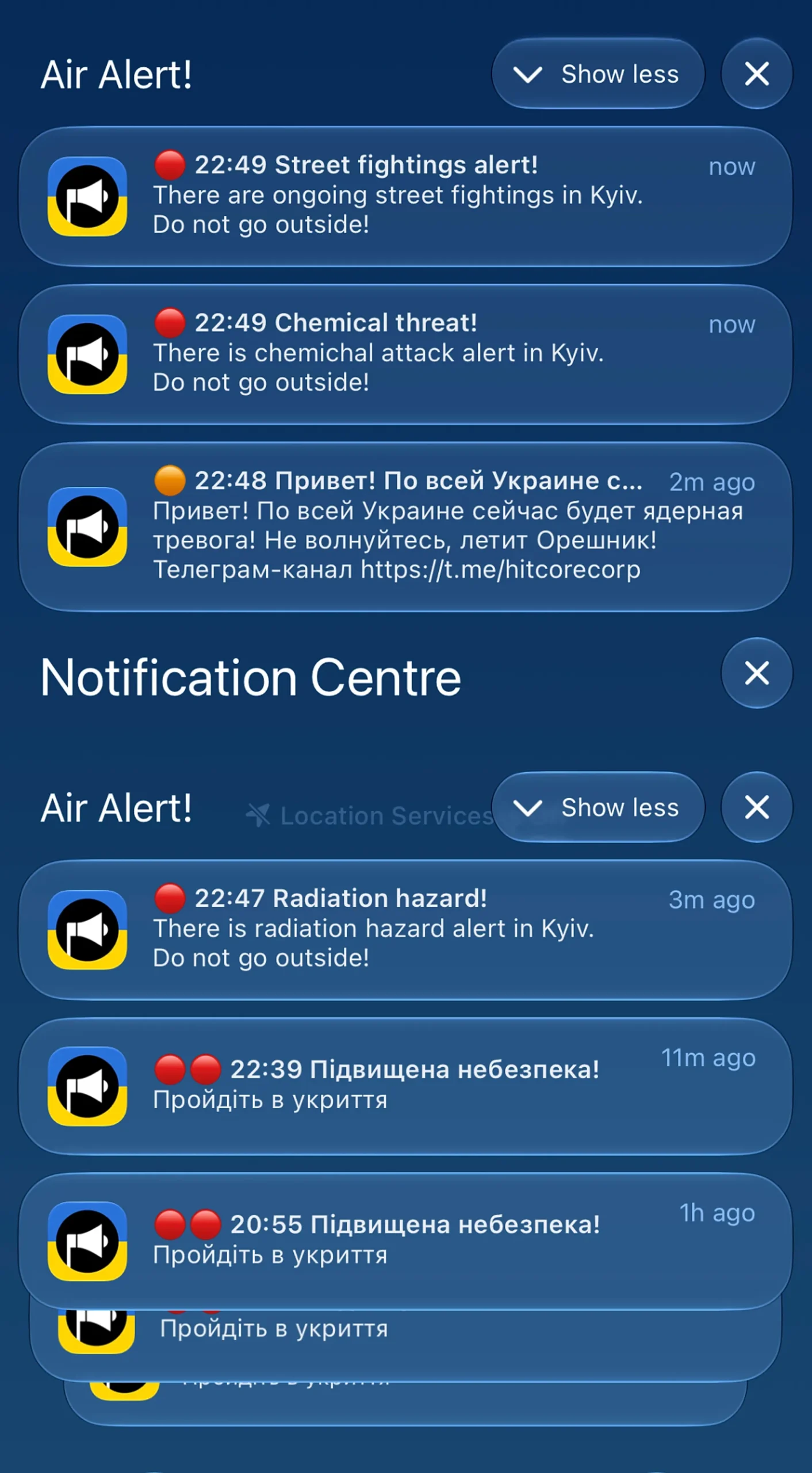
Air warning applications in both Ukraine and Russia were compromised by cyberattacks on Sunday night that sent out false emergency warnings that included fabricated threats of nuclear attacks, radiation leaks, chemical risks and street fights..
The security breaches coincided with the end of the longest localized ceasefire of the war, implemented in Ukraine’s eastern Kherson region and brokered, par par, by US First Lady Melania Trump. The ceasefire officially expired on Sunday after Russia refused to extend it.
For years, residents on both sides have depended heavily on these mobile applications for security information as a vital lifeline against daily aerial bombardment. In Ukraine, where citizens have endured nearly five years of conflict, the compromised app abruptly pushed airstrikes to red levels.
A Kiev resident named Olena described the immediate panic to the BBC, saying: “The first thought was ‘oh my God, I’m not ready for this’. I’m ready for blackouts, for a cut in central heating and water supply, but not for a nuclear attack.
Olena noted that her husband subsequently received alerts for Street fighting in Kyiv and messages written in Russian. She added: “Then I understood that someone had attacked the app because all the notifications I was getting [are] in Ukrainian.”
In an official Telegram post, the Ukrainian Air Force urged calm, saying: “The Air Alert application is likely subject to hostile interference. There is no radiation threat! Stay calm and follow our updates on our channel.”
Hours after the Ukrainian breach, Russian authorities confirmed that one of their air raid alert applications was also targeted by a “massive cyber attack” that spread false information to the public.
An alleged screenshot shared by a partisan group operating in Russian territory warned users that “nuclear warheads are mounted on P1-Suns [a Ukrainian attack drone] was launched in all regions of Russia.”
The rough alert contained profanities and told residents that there was a “Risk of [things] come alive” before instructing them to “stock and hide emergency food for three weeks.”
Although it remains unclear whether the simultaneous cross-border hacks were directly related or part of a retaliatory tit-for-tat exchangeCyber experts note that the informal language used in the hoax alerts points to hacktivist networks rather than formal government directives.
The Ukrainian Center for Strategic Communications put the blame squarely on Russiawhile Kremlin spokesman Dmitry Peskov did not address the specific breach, instead noting that the Russian government’s Internet resources are under “constant cyberattacks” around the clock.
Both governments moved quickly to reassure the public and restore full functionality to their respective citizen security platforms.
Related posts
Discover more from Tech Digest
Subscribe to get the latest posts sent to your email.