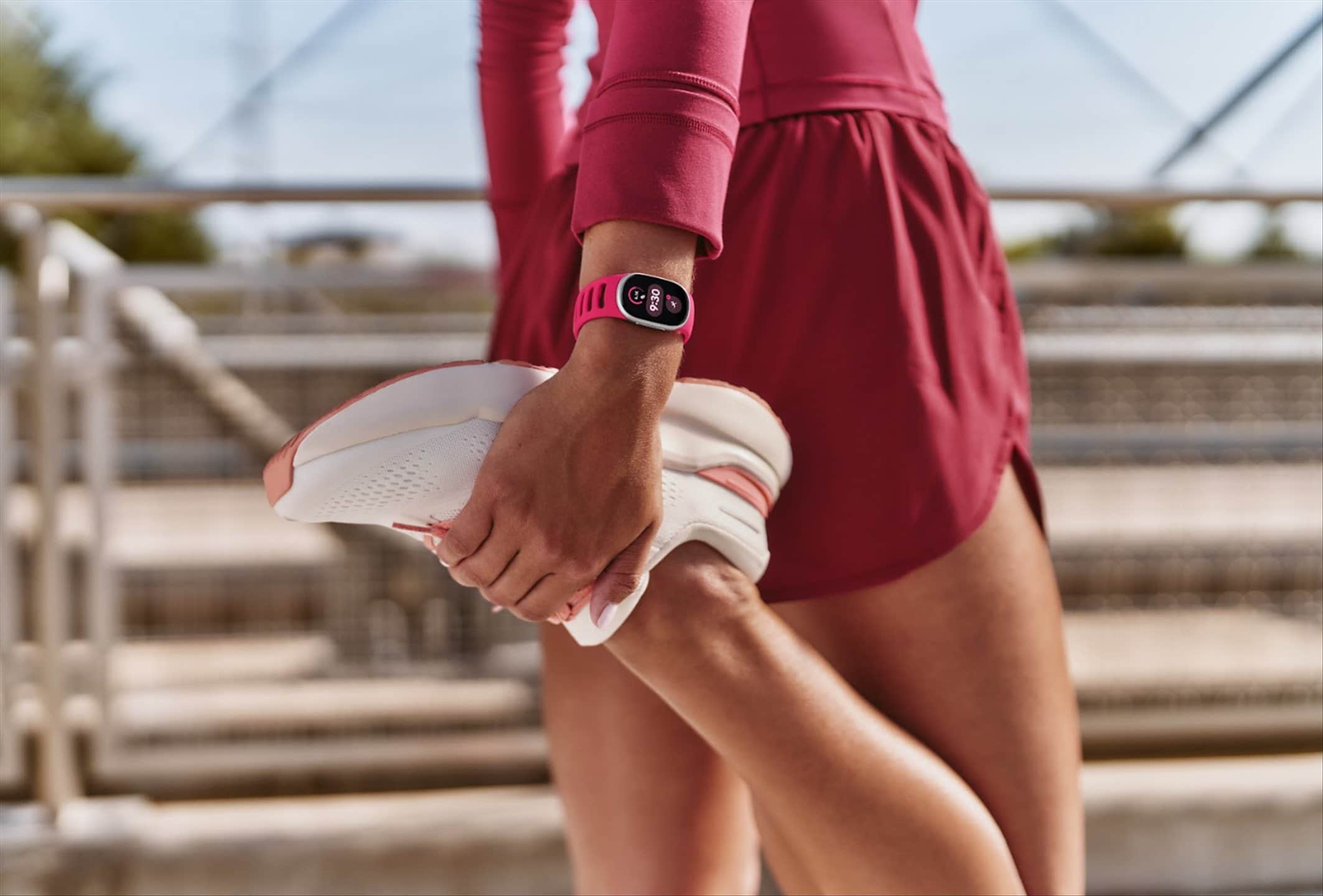
Google introduced the Fitbit Edge, a slim fitness tracker with a larger OLED display, enhanced activity tracking, built-in GPS and AI-powered health coaching. The device is available for pre-order in Australia and New Zealand ahead of its October 27 release.
The Google Fitbit Edge is designed to sit between the company’s Pixel Watch smartwatch range and its screenless Fitbit Air wearable, offering a combination of fitness tracking, health monitoring and everyday smartwatch features in a compact design.
The new tracker incorporates Google’s personalized health coach, which provides fitness and wellness guidance through a Google Health Premium subscription.
Fitbit Edge has a recycled aluminum case that measures 11.5mm thick. According to Google, the case is 45% lighter than the Apple Watch Series 12, while its curved design is intended for a comfortable fit for all day and night use.
The Fitbit Edge features what Google describes as its largest and brightest fitness tracker display yet, offering 46% more viewing area than previous Fitbit trackers.
Its hybrid OLED screen is designed to remain readable in direct sunlight and supports customizable watch faces, viewable information tiles and an updated interface based on the experience introduced with the Pixel Watch 5.
A redesigned physical side button provides tactile feedback and allows users to access functions such as workout controls without relying entirely on the touchscreen.
The interface displays information including step counts, weather updates, heart rate, sleep metrics and menstrual cycle tracking.
Fitbit Edge also supports Google Maps, media controls, and call and message notifications, bringing select smartwatch capabilities into the fitness tracker category.
Google equipped the Fitbit Edge with support for more than 50 training modes, including running, Pilates, high-intensity interval training and track workouts. The updated exercise interface provides real-time metrics such as pace, heart rate zones, workout splits and performance goals right on the display.
Built-in GPS enables outdoor activity tracking without requiring a connected smartphone. Google claims that GPS tracking accuracy has been improved by up to 40% compared to previous generations, supported by an upgraded GPS chipset and nano-shaped technology integrated into the aluminum housing.
An integrated altimeter also measures elevation changes during activities such as hill running, stair climbing and outdoor workouts.
The device can automatically recognize and categorize up to 100 workout types, allowing users to record activities even if they haven’t manually started a workout session.
Google says the automatic tracking system uses contextual activity analysis to identify different exercises and include them in weekly fitness goals.
Health monitoring is another major focus of the Fitbit Edge, with Google introducing its Health Guardian features alongside a number of biometric sensors. The device supports continuous optical heart rate monitoring, high and low heart rate alerts, and wrist electrocardiogram (ECG) assessments.
It also includes a dedicated skin temperature sensor that measures overnight fluctuations, alongside heart rate variability (HRV) and sleep stage analysis to provide daily arousal insights. Google says Health Guardian can monitor changes in blood pressure and insulin resistance trends, though these features require a Google Health Premium subscription.
Through Google’s Health Coach, subscribers can receive personalized lifestyle recommendations, explanations about changing health patterns and adjustments to fitness plans based on their recorded data. The company is also positioning the service as a way for users to better understand their health information before discussing potential concerns with a healthcare professional.
Despite its slim design, Fitbit Edge offers up to seven days of battery life on a single charge, according to Google. The extended battery life is intended to support continuous activity monitoring and overnight sleep tracking without frequent charging.
The tracker also supports fast magnetic charging, with Google claiming that a five-minute charge will provide enough power for a full day of use when the battery is low.
Fitbit Edge has a water resistance rating of up to 50 meters, making it suitable for a range of exercises and everyday activities.
Google also introduced a modular internal design and replaceable battery, making the Fitbit Edge the first repairable Fitbit fitness tracker. The changes are intended to extend the useful life of the device.
Australian prices and availability
The Google Fitbit Edge is priced at AU$269 in Australia with pre-orders available through the Google Store and participating retail partners. The fitness tracker is scheduled to go on sale on October 27, 2026. Eligible new and returning customers who purchase Fitbit Edge also receive a free three-month Google Health Premium subscription, which provides access to the company’s personalized coaching and select advanced health monitoring features.