
There is some solid free software that can help you keep your computer healthy.
The temperature of your CPU is one of those things you don’t really think about unless something is wrong with your PC. When it works, this little chip makes everything you do on your computer—from opening multiple browser tabs to editing photos and playing your favorite games—smooth.
But if your PC is suddenly slower than usual or your fan starts sounding like a jet engine, there’s a good chance it’s overheating and the culprit could be your CPU.
Don’t panic! CPU temperature can fluctuate for many different reasons, and there are several free tools available that will tell you how.
Monitoring the temperature of your CPU
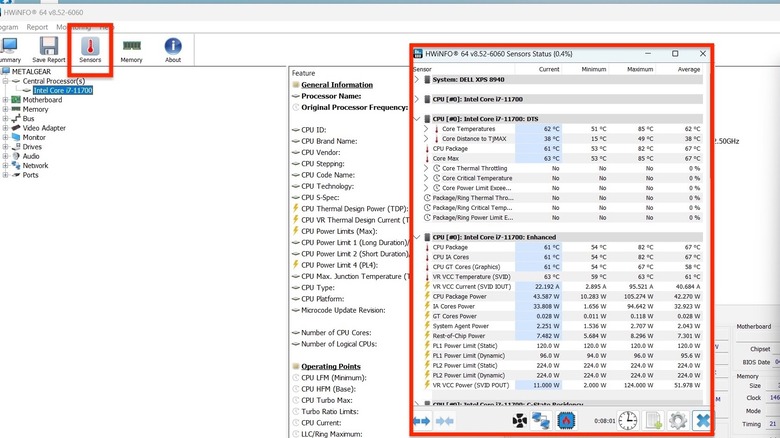
One of the best tools you can use to check the temperature of your CPU is HWiNFO, a free diagnostic tool that gives you a ton of real-time data about the hardware in your PC or laptop. Once installed, open the program and click on the sensors Tab to bring up a new window with temperature readings (displayed in Celsius) about your CPU.
There are other free apps like Core Temp and HWMonitor that also provide the same information. Whichever you choose, it can be helpful to turn them on every so often to see how your CPU performs under different conditions. For example, you can open a game, video editing software or other resource-intensive program to see how the CPU temperature changes compared to idle.
While the exact numbers vary by CPU, an average running temperature of 60 degrees Celsius or below is typically considered a good baseline for everyday use. But if the CPU consistently hovers between 70 and 90 degrees Celsius, you should look into what is causing the spike and if there is a long-term problem. Pressing 90 degrees and above could indicate some serious overheating and reduce the life of the CPU if it doesn’t cool down.
You’ll know ahead of time when it gets to that point: Most modern CPUs will throttle performance if the temperature is too high, slowing down your PC significantly as a way to protect itself. But if throttling is still not enough to cool the CPU, you may also experience freezes and crashes.
Keep in mind that these temperature readings are just guidelines and that your experience will vary depending on which CPU model you have. But if you are curious to push the limits of your processor (such as overclocking for better performance), it is best to consult the original manufacturer for more accurate temperature ranges.
What do you do when it’s hot?
There are a few steps you can take if your CPU is running hotter than normal. It could be as simple as getting rid of a program that is eating up all your processing power – you can test this yourself by opening Windows Task Manager and closing any apps that are hogging the CPU.
But if the temperature still doesn’t drop, your PC may have more of a hygiene problem than a software one. You can open your tower to see if dust has accumulated in the fans or on the components themselves. Use a can of compressed air to push the dust out and improve airflow in your case. Many cases also have dust filters that can be removed and cleaned.
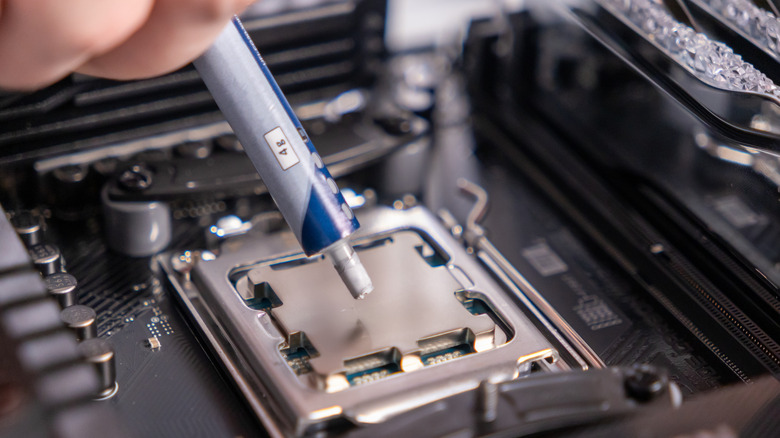
You may also need to apply thermal paste on the CPU, which can dry out over time. The paste serves as a thin layer of connection between the CPU and its heatsink, helping to dissipate the heat when the temperature rises. This isn’t particularly challenging to do yourself, but does require temporarily removing the cooling hardware from your CPU, so find a good guide online and follow along.
The temperature of your CPU is only one indicator of the overall health of your PC. But at a time when the price of PCs and laptops has skyrocketed due to the AI bubble, it’s more important than ever to be proactive about taking care of your electronics.
In addition to GPUs, RAM and storage, the prices of CPUs have been steadily increasing. Earlier this year, both AMD and Intel – two of the biggest chip manufacturers for PCs – raised their CPU prices and plan to do it again. So regular check-ups like this can help extend the longevity of your PC and avoid the need to buy expensive replacement parts.