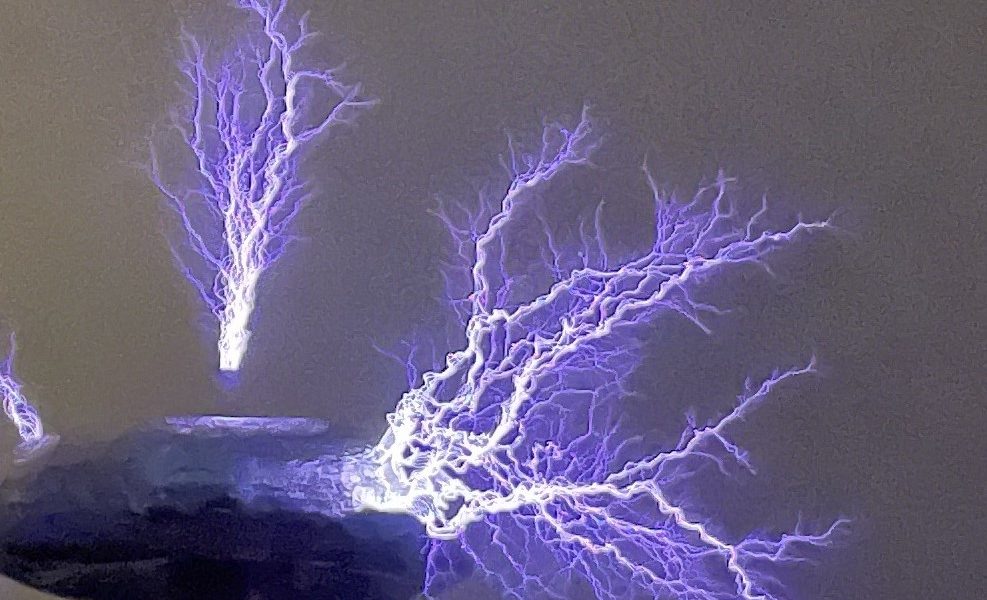

Maker Faire Rome – The European Edition: 23–25 October 2026
Gazometro Ostiense, RomeTickets are available exclusively online at makerfairerome.eu.
Humanoid football, hands-on research, and more return to the Gazometro: The 14th edition runs from 23 to 25 October with 26 secondary schools, 27 universities and research centers, 145 projects and new programs spanning robotics, craft, books, food and design.

More than 400 exhibition stands will fill the Gazometro Ostiense in Rome from 23 to 25 October as Maker Faire Rome – The European Edition returns for its 14th edition. Organised by the Rome Chamber of Commerce, the event brings together makers, companies, start-ups, researchers, universities and schools. This year, 26 secondary schools and 27 universities and research centres are taking part, with 145 projects between them.
The programme is built around three main areas – Innovation, Creativity and Discovery – but the real thread running through the three days is practical experience. Visitors can see working prototypes, test technologies, talk to the people who built them, join workshops and watch research move out of the laboratory and into public view. Robotics and artificial intelligence feature heavily, alongside digital manufacturing, circular economy, agritech, aerospace, design, education and new forms of creative production. Although primarily in the Gazometro itself, part of the programme will once again take place at the nearby Istituto Superiore Antincendi.
Humanoid robots take to the football pitch

One of the biggest additions for 2026 is Italy’s first International Italian Open RoboCup Humanoid Soccer tournament. Teams from universities and research centres will compete with five humanoid robots on each side. Once a match begins, the machines play autonomously, reading the pitch and making their own decisions without human control. Among the teams competing is SPQR from Sapienza University of Rome. In August, the team reached the final of the World Humanoid Robot Games in Beijing and was the only non-Chinese team still in contention during the final three days of the competition. SPQR belongs to Sapienza’s Department of Computer, Control and Management Engineering and has competed in RoboCup since 1998. The team is led by engineer and researcher Vincenzo Suriani. Read more about it from MFR communications lead Ursula Pala HERE.
Robotics beyond the lab
Running alongside Maker Faire Rome is I-RIM 3D 2026, the eighth edition of the conference organised by the Institute of Robotics and Intelligent Machines. The scientific programme covers assistive and medical robotics, collaborative systems, Embodied Intelligence and Physical AI, as well as the growing use of artificial intelligence and robotic agents in industry. A new I-RIM 3D DEMO programme will put research systems directly in front of visitors. Live demonstrations will run throughout the three days, giving the public the chance to see robots operating and interact with prototypes developed by research teams.
The I-RIM 3D Exhibition will bring together work from universities and research centres, while RoboPitch will give selected start-ups and research groups the opportunity to present robotics proof-of-concept projects to investors, universities, companies and innovation hubs. CNA Roma will add a practical business perspective, looking at how robotics and AI can be used by craftspeople and smaller companies. Here is a related video demonstrating robotics concepts and lab prototypes from the I-RIM community.
Italian craftsmanship meets advanced technology
Another new strand for MFR 2026 is AvantCraft, an exhibition examining how Italian craftsmanship is changing as digital fabrication, robotics and artificial intelligence enter workshops and production processes. AvantCraft is curated by Stefano Micelli, Professor of Business and Management at Ca’ Foscari University of Venice, and organized by Upskill 4.0. The exhibition is divided into three areas: mobility and precision engineering; contemporary craft across ceramics, glass, scagliola and inlay; and fashion, jewellery and biomaterials.
The objects themselves carry much of the story. Visitors will find high-performance cars, titanium bicycles, 3D-printed ceramics, hand-set titanium jewellery, large-scale embroidery and materials made from waste. Among the exhibits is the Dallara Stradale, made in an environment where advanced composite engineering still sits alongside manual assembly and specialist technical knowledge. A light, mechanically pure vehicle, it has everything needed – and only what’s needed. Moreover, it is analog: it does not allow superfluous electronics to compromise what really counts, both on the road and the track: fun.

Technology built around people
A number of projects this year focus less on what technology can do in theory and more on what it can solve in practice. Inail and the Italian Institute of Technology will present research into workplace safety, including wearable devices, robotics and systems designed to improve training. For example, an eye-tracking system studies how people look at potential hazards and how visual attention affects risk perception.
The SIDE haptic exoskeleton, developed by Inail and Sapienza University of Rome, recreates forces and physical interactions within virtual or augmented environments. It is intended for training in dangerous settings such as confined or potentially contaminated spaces, allowing workers to practise without being exposed to the real risk.

IIT and Inail will also present XoTrunk and FleXoTrunk, wearable prototypes designed to support the lower back during manual handling. Another project combines a wearable airbag with fall-detection technology. The system can distinguish an actual fall from normal movement and deploy within milliseconds to protect the torso, sides, shoulders and neck. Here’s a look at an earlier model.

From food design to farming in space
Agrifood research at Maker Faire Rome brings together CREA, ENEA, CNR, Sapienza University of Rome, the University of Tuscia spin-off Value Groovers and the CMCC Euro-Mediterranean Center on Climate Change.
CREA will present work on food design, a software-controlled micromalting system and 3D food printing. ENEA will explore food production in extreme environments, including technologies relevant to agriculture in space, cellular agriculture and plant biotechnology. CNR’s FoodEye uses spectroscopy to analyze food, including nutritional characteristics, geographical origin and possible contamination or counterfeiting.
Value Groovers has developed a digital system to help farmers plan plant-protection treatments and choose the right time to intervene, while Sapienza’s MicroBites presents research in food microbiology and technology transfer.

Terravionics combines IoT, Earth observation data and algorithmic analysis to support proactive tree management.

Yeastime takes a different route, applying proprietary ultrasound technology to fermentation processes with the aim of cutting processing times and energy use.
Books become part of the programme
Books@MFR26 adds a new editorial strand devoted to science, technology and social change. The program ranges from education and space settlements to quantum research and human relationships, with authors appearing on the main stage and in dedicated discussions. Visitors will also be invited to bring a favourite book on science, innovation or technology and make a two-minute case for why somebody else should read it. Copies left at the event will become part of a shared BiblioMaker collection.
A DeLorean, a driverless racing car and a robot that cooks cacio e pepe
Some exhibits need little explanation.
A DeLorean DMC-12, designed by Giorgetto Giugiaro and made famous by Back to the Future, will come to Rome from the Enter Technikwelt Solothurn museum in Switzerland.

Sapienza Corse will present Gajarda AWD Hybrid Driverless, a Formula Student racing car equipped with cameras and autonomous actuators that allow it to recognise the course and drive without anyone at the wheel.

A 17-year-old Italian maker will show a neural headset that captures body signals and turns them into commands, together with a 3D-printed bionic hand capable of reproducing human movement using computer vision or electromyographic signals.
Da-Vinci Bicycle takes Leonardo da Vinci’s aerial screw as the starting point for an interactive physical and virtual-reality experience. Visitors pedal a stationary bicycle that drives the mechanism while experiencing flight in VR.
The Gran Sasso Science Institute will make dark-matter research accessible through Seeing the Invisible, with microscopy, a cloud chamber and interactive demonstrations linked to work including the DarkSide-20k experiment.
Robby Minichef brings robotics into an everyday setting. The prototype kitchen robot learns from a chef and can reproduce the actions and timings required to prepare dishes including spaghetti cacio e pepe.

P3DALO, built by a maker from Sardinia, is a five-meter inflatable pedal boat whose paddlewheel and structural components are largely produced on a standard desktop 3D printer. Its modular design allows it to be dismantled and transported in an ordinary car.
CNR opens up current research
The National Research Council will return with projects, workshops and demonstrations spanning robotics, agriculture, environmental research, medicine and open science.
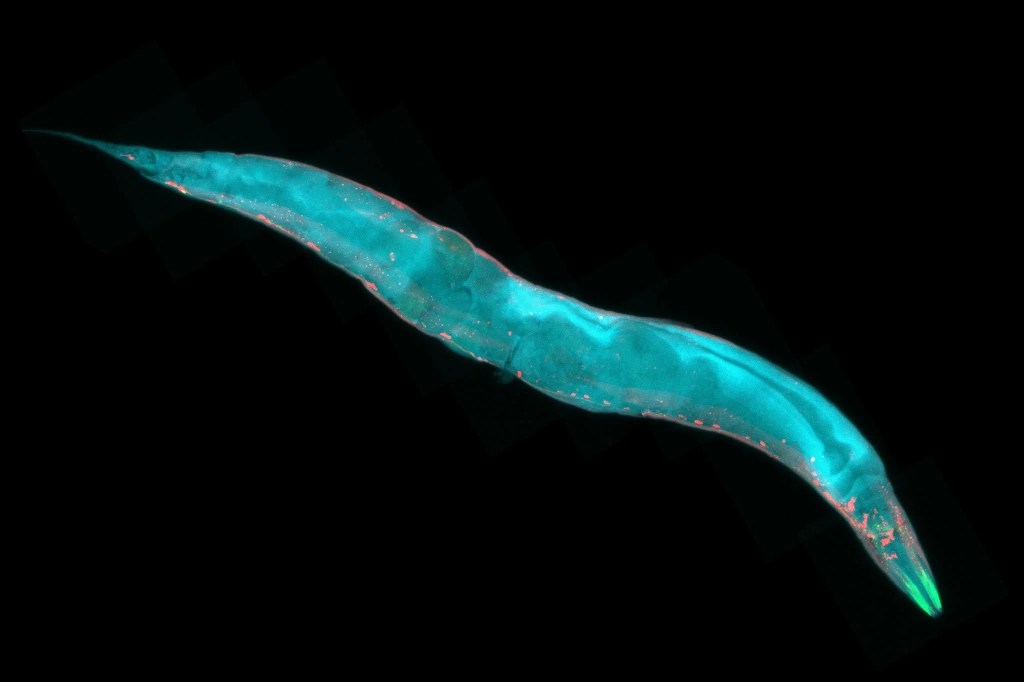
Among them are Babots, which explores biological animal robots, specifically a new type of “living robot” made up of tiny worms (C. elegans), whose behavior has been carefully modified.)for indoor farming; a project using 3D printing to obtain water from air; Melandetect, an app-based approach to predictive diagnostics; and RoseBio, focused on personalized oncology.
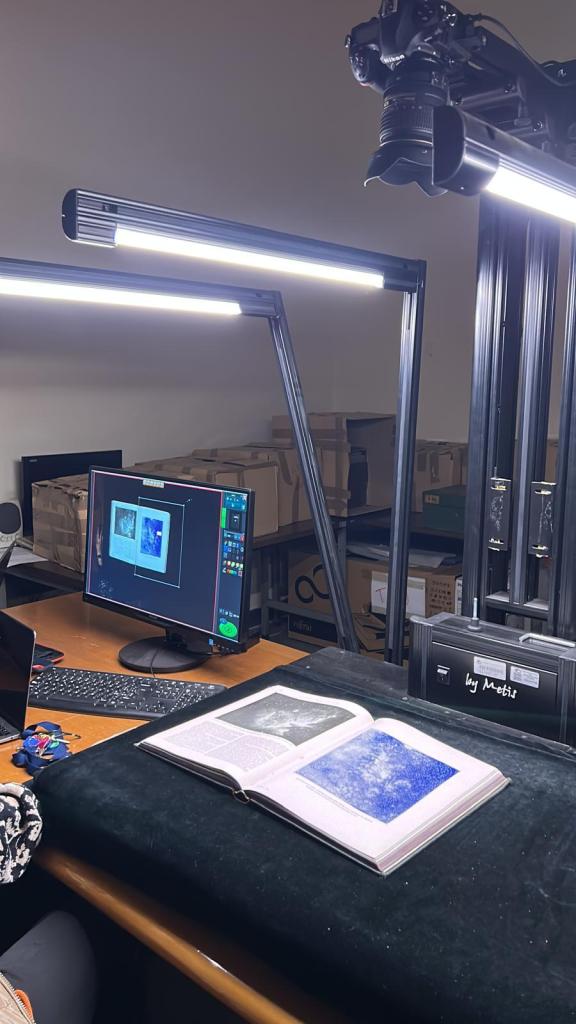
The GLAM project will explore open science and cultural heritage through the collections of the CNR Central Library Guglielmo Marconi, which marks its centenary on 23 October.
Other activities cover sustainable mobility, digital education, architecture and interactive science.
The principle is straightforward: learning starts by trying things.
The Educational and Gaming area is designed around direct participation rather than passive demonstration. MakerCamp, Italy’s only Official Minecraft Partner and Minecraft Education Partner, will use Minecraft in activities focused on coding and problem-solving. Visitors will also find robot battles, circuit printing, augmented reality, driving simulation, space-related activities with the European Space Agency and live chemistry demonstrations. The 2026 edition of STEAM in Minecraft has already attracted 417 registered classes from primary and secondary schools across Italy.

Startup Opportunity: Skills for the energy transition
MAIRE will take part through Fondazione MAIRE ETS and the newly established Green Innovation ITS Academy. The academy was created to train specialist technicians for the energy transition. Its founding members include MAIRE, Acea, Kuwait Petroleum Italia, Orange Branded, schools in Rome and Monterotondo, Campus Bio-Medico University of Rome, Unindustria Perform and CNOS-FAP Lazio Salesiani. Its first two-year Energy Transition Specialist course is due to begin in Rome by November 2026. Unindustria will also select ten member start-ups to exhibit free of charge at Maker Faire Rome. Applications close on 10 October.
Design, consumers and future scenarios
NABA will present AURORA, developed by students on its Graphic Design and Art Direction programme as part of the Computer Art course. Assoutenti APS will hold the ninth edition of Expo Consumatori, looking at how artificial intelligence, digital security, circular economy and financial education are changing everyday consumer choices. Maker Faire Rome is also a founding member of Ecosistema Futuro, promoted by the Italian Alliance for Sustainable Development, ASviS. More than 100 organisations take part in the initiative, which studies megatrends and possible future scenarios. IED Rome will present Design for Schools with GAM Gonzagarredi Montessori, using scale models, workshops and visualisation tools to explore how school spaces can be redesigned through co-design.
Tecnopolo Roma and advanced digital skills
Tecnopolo Roma will present work from its Tiburtino and Castel Romano technology hubs and from the companies based there. Its program includes the R.O.M.E. Digital Hub, part of the European Digital Innovation Hub network. Tecnopolo Roma led a partnership of 25 organisations providing businesses and public administrations with specialist services and practical tools for artificial intelligence and advanced digital skills. That work now continues through participation in the EU Erasmus+ project E.U-Re.C.o.V.E, focused on skills and new models for urban social regeneration and technological transformation.
Competitions and awards
MakeITcircular 2026 focuses on products, services and projects built around durability, repair, reuse, sharing and other principles of circular consumption. The competition is promoted by consumer associations belonging to the CNCU, Italy’s National Council of Consumers and Users. The top prize is €3,000. Applications remain open until 1 October, with the winners due to be announced on the main stage on 23 October.

Top of the PID 2026, promoted by Unioncamere through the Digital Enterprise Points network of the Italian Chambers of Commerce, will recognize small and medium-sized businesses using Industry 4.0 technologies and artificial intelligence.
A new School Edition also launches this year, linking digital innovation, sustainability, schools and businesses.
Institutional participation
Eni returns as Main Partner for the thirteenth consecutive year. Maker Faire Rome takes place within Eni’s Gazometro site in Rome Ostiense, a historic industrial area now undergoing a wider transformation that includes ROAD – Rome Advanced District. In the year marking the centenary of Agip, Eni will present Pioneers to Makers, an interactive space using installations, games, projections and virtual reality to trace a century of technological change and energy research. The Eni2050 Lab will also present research ranging from biofuels and CO₂ capture and storage to renewable energy production and energy storage.
Regione Lazio will have a dedicated area for start-ups, small and medium-sized enterprises and innovation projects from across the region. Companies selected through a dedicated call under the Lazio ERDF Regional Programme 2021–2027 will be joined by the FabLab Lazio network and Lazio Innova’s Spazi Attivi.
Roma Capitale will also take part through the Casa delle Tecnologie Emergenti, presenting start-ups and projects developed through its acceleration programs.
The Italian Trade Agency has supported the international dimension of Maker Faire Rome through its overseas network, helping to select investors, journalists and bloggers invited from European and other international markets.
Practical information: #MFR2026
Maker Faire Rome is promoted and organised by the Rome Chamber of Commerce through its special agency Innova Camera. The 2026 edition is curated by Alessandro Ranellucci together with the event’s area coordinators. The event is produced with the collaboration and support of Regione Lazio and Lazio Innova and with the partnership of the Ministry of Labour and Social Policies, Inail, InfoCamere, Dintec – Unioncamere, PID, Tecnopolo Roma, Unindustria and CNA Roma. Eni is Main Partner. Arduino, DigiKey, MAIRE, STMicroelectronics and Unidata are Gold Partners. Media partners include RAI as Main Media Partner, Il Messaggero as Main Media Partner for press and digital, ANSA and Futura Elettronica as Technical Media Partner.
