The wreck is filed under games, but it is also called a visual novel, an interactive experience, and a playable movie. Florent Maurin is OK with everything. “I like to think that we are humbly participating in expanding the idea of what a video game can be,” he says.
Maurin is the co-writer, designer and producer of The wreck – and here we will let you decide what to call it. The wreck tells the story of Junon, a writer who is abruptly called to the hospital to make a life-changing decision with her mother. The story is anchored by the accident that gives the game its name, but the ensuing narrative is split, and begins to take shape only as players navigate through seemingly disconnected scenes that can be viewed several times from different perspectives. The wreck is far from light. But its powerful story and unorthodox mechanics combine for a unique experience.
“We tried to make a game that’s a little off the beaten track,” says Maurin, who is also the president and CEO of The Pixel Hunt Studio, “and hopefully it connects with people.”
ADA FACT SHEET
The wreck
- Winner: Social impact
- team: The Pixel Hunt
- Available at: iPhone, iPad
- Team Size: 4
Maurin is a former children’s journalist who worked for magazines and newspapers in his native France. After nearly 10 years in the field, he turned to video games, seeing them as another way to share real stories about real people. “Reality is a source of inspiration in movies, novels, and comic books, but it’s almost completely absent from the gaming landscape,” he says. “We wanted to challenge that.”
Founded in 2014, The Pixel Hunt has released acclaimed titles such as the App Store Award-winning historical adventure Lift up and the SMS adventure Bury me, my love. It was near the end of the development process for the latter that Maurin and his daughter were involved in a serious car accident.
“It was honestly like a movie trope,” he says. “Time slowed down. Strange memories that had nothing to do with the moment flashed before my eyes. Later I read that the brain parses through old memories to find relevant knowledge to face such a situation. It was so sudden and so intense, and I knew I wanted to do something about it. And what immediately came to mind was a game.”

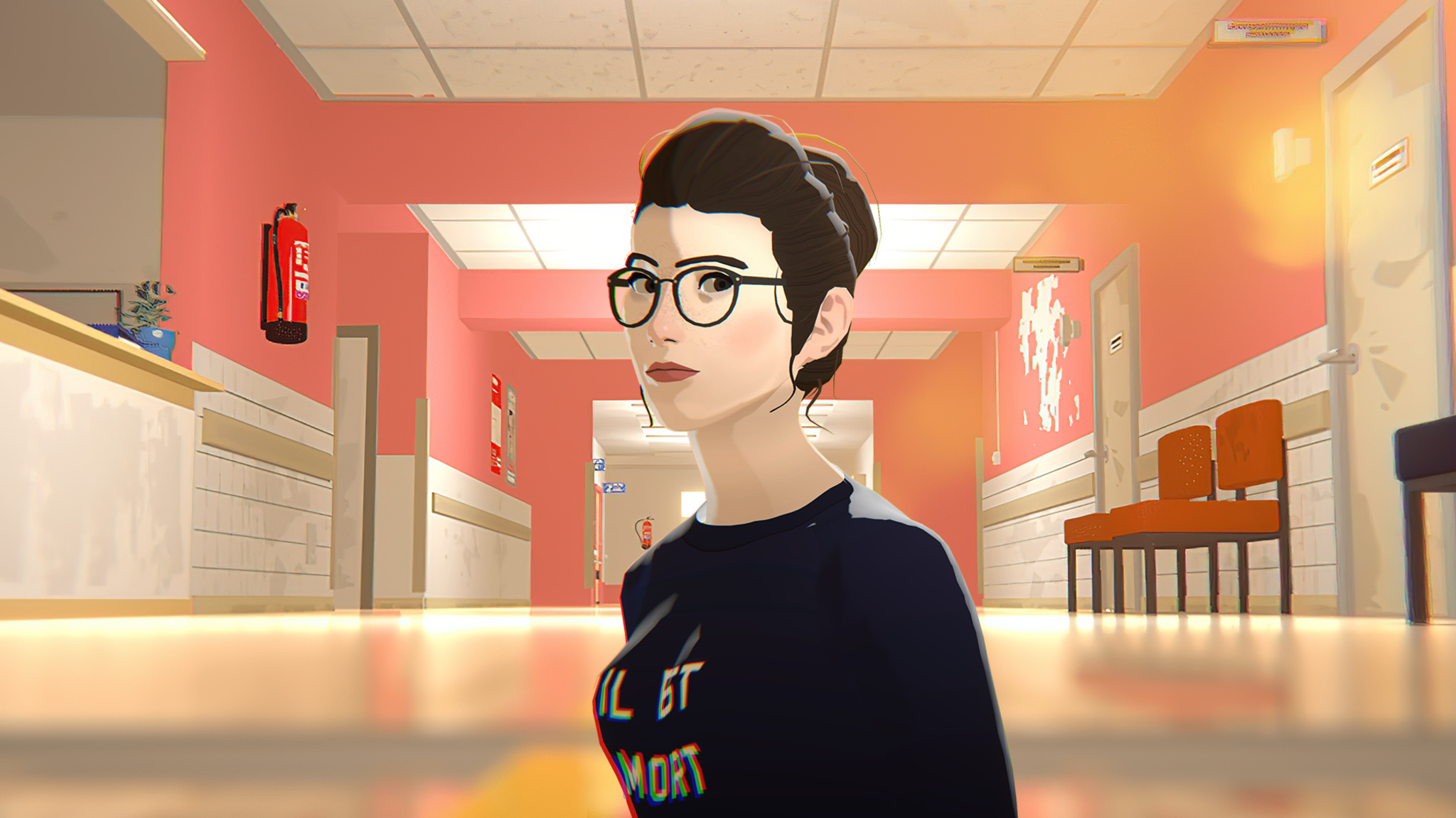
Junon’s interactions with the hospital staff drive the narrative The wreck.
But Maurin was too close to the source material; the accident had left a lasting impact, and he separated himself from the creative process. “I think I tried to protect myself from the intensity of that feeling,” he says. “That’s when Alex, our art director, said to me, ‘Look, this is your idea, and I don’t think it’s going to flourish if you don’t really dig deep and own the creative direction.’ And he was right.”
That was art director Alexandre Grilletta, who helped the development team alongside lead developer Horace Ribout, animator Peggy Lecouvey, sound designers Luis and Rafael Torres, and Maurin’s sister, Coralie, who served as a “second brain” during the writing. (In a bit of serendipity, the game’s script was developed in an open-source scripting language written by Inkle, who used it for their own Apple Design Award-winning game, Overboardin 2022.)

Junon’s sister may not be a very welcome presence The wreck.
The history of The wreck is divided into two parts. The first—what the team calls the “last day”—follows Junon in the hospital as she confronts her mother’s situation as well as revealing interactions with her sister and ex-husband. Maurin says the “last day” was pretty easy from a design point of view. “We knew we wanted a cinematic look,” he says, “so we made it look like a storyboard with some stop-motion animation and framing. It wasn’t really anything too fancy. The part that was much more challenging was the memories.
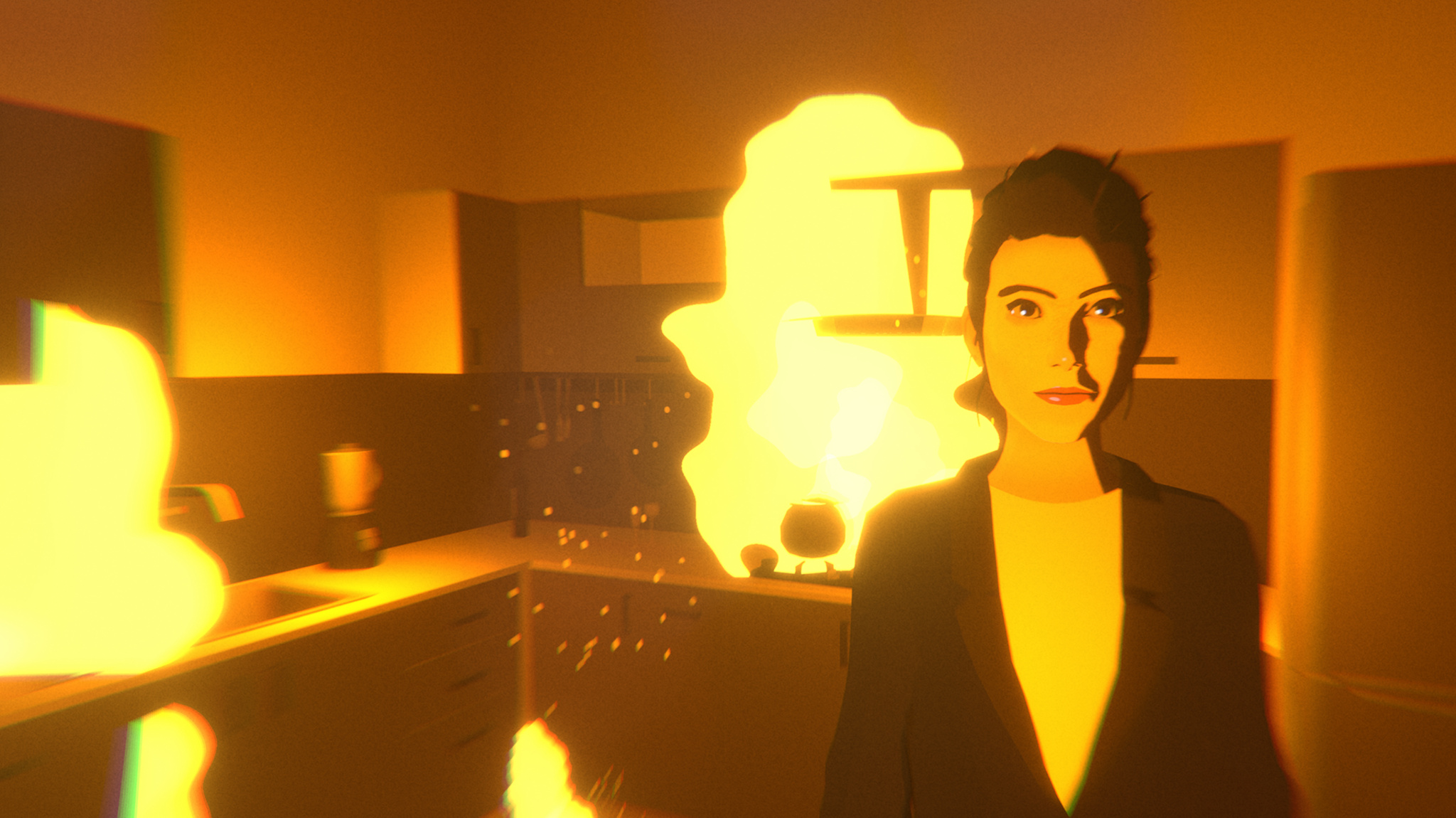
The “memories” – and the backstory they tell – use a clever mechanism in which players see a scene as a movie and have the ability to fast-forward or rewind the scene. These memory scenes feel much different; they are dreamy and inventive, with swooping camera angles, shifting perspectives and words floating in the air. “I saw that first What remains of Edith Finch“says Maurin. “I thought it was an elegant way to suggest the thing that was triggering the character’s brain at that moment.”

Junon’s thoughts are often conveyed in floating expressions that surround her in stressful moments.
Successive viewings of these memories can reveal new details or cast doubt on their legitimacy – something Maurin wrote from experience. “I’ll give you an example,” he says. “When my parents brought my little sister home from the hospital, I remember the exact moment they arrived in the car. It’s incredibly vivid. But the strange part is: this memory is in the third person. I see myself looking out the window to see her on the street – which is impossible! I rewrote my own memory for some reason, and only my brain knows why it works so correctly.
Throughout the development process, Maurin and the team kept close to the idea of a “moving and mature” story. In fact, early prototypes of The wreck were more gamified—in one version, players grabbed floating items—but playtesters found the activity distracting. “It took them out of history,” says Maurin. “It broke the immersion. And that was counterproductive to our goal.”

Articles and The wreck – like this tin of peppermints – often have a greater meaning.
Maurin admits that playing with this mindset is a challenge. “Some players are curious about our games and absolutely love them. Some people think: “These do not fit the perception of what I think I enjoy. And maybe the games are for them, and maybe not. But this is what we have been doing for 11 years. And I think we’re getting better at it.”
Meet the 2024 Apple Design Award winners
Behind the Design is a series that explores the design practices and philosophies of the finalists and winners of the Apple Design Awards. In each story, we go behind the scenes with the developers and designers of these award-winning apps and games to discover how they brought their remarkable creations to life.