
The new form factor offers convenience at a price.
Book-style flip phones feature enough screen real estate to rival compact tablets, and at this point it’s reasonable to ask whether the former should replace the latter. For example, the latest iPad Mini has an 8.3-inch screen, only 0.3 inches larger than the Pixel 11 Pro Fold and Galaxy Z Fold 8 Ultra. At 7.6 inches, the iPhone Duo is slightly smaller, but the difference is small. Most people don’t carry around a compact tablet, but when an 8-inch device folds down to a typical smartphone size, that’s different.
In fact, this convenience is the strongest argument for replacing your tablet. You can use all the features you normally use on a smartphone and fold the screen if you prefer a tablet experience. A foldable bar also simplifies mobile data as most tablets need a second cell plan when you are around and need full access to its functions. If you don’t have a second plan, you may have to pay extra for a hotspot on your phone.
The folding bar consolidates these applications into a single device and slips into your back pocket when you’re done. It’s not perfect, and it’s not a universal replacement, but it’s more than enough to replace a casual tablet, especially on the go.
Tablets still win for long sessions and serious work
It’s a different story if your tablet is a big part of your daily work. A folding bar is great for two, maybe three-app multitasking and portable entertainment, but it can’t match the convenience and larger workspace that a tablet typically brings to the table. This is especially true with tablets designed for video editing, graphic design or work that benefits from a larger canvas.
Granted, flip phones can connect to most of the same peripherals as a tablet can, making them pretty capable travel tools for basic work. But that’s not the same as a real workhorse. Using your phone as your full-time work machine puts a lot more strain on the battery, which is a big trade-off since it’s also your main device for everyday use.
The price difference is also worth considering, as foldables are not very budget-friendly. The Pixel 11 Pro Fold and Galaxy Z Fold 8 start at premium prices, so combining your phone and tablet into one product can still cost more than buying separate devices, depending on what you need from each.
What are the disadvantages of a flip phone?
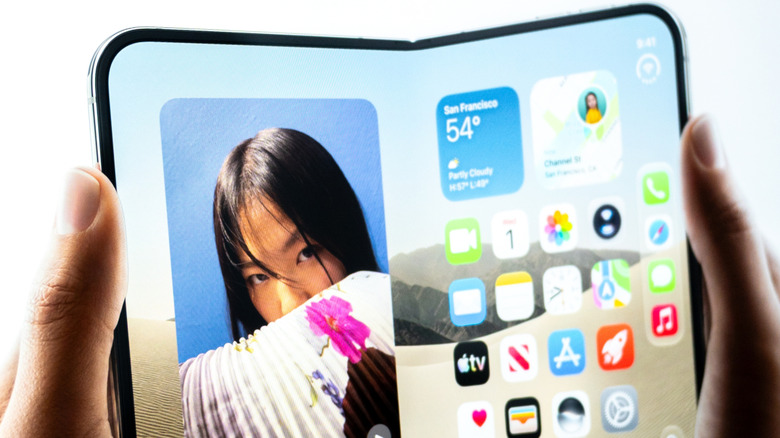
Foldable phones still come with more compromises than either a standard smartphone or a dedicated tablet. The biggest reason is the hardware. Much has been said about hinges and folding displays, but ultimately they just add complexity and cost, along with another element of wear and tear.
The design presents some trade-offs in everyday use. It offers more screen real estate, but that also means a bulkier, heavier device, with an internal screen that’s visible under certain lighting conditions. To be fair, foldable phones are getting thinner and lighter, although they still have a way to go.
There are sometimes software compromises as well. Android handles large screens and split-screen multitasking better than it used to, but sometimes an app uses the unfolded screen less than gracefully. Some apps simply stretch a vertical layout over a wider panel, and the result is… interesting.
Flip phones are a premium convenience, but not quite a full replacement for every phone and tablet. They can absorb the work of a casual compact tablet, but there are some compromises along the way. For those who are not yet looking for new compromises and need a mobile workhorse, a special tablet is still the best bet.