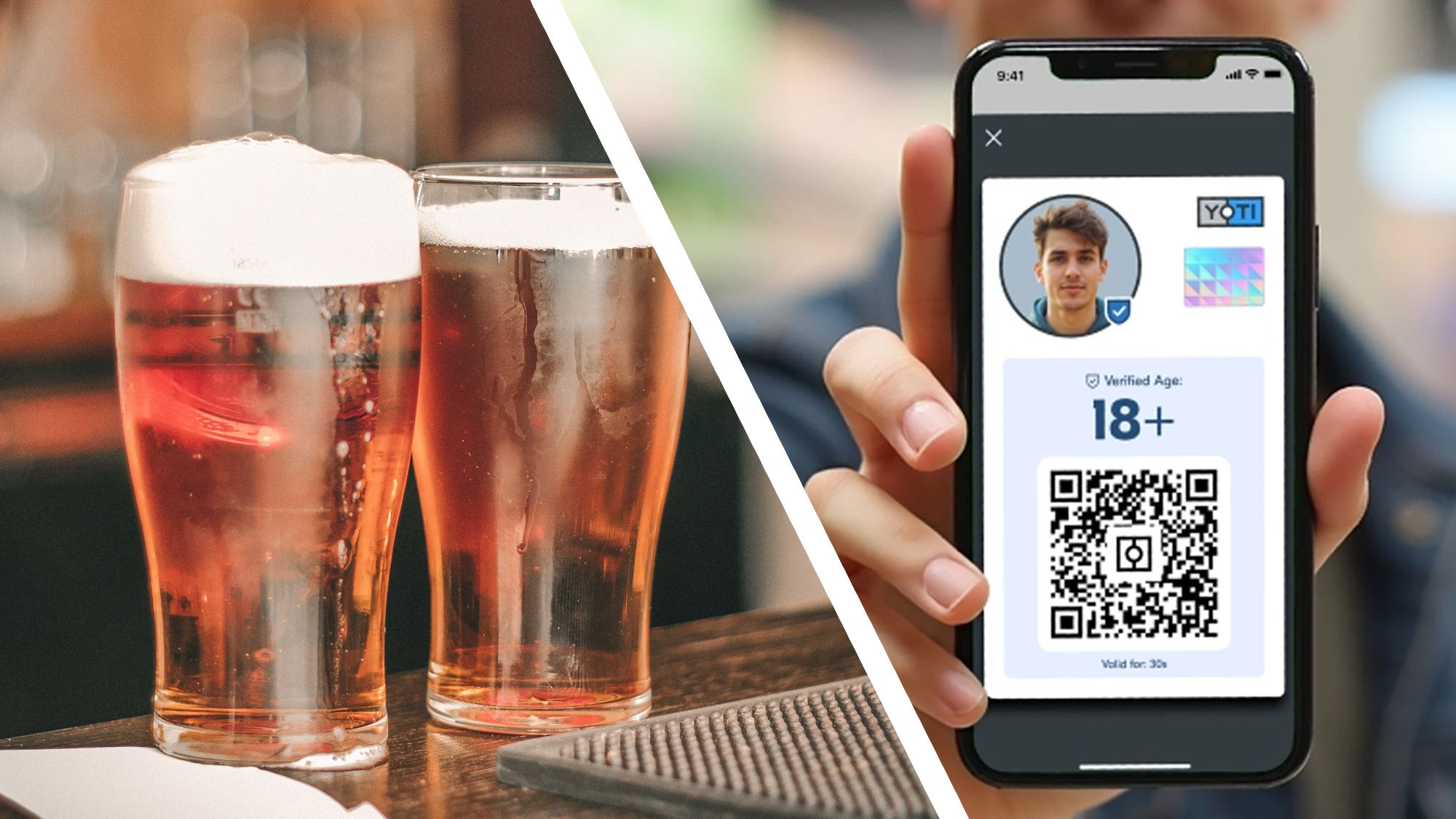
- From September 15, licensed venues can accept digital ID as proof of age
- Physical ID is still accepted, and adoption is voluntary
- There could be some issues with time limits set on user verification
New rules introduced by the UK government today mean that licensed premises such as pubs and restaurants can now accept digital ID apps – such as Yoti ID or Post Office EasyID – as proof of age. However, physical ID will still be accepted, and adoption of digital ID apps is voluntary for locations.
In theory, it sounds like a solid step forward: younger drinkers can present a QR code to scan, or tap a reader on their phone, rather than fish out a physical ID that requires scrutiny by staff, who must carefully count 18 years backwards from the current date to find out if someone is old enough to buy alcohol.
I don’t ask much of the world, but being able to get a drink from a bar without a long and frustrating wait is something I appreciate. If that means I get held up by age checks less often, I’m all for it. It should also be easier for the 18 and 19-year-olds, who never forget their mobile phone, but leave their driver’s license at home.
Latest Videos FromTechRadar
However, I saw a potential major flaw in the scheme, as mentioned by the Guardian: “The customer will usually only have about 30 seconds between scanning their face on their phone and validating the credentials with the merchant to prevent underage drinkers from borrowing the phones of older friends.”
Speed up or slow down?
If that’s really how these age verification apps work – and I haven’t tested them myself – then I’m afraid I could be in for a longer wait rather than a shorter one. I can see the point of trying to stop younger people passing their phones around, but requiring a face scan every time could be problematic.
Imagine being stuck behind a line of young adults in a music bar, all trying to scan their faces and get to the front of the queue in 30 seconds. I’ve also never been to a brightly lit gig, which means that a lot of the time these face scans can fail due to a lack of proper lighting.
Maybe it will all work out fine – fingerprint scans or PIN codes would certainly be a better bet than a face scan if that’s an option, and there definitely needs to be a prerequisite for these apps to work offline – but I’m bracing for some early issues as everyone gets used to the scheme.
I’m well past the age where anyone could mistake me for being under 18, but if the government is interested in expanding the scheme further, I’d like to see these apps also supported at self-check-outs – it would mean I wouldn’t have to wait for a member of staff to wander in when buying alcohol at the supermarket.

Follow TechRadar on Google News in the add us as a preferred source to get our expert news, reviews and opinion in your feeds.