Editor’s note: Turning an app idea into a viable product takes seven steps, and choosing the right development team is the most important. Specializing in software engineering for demanding industries, including healthcare, insurance, and investment, ScienceSoft can be the team for your mobile app.
Mobile apps are all unique in their own way: they differ in complexity, functionality and intended use. Because of this diversity, there is no universal approach to mobile app development. However, there are general steps that are common to different projects and describe the app development process as a whole.
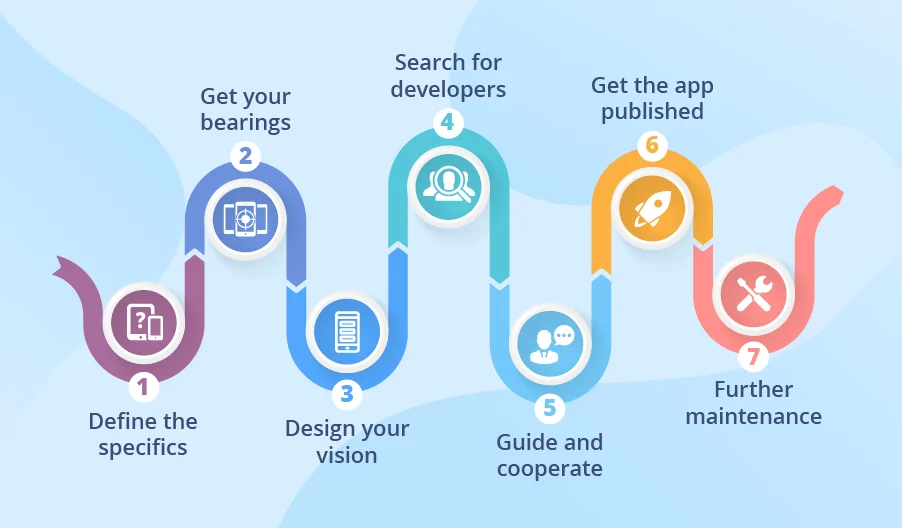
In this article, we will guide you through these mobile app development steps so that you know what to do after a great app idea has popped into your head.
1. Define the specifics
To make your app idea concrete, you need to define it in technical terms. That is, you have to put the app concept into certain categories based on three main factors:
Decide if you want to cater to the iOS or Android audience. If you want to meet both platforms, set your priorities and choose the market you want to join first.
If you chose a single platform in the previous question, you should most likely go native. If you’re considering catering to both markets, look at cross-platform and hybrid opportunities.
Think about how you want your app to generate profit. You can pay your users to install the app, earn money from advertising or in-app purchases. Until recently, the third option was common only for Android apps, but in-app microtransactions have proven effective, and now they also drive many popular iOS apps.
Whether you make these decisions on your own or with the help of mobile advisors, once you have your answers, move forward with confidence.
2. Get your bearings
In the second step of the mobile app development process, see your future competitors by looking at the apps based on concepts that resonate with you. No implementation can be exactly what you thought, but most likely, very similar apps already exist. Don’t let that discourage you; instead, take advantage of it.
Check out similar apps to better understand what you want (and don’t want) to be your app. Pay attention to user feedback: what do they expect from an app like yours? What are they not satisfied with? What improvements do they suggest? With these insights, your app can absorb all the best that is already present in the market and have a jump start by providing a thoughtful solution.
3. Design your vision
Before turning to a professional UI/UX designer or application developer, try to recreate your own vision of the future app, as you will be asked for this type of input anyway. You can do it on paper by drawing the main frames of your app and marking essential information about button actions and animations.
But for better convenience and effectiveness, you can use a simple prototyping tool like Justinmind. It requires no code knowledge; all you have to do is drag and drop pre-made UI elements onto the virtual mock-up model of your app. Since it is also possible to assign actions to the navigation elements and adjust transitions, you can even interact with a prototype of your app and see it live.
4. Search for developers
Finding a mobile team to implement your concept is the most important step in the entire app development process. To get your app into the right hands, do a thorough investigation of your potential business partner. In particular, consider her:
- Mobile development experience (in general)
- Technology skills (relevant to your project)
- Industry focus
- Customer testimonials
- Case studies and demos.
Don’t make a hasty decision and take your time to approach 5-10 vendors.
5. Guide and cooperation
After finding and hiring a vendor, you do not release yourself from responsibility. If you want to end up with a great app, you should continue to work on the application alongside the developers.
It is important that you agree on the cooperation model as early as possible. Do you want to participate as little as possible in the project and get a product for a fixed price, or do you prefer to keep up with the progress, change your requirements along the way and pay for any additional changes you request?
In the second case, discuss the amount, form and frequency of your communication with the developers to make sure you both understand how much you will be involved. Be prepared to dedicate some of your time to providing detailed feedback during UI/UX design, development and testing phases. If you are a business owner, consider becoming a project sponsor to manage everything on your behalf.
6. Get the app published
Unless you are developing an app that you need to integrate with internal systems, the next step in the app development process is to publish the app to a store. Since app stores have specific quality standards and security requirements, you are on the safe side when delegating publishing to your developers. The store’s approval to release the app is the final quality assurance test they must pass.
7. Continued Maintenance
You can never say your app is ‘complete’, even after its release. There is always room for growth and improvement, so you probably want your app to have regular maintenance and updates. By constantly working on your app together with the development team, you can keep its content and design relevant as time goes by. Depending on the type of your app, you may also need a permanent tech support team to spot and fix any technical issues right away.
Summary
Although each project is unique, the mobile app development process always consists of a series of steps described above. To bring your app from the state of a simple concept to a viable product, you need to decide on its technical characteristics, analyze the market, communicate your design and UI architecture visions and finally work closely with developers during the implementation, testing and maintenance phases. To have a successful app, follow each step carefully.