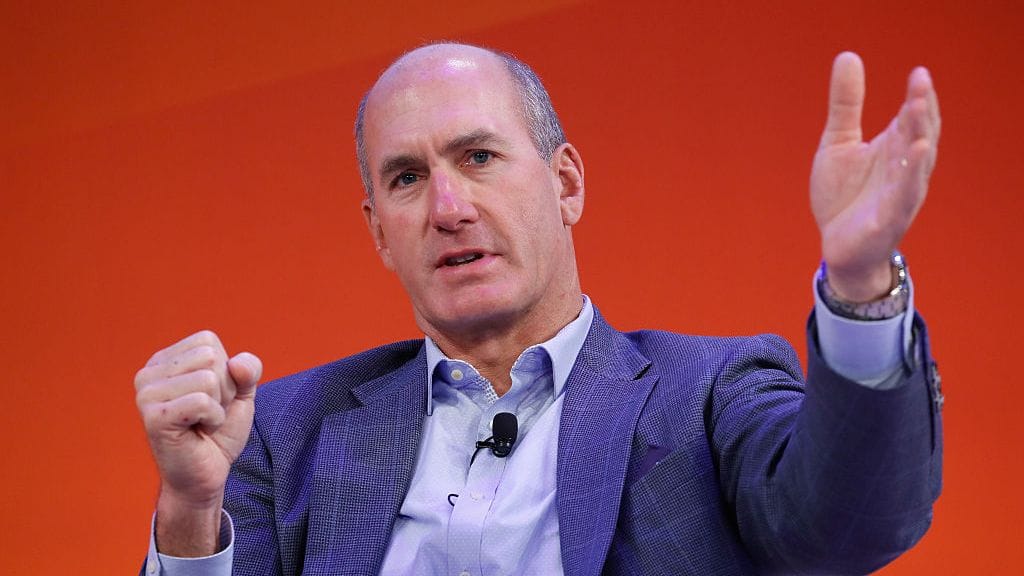
- AT&T’s CEO said Starlink’s plans to launch a rival service are not “viable”
- They argue that fiber is simply so much faster than satellite connectivity that it would be impossible for Starlink Mobile to compete
- However, AT&T has also announced plans with Verizon and T-Mobile to use satellites to eliminate dead zones
We’ve heard a lot lately about Starlink’s plans to launch a traditional mobile carrier that aims to rival the likes of AT&T, T-Mobile and Verizon — and perhaps even make such a service available globally. But if AT&T CEO John Stankey is to be believed, it probably won’t happen — or at least not anytime soon.
Speaking to Axios, Stankey claimed Musk’s plan is “not a viable strategy,” in part because it relies heavily on Starlink satellites rather than fiber infrastructure. When it comes to fiber, Stankey said “nothing beats it” because it’s three times faster than satellite connectivity, adding that “satellite, at its best — if everything happens right in the next 10 years” — is “still not going to beat fiber.”
Of course, Musk likely recognizes this, as Starlink’s plans also involve more traditional network infrastructure, with the company previously outlining its plans to install small cellular base stations alongside Starlink dishes on homes and businesses.
Latest Videos FromTechRadar
But Stankey also has his doubts about that, saying that the endeavor would be hugely expensive, and that “there are all sorts of other issues, like you can’t broadcast cellular signals from a house without their permission, unless you change the law on that. We can go down a whole bunch of reasons why that wouldn’t work effectively.”
It could be a long road for Starlink Mobile
Some analysts are also unconvinced by Musk’s plans, with Bernstein analyst Madison Rezaei saying: “Starlink Mobile can fill a meaningful gap in the market (ie remote, rural, maritime, disaster scenarios), but we believe it has a long way to go to replace terrestrial carrier networks.”
On the other hand, Alex Besen, CEO of Besen Group, was a little more positive about the chances of Starlink Mobile in a conversation with Fierce Network, saying of conventional carriers that “maybe not a majority of it, but definitely, they will lose” some of the consumer market.
And while Stankey claims not to be worried, it seems he’s not taking any chances, with AT&T, T-Mobile, and Verizon recently launching a joint venture to clear coverage zones through satellite connectivity.
So whether Musk’s Starlink Mobile plans are viable or not, it appears that more and more carriers will use a mix of masts, fiber and satellites to serve their customers.

Follow TechRadar on Google News in the add us as a preferred source to get our expert news, reviews and opinion in your feeds. Make sure you click the follow button!
And of course you can too Follow TechRadar on TikTok for news, reviews, unboxings in video form, and receive regular updates from us WhatsApp as well.