Quick summary
The first phones announced for 2027 show a jump in camera specifications, supported by a huge battery capacity designed to extend the experience longer.
With new hardware powering these devices, it’s hardware features that buyers actually want, while AI features are being pushed by manufacturers.
Every year in September there is a flurry of smartphone launches. It is a relatively recent phenomenon, with the impetus of Apple’s iPhone launch, which has taken place every September since 2012.
Brands that were once launched in February are now launched in September, as if to say that anything Apple can do, we can do better. This competitive drive has also launched the supply chain forward. For example, Snapdragon Summit – which sees the launch of new Snapdragon hardware to power new devices – now takes place in September, instead of its slot 5 years ago, which was in November.
However, the emerging trend is clear: smartphones now pack huge batteries and ultra-tier cameras, to push these devices into a completely new experience.
Battery life remains top of consumer wants
Battery life has long been at the top of smartphone buyers’ wish lists. That was verified in a YouGov survey (albeit from 2023), ratified in a CNET survey in 2026, and it plays out in real time through the evolution of silicon-carbon technology.
The move from lithium-ion to silicon-carbon batteries comes with a downside, but it has led to battery capacities that would have been unimaginable a few years ago. We recently reported on Honor’s phone launching with an 11,000mAh battery – that’s double what you’ll find in the iPhone 18 Pro or the Samsung Galaxy S26 Ultra.
(Image credit: Qualcomm)
This is not an isolated case. After the announcement of Qualcomm’s new Snapdragon 8 Elite Gen 6 hardware (which for the first time also comes in an extreme version), we saw the announcement of the Xiaomi 18 Pro Max, with an 8500mAh battery, while the Oppo Find X10 Pro Max has an 8000mAh battery.
These phones not only expand the physical capacity of their batteries (in many cases also paired with fast charging), but with the core hardware moving to 2nm and leading to new efficiency, multi-day use should become commonplace.
The camera is still a key battleground
If you watched the launch of the new iPhone 18 Pro, you noticed that the first frame of the intro video is dedicated to the camera. While Siri AI and performance were the first topics discussed, the camera section took up almost 30% of Apple’s presentation of the new iPhone. That just highlights how important the camera still is to smartphone users.
While Apple settled on variable aperture (a feature I tried and found really impressive) the big spec battle is raging elsewhere. It’s not about flagship phones anymore, it’s about ultra phones with ultra cameras. The “ultra” naming trend, started by Samsung, is wearing thin with many brands choosing the Pro Max name instead, but the trend remains.

(Image credit: Oppo)
Big cameras are in, and the best dressed smartphones for 2027 have one, two, or maybe three 200-megapixel sensors. Samsung’s Galaxy S26 Ultra with its solitary 200-megapixel main camera looks a little under-specified, while the Honor Magic 9 Pro Max is equipped with two 200-megapixel cameras, developed with ARRI. (It also has an 8800mAh battery.)
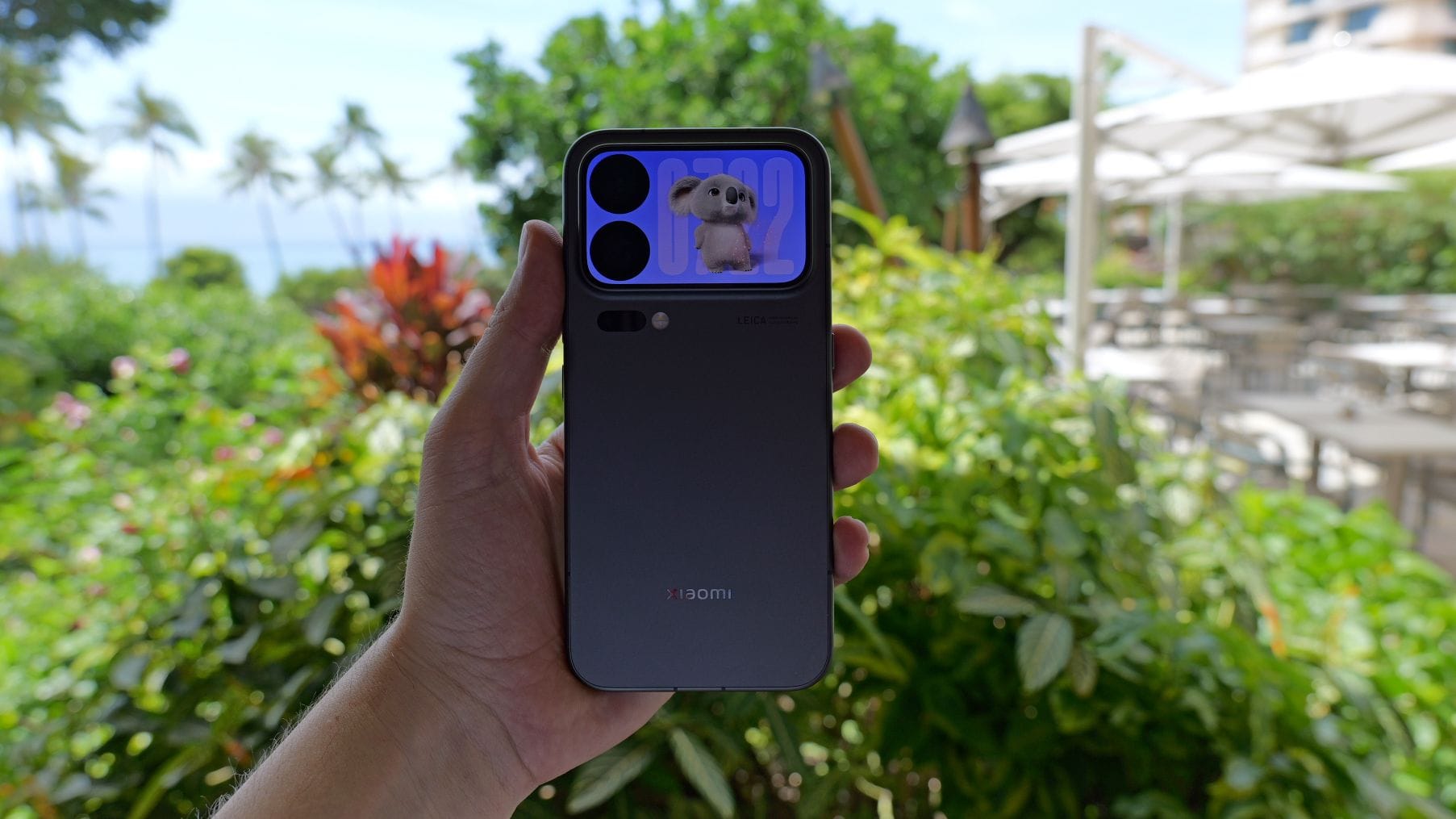
The Xiaomi 18 Pro has a dual 200-megapixel camera developed with Leica, while the Oppo Find X10 Pro Max has no less than three 200-megapixel cameras developed with Hasselblad. The Motorola Signature 27 also gets a 200-megapixel telephoto camera, not to be left out.
Gargantuan housings and snap-on telephoto lenses that offer 200x zoom are now common, making the modest 48-megapixel sensor feel a bit pedestrian.
However, we’ve been through this megapixel race before, and we know that more megapixels don’t make for better photos. Big sensors, precise image processing and quality lenses make a difference, which is why we see names like Hasselblad and Leica lending their weight to the proceedings.
Hardware is important, but software is highlighted
These hardware trends for 2027 point to smartphone manufacturers addressing things that real customers want, but that often seems at odds with the message that brands are pushing.
Samsung’s recent Galaxy Z launch was dominated by new Galaxy AI features, much of the discussion at the Snapdragon Summit was about the power for AI that the expanded NPU (neural processing unit) can provide, while Apple’s iPhone launch was largely focused on Siri AI.

(Image credit: Mike Lowe / Future)
AI is at its height, the so-called tech bros who whip the industry into a frenzy about the potential that AI brings, but so often land in a frivolous feature, like a cartoony image generation, or something that wants to make decisions for you that you can easily make yourself.
According to Pew Research, only 10% of Americans reported being excited about AI, while 50% say they are more worried than excited. At the same time, research from Stanford University suggests that fear around AI is increasing worldwide.
While the AI message that tech brands want to push may not land as they expect, the promise of longer battery life and an even more capable camera should give smartphone buyers the features they actually want in the best smartphones of 2027.