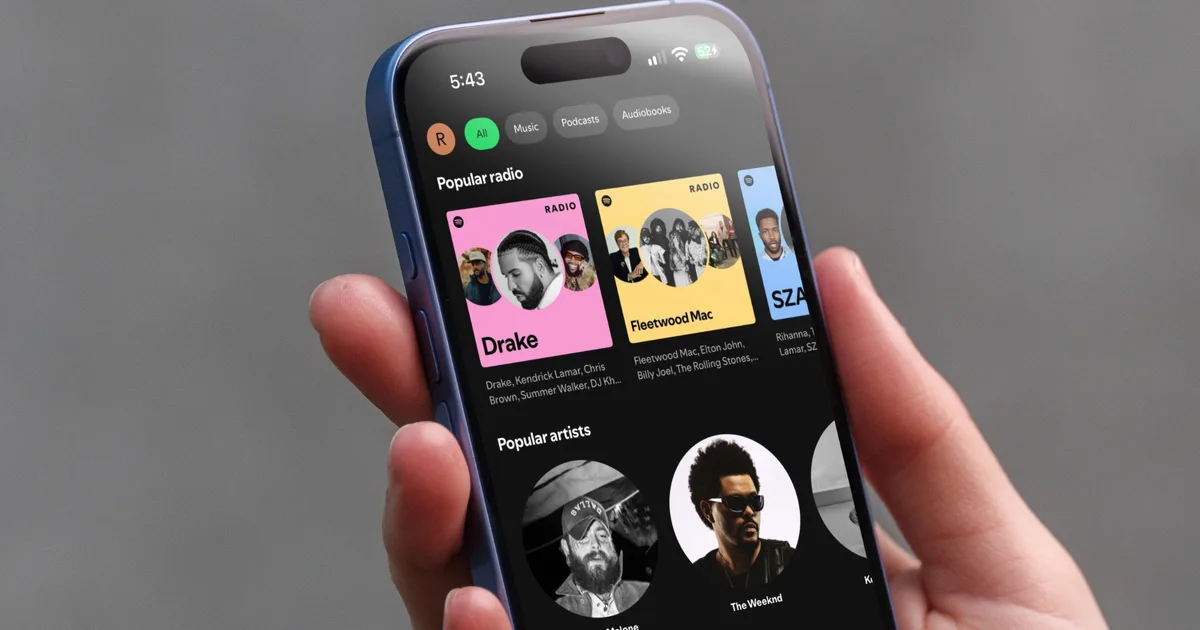
When Spotify launched its Premium Family plan in 2014, it was intended for people who live together, but that hasn’t stopped some subscribers from splitting the cost with friends or family members who live elsewhere. The company has tried to enforce this rule several times, and now it’s introducing a different way to check if everyone on a plan really belongs to the same household.
Some premium family members can now be asked to verify where they live by scanning a QR code displayed on the plan manager’s phone. Both people have to be in the same place when the scan happens, and Spotify says the code changes every few seconds, making it difficult to simply send a screenshot to someone else.
If you miss the check, you can be locked out for a year
Spotify gives members seven days after receiving the notification to complete the QR scan. Anyone who misses this window or fails verification will be barred from joining another family or duo plan for 12 months, although they can still sign up for another premium option.
The company already asks family members to provide their full address when they join, if the plan manager changes the address or if Spotify can’t confirm the address on file. Spotify also says it doesn’t track users’ locations and only checks addresses for verification.
Spotify was already down this road
Spotify tried a more direct approach back in 2018, when some family subscribers in the US and Germany were asked to confirm their home address by sharing GPS information. The test has raised complaints because not all families live under one roof, with separated parents being an obvious example.
The same problem has not completely disappeared eight years later. A student living away from home, a parent traveling for work, or family members living apart can still struggle to clear a personal check within seven days, even if they truly consider themselves a family. As for the QR code scan method for the verification itself, unless we’re missing something, I’m sure users will still be able to find a solution.