Vivo could have played it safe with the X500 series. Give the phones a slightly faster processor, slap on a new coat of paint, throw some AI buzzwords around, and call it a day. No one would have been particularly surprised. Fortunately, Vivo seems to have other ideas.
The new X500 lineup consists of three phones: the X500, X500 Pro, and X500 Pro Max. But don’t let the names fool you into thinking these are simply three sizes of the same phone. Each model has its own identity, with differences in display size, processing power, and camera hardware. The X500 gets a 6.59-inch display in the Dimensity 9600M, while the compact X500 Pro packs a 6.36-inch screen in the flagship Dimensity 9600 Pro. Then there is the X500 Pro Max, the big boss of the family, with a bigger screen, upgraded cameras, and the same flagship silicon.
I have the Vivo X500 Pro Max in my hands, and there is already a lot to be excited about. One important caveat, though: this is the global version, not the Chinese variant. The global launch is coming soon, so we’ll have to wait a little longer to see what the whole family brings to the table. For now, let’s talk about the phone that caught my attention.
Design and build: subtle flex, maximum effect
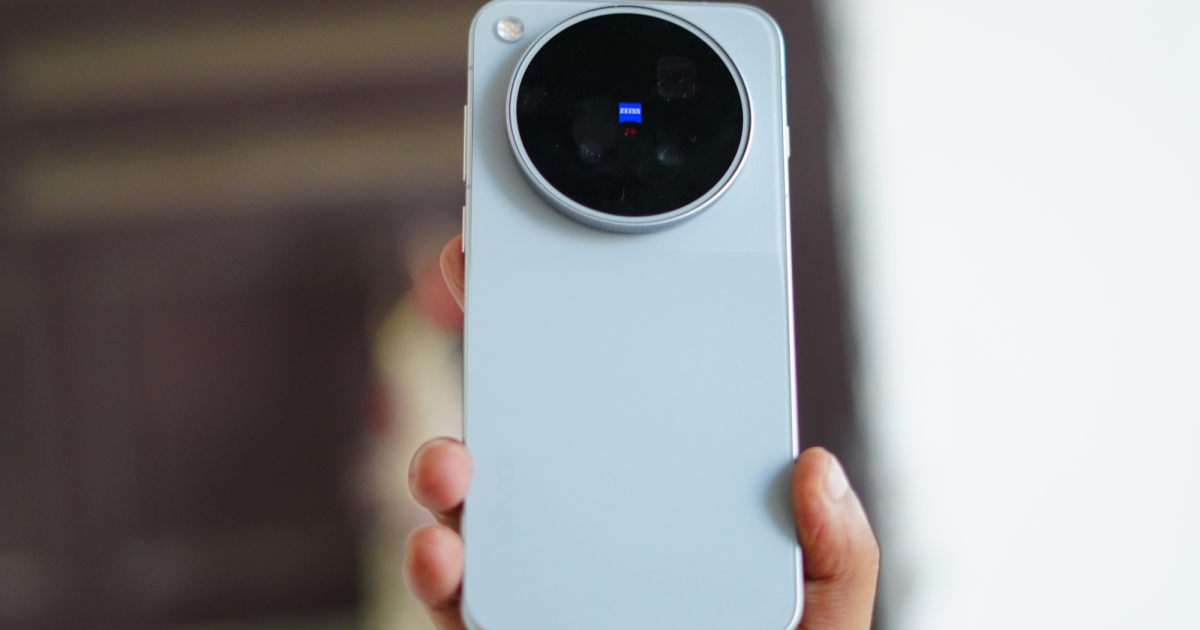
I have the gray version, and frankly, this is the one I would choose. The rear panel doesn’t scream for attention, but look a little closer, and there’s more going on than meets the eye.
The lower half of the back has a matte finish sprayed with small star-like details that sparkle when the light hits them. The top half gets a slightly raised section with a different texture, although the entire surface remains smooth to the touch. It’s understated, classy, and just flashy enough to remind you that this isn’t a run-of-the-mill record.
The camera island is still massive, as apparently smartphone manufacturers have collectively decided that subtle camera bumps are a thing of the past. At least Vivo has dressed it up with a colorful ring, while the flash has changed from a linear design to a circular one.
Elsewhere it’s business as usual, and that’s not a complaint. You get flat glass on the back, flat aluminum rails, and a flat display. The phone also retains its IP69 dust and water resistance rating, so a little rain shouldn’t send you into panic mode.
The box includes a case, a USB cable and a 90W charging adapter. Vivo also offers an optional Photographer Kit with a shoulder strap, an extra quick-release hook, and a case with a camera control grip.
There is one accessory that I wish the global version borrowed from its Chinese sibling: a second case designed around the new rear display that allows you to control the rear cameras when taking selfies. Because if you’re going to take selfies, why not use the better cameras? Unfortunately, global buyers are missing out on this special party trick.
Display: Bigger is better, apparently
The X500 Pro Max gets a 6.85-inch AMOLED display, up from 6.78 inches in last year’s model. That’s also bigger than the screen on the X300 Ultra. The resolution also matches the Ultra, giving the Pro Max a welcome bump over its predecessor.

Peak brightness remains at an impressive 4,500 nits, while LTPO technology allows the refresh rate to adapt to what is happening on the screen. This time it can go all the way up to 144Hz. Translation: Scrolling should feel ridiculously smooth, and animations should look smooth.
You also get an always-on display that can stay permanently activated, an ultrasonic fingerprint sensor, USB 3.2 connectivity, dual stereo speakers and four microphones.
There’s still no dedicated camera button, but I can’t say I’m losing sleep over it. The customizable shortcut key is sticking around, and I’d much rather have a button I can configure to do what I want than another piece of hardware I can barely use.
Performance: Two nanometer problems for the competition
Here is where things get really interesting. The X500 Pro Max is the first phone to run MediaTek’s new 2nm Dimensity 9600 Pro chipset. Yes, two nanometers. We are now at the point where smartphone processors sound like they belong in a physics show.
The chip uses the latest CPU and GPU designs from ARM, with two ultra-prime cores at 4.55GHz, three performance cores at 4.35GHz, and three additional cores at 3.1GHz. MediaTek also claims a 27% improvement in peak GPU performance.

That’s a promising combination of raw power and improved efficiency, especially for demanding games, intensive multitasking, and AI workloads. The chipset also supports LPDDR6 RAM and UFS 5 storage, although Vivo has not confirmed whether the tested phone uses the newer standards or with LPDDR5X memory and UFS 4.1 storage. We’ll talk more in depth in our full review.
On the software front, OriginOS 7 runs on Android 17. OriginOS 6 was a significant step forward, so the latest version feels more like a refinement than a complete overhaul. The interface remains smooth, and Vivo has added AI features, fluid movement, seamless interaction and a new Snap Up Engine for system optimization. I’m not complaining about the familiar look. When something works this well, there’s no need to tear it apart just to make the update feel important. I’ll save the final verdict on performance for the full review.
Cameras: The Ultra’s zoom, minus some of its bragging rights
Vivo has refreshed almost the entire camera system, and the periscope telephoto camera is the star of the show. It’s the same unit found in the X300 Ultra, which is excellent news for anyone who likes to zoom without turning their photos into impressionistic images.

Honestly, the Vivo X500 Pro Max doesn’t just track megapixels. It brings some serious camera technology to the party, starting with one of Sony’s latest 50MP, 1/1.28-inch LOFIC CMOS image sensors. And no, LOFIC is not just another acronym for a marketing department to get excited about.
Short for Lateral Overflow Integration Capacitor, LOFIC technology promises High Dynamic Range (HDR) images with less processing overhead. Instead of capturing multiple frames and stitching them together to preserve highlights, shadows and details while controlling noise, the sensor can achieve similar results with a single shot. For content creators, that’s a pretty big deal. Moving subjects are less likely to appear as accidental double exposures, thanks to a reduced risk of ghosting. The technology also enables more efficient HDR 4K video recording at 60 frames per second while reducing power consumption. Your footage gets the upgrade, without your battery necessarily paying the price.
The camera hardware doesn’t stop there. The X500 Pro Max retains a 200MP telephoto camera and a 50MP ultra-wide shooter, complementing the new main sensor. Features like 4K Cinematic Color Video, auto-framing, and Stage Mode 3.0 further position this phone as a serious tool for creators rather than just an expensive rectangle for social media scrolling.

Want to get closer to distant subjects? Vivo also offers optional 200mm and 400mm telephoto extender lenses, like those available for the X300 Ultra. These accessories open up additional possibilities for long-term photography and creative framing. Just remember that they are sold separately, as apparently closer to your theme comes with an additional price tag.
But no, the X500 Pro Max doesn’t steal every advantage from its Ultra sibling. But with upgrades to every camera except the selfie shooter, Vivo clearly hasn’t treated photography as an afterthought. Fortunately, the cameras seem to be where Vivo wants to make the biggest noise.
First Impressions: This is how you do an annual upgrade
The biggest surprise about the Vivo X500 Pro Max is just how much Vivo has changed. A bigger screen, a new 2nm flagship chipset, refreshed cameras, and a massive battery aren’t the kind of upgrades I’d dismiss as incremental.
The Chinese version gets an 8,000mAh battery, while the global model, which is our unit, comes in at 7,800mAh. That’s a serious amount of battery for a flagship, especially when paired with a chip to improve efficiency. Wired charging remains at 90W, with 40W wireless charging for those who prefer to ditch the cable. Of course, impressive specs don’t automatically make a great phone. I still need to test battery endurance, sustained performance, camera consistency, and how well the software holds up during daily use.
I went into the Vivo X500 Pro Max expecting a decent flagship refresh. Instead, Vivo seems determined to make the competition a little tougher. A massive 7,800mAh battery, a 2nm flagship chipset, a sharper 144Hz display, and sensible camera upgrades make this feel like more than an annual exercise in tweaking the numbers on a spec sheet.
The camera system is particularly interesting. With a new Sony 50MP LOFIC main sensor designed to capture HDR images in a single shot, a 200MP periscope telephoto camera, and a 50MP ultrawide shooter, Vivo seems to be taking mobile photography seriously. The promise of reduced subject ghosting and more efficient HDR 4K video recording at 60fps could make this a particularly compelling option for content creators. Add support for optional telephoto extender lenses, and the X500 Pro Max starts to look like a pretty capable camera that happens to make phone calls.
Of course, the real test is yet to come. Battery endurance, sustained performance, and camera consistency determine whether the X500 Pro Max is truly great or just looks impressive on paper. But Vivo has already given me plenty of reasons to be optimistic.
The X500 Pro Max doesn’t look like a phone that exists only to justify a new number on the box. It looks like Vivo sat down, identified what is important, and decided to do something about it. If the full review supports these early impressions, Vivo could have a serious flagship contender on its hands. And if other smartphone manufacturers are watching, here’s a friendly suggestion: take notes. Also, in the meantime, here is our Vivo X300 Ultra review.